The salt air hits your tongue long before you reach the causeway, carrying that unmistakable brine of the Atlantic meeting the Gulf. Step inside a traditional Florida coastal home on a July afternoon, and you immediately understand that interior design here is not merely about aesthetic curation—it is an active defense strategy. The humidity rolls off the tile floors in invisible waves, the afternoon sun glares with relentless intensity, and tropical downpours test the integrity of every threshold. Designing a living space in the Sunshine State requires a distinct shift in mindset. You are not just decorating rooms; you are engineering a microclimate of comfort, durability, and breezy elegance.
For years, coastal design was pigeonholed into a caricature of neon pink flamingos, faux-rustic driftwood, and heavy nautical ropes. Modern Florida interior design has matured into a sophisticated dialogue between indoor and outdoor living, drawing inspiration from Caribbean vernacular, Spanish revivalism, and contemporary minimalist architecture. Whether you are outfitting a high-rise condominium overlooking Biscayne Bay, a mid-century ranch in Palm Beach, or a sprawling new-construction estate in Tampa, the fundamental rule remains unchanged: your environment dictates your palette.
Navigating this design ecosystem means wrestling with harsh environmental realities. Standard drywall warps under sustained humidity; traditional hardwoods cup and buckle without climate stabilization; and non-rated fabrics fade into chalky shadows within a single season of exposure to ultraviolet rays. Yet, the reward for getting it right is unmatched. When you master the balance of performance fabrics, cross-ventilation lines, and organic textures, your home becomes a cool, luminous sanctuary from the tropical heat outside.
The Climate-Driven Physics of Florida Interior Design
Understanding the physics of the Sunshine State environment is the baseline requirement for any successful design project. Florida features a Köppen tropical and subtropical climate classification, translating to high relative humidity year-round, prolonged solar radiation, and seasonal hurricane threats. These factors demand a complete rethinking of material science when selecting textiles, finishes, and structural furniture elements. If you ignore these variables, your investment will degrade rapidly.
Humidity is the silent destroyer of poorly chosen interiors. When relative humidity consistently hovers above 70 percent, moisture penetrates organic fibers, encouraging mold spores and warping unsealed wood. For flooring, traditional solid oak planks can be a heartbreak. Instead, experienced designers rely on engineered hardwood with waterproof cores, large-format porcelain tile, or polished concrete. Porcelain tile, in particular, remains the gold standard for Florida homes; it stays cool underfoot, cleans easily after a torrential summer storm tracks mud across the entryway, and does not retain moisture.
Ultraviolet degradation presents the second major hurdle. The sun in Miami or Jacksonville is markedly more intense than in northern latitudes, acting as a natural bleach on un-stabilized dyes. Window treatments require careful engineering. Solar screen shades with a 3% to 5% openness factor filter out damaging UV rays while preserving the expansive water views that make Florida real estate so valuable. Layering these with breezy, unlined linen draperies introduces softness without trapping stagnant heat against the glass.
Airflow and thermal regulation dictate spatial layouts just as much as aesthetic preferences. Historically, cracker-style Florida architecture relied on wide central hallways and high ceilings to encourage cross-ventilation. Modern interior design honors this heritage by keeping floor plans open and minimizing heavy, space-dividing bulkheads. Furniture placement must respect the natural paths of air circulating from ceiling fans and HVAC vents, ensuring that every room breathes freely rather than trapping dead air pockets against exterior walls.
Curating a Palette Inspired by Subtropical Ecosystems
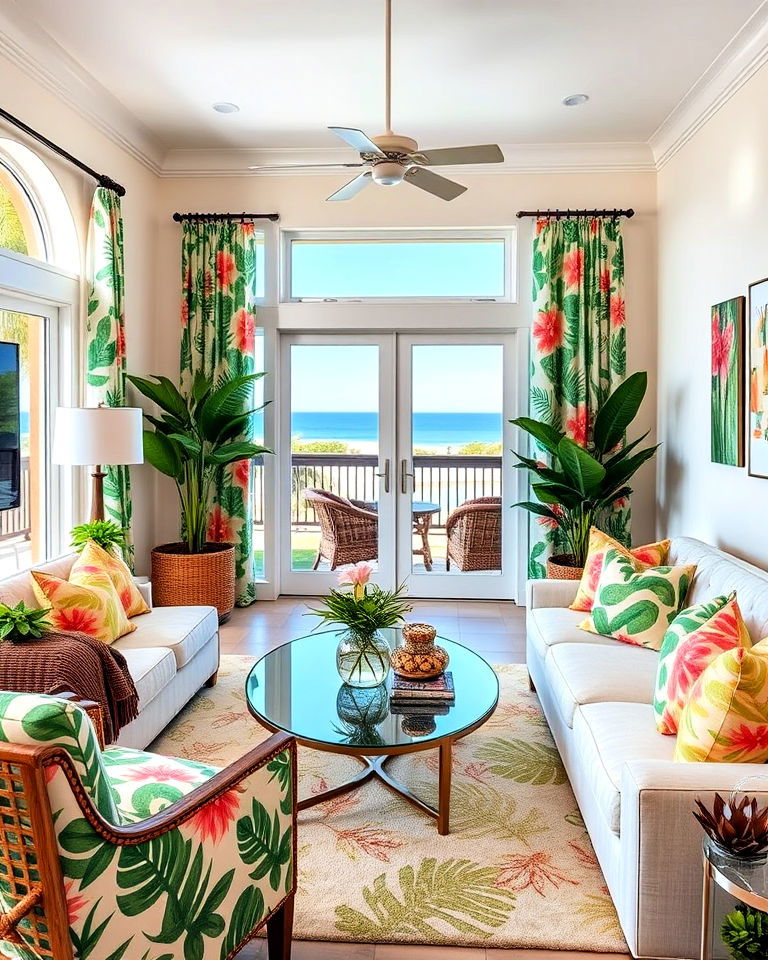
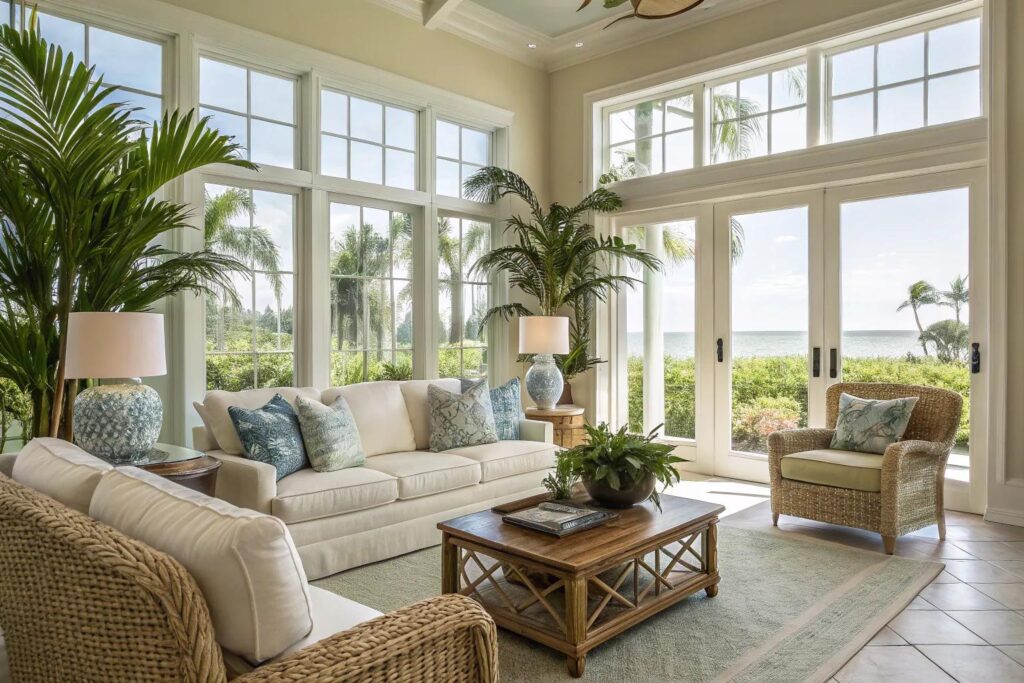
The color palette of a well-executed Florida home draws directly from the surrounding ecosystem without falling into literal thematic traps. Move past the cliché aqua-and-coral formulas and look deeper into the native landscape: the silvery-green of sea oats, the chalky white of crushed coquina shells, the deep emerald of sabal palm fronds, and the rich terracotta of historic Mediterranean revival tiles. This restrained, nature-adjacent palette creates an immediate sense of calm and visual expansiveness.
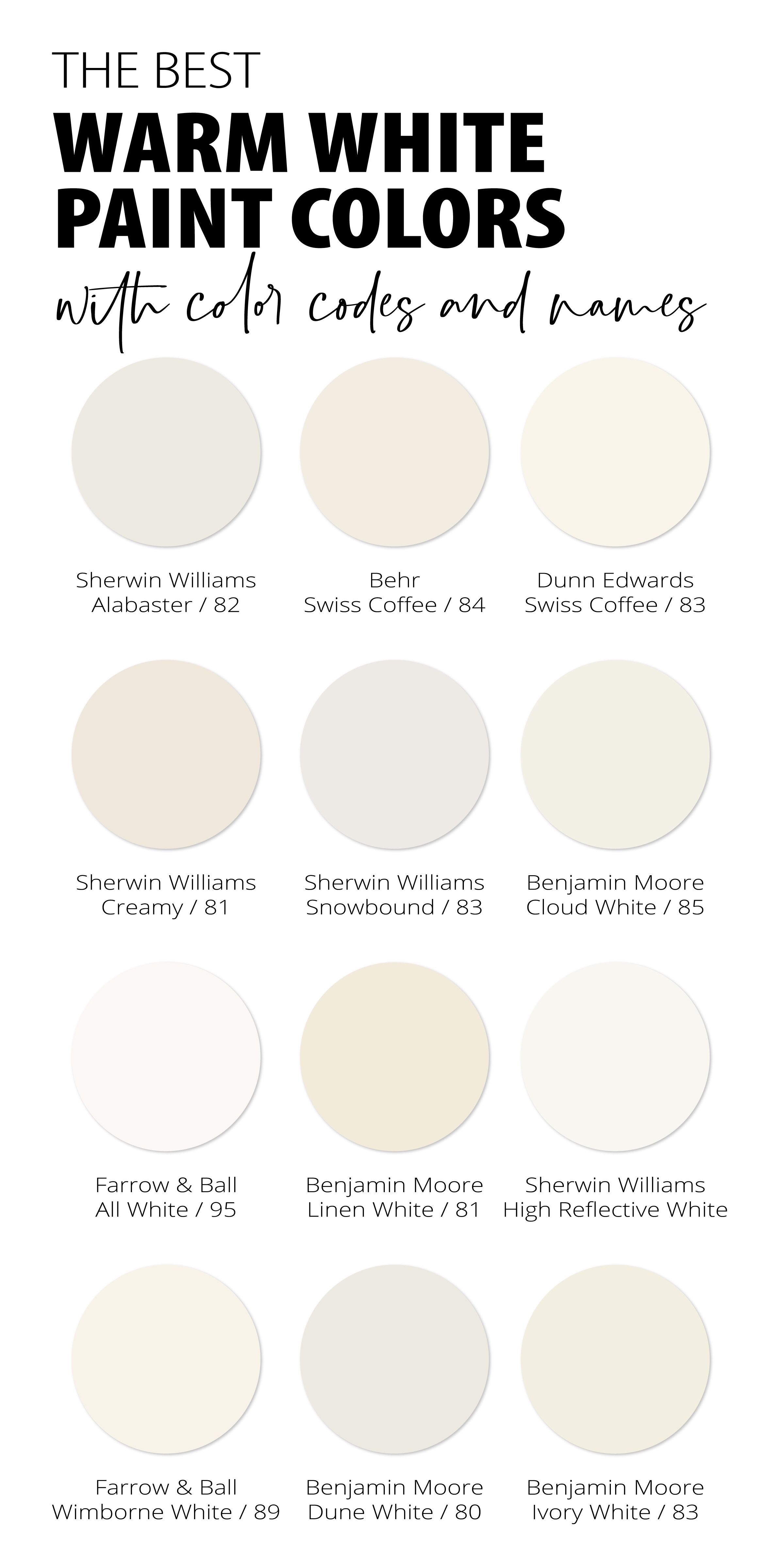
Base layers should always lean toward lightness. Crisp chalk whites, warm ivories, and pale sandy beiges act as reflective surfaces that bounce natural light deeper into the core of the floor plan. This brightness is essential during the stormy summer months when heavy cloud cover can cast a gloomy pall over darker rooms. By keeping the large foundational elements—walls, oversized upholstery, and flooring—neutral, you create a flexible canvas that absorbs the shifting blue-and-green reflections of the outdoor environment.
Textural variation becomes your primary tool for adding depth when relying on a neutral color scheme. In a climate where heavy wool rugs and velvet upholstery feel oppressive, tactile interest must come from organic, breathable materials. Incorporate chunky jute and sisal area rugs, hand-knotted macramé wall hangings, and raw-edge pecky cypress accent walls. Pecky cypress, a native wood carved by a natural fungus that creates gorgeous, vertical channel patterns, offers an unmatched local pedigree that grounds a room in authentic regional history.
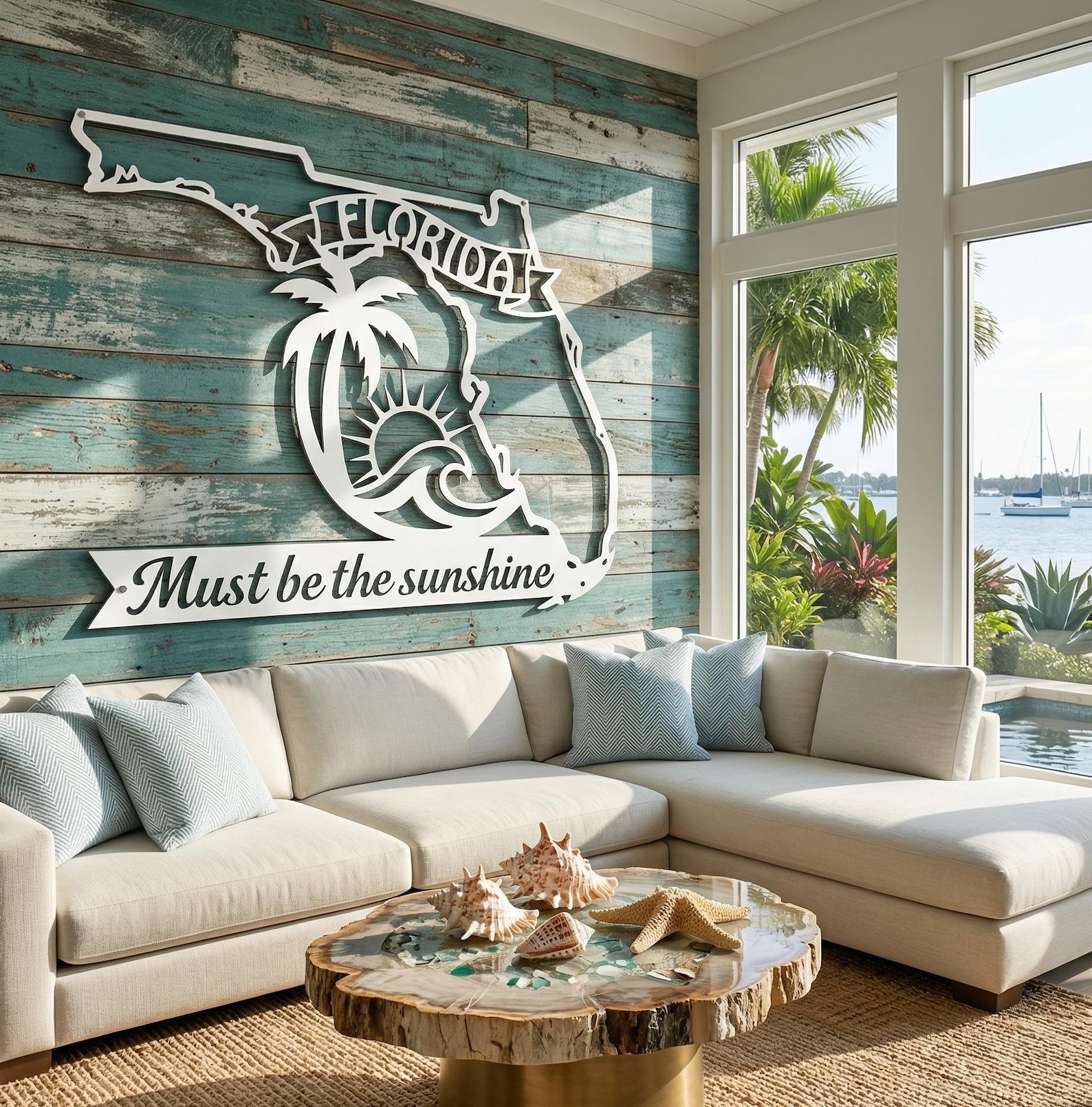
Metallic finishes also require deliberate selection. Highly polished brass and chrome can feel overly stark and reflective under intense tropical sunlight. Instead, specify brushed or antiqued brass, blackened iron, and textured rattan or abaca weaves. These materials develop a rich patina over time, gracefully absorbing the minor wear and tear of a coastal lifestyle where sandy feet and wet swimsuits are an everyday reality.
Step-by-Step Methodology for Designing a Weather-Resilient Florida Living Space
Transforming a space from a standard floor plan into a climate-smart coastal retreat requires a disciplined, methodical approach. Follow this step-by-step framework to ensure your design withstands environmental stressors while maximizing aesthetic appeal.
Navigating Common Pitfalls and Field-Tested Workarounds

Even experienced DIYers and seasoned designers stumble when facing the unique constraints of subtropical interior design. Recognizing these common traps saves you from costly replacements down the line.
The Intersection of Indoor-Outdoor Living and Sustainable Coastal Architecture
The defining characteristic of modern Florida home decor is the seamless erasure of the boundary between the interior living room and the exterior lanai, pool deck, or courtyard. With outdoor temperatures remaining temperate for the majority of the year, the lanai functions as a true second living room. Designing this continuum requires continuity of flooring materials, lighting concepts, and color palettes so that the transition feels entirely natural rather than forced.
Architectural advancements in pocketing sliding glass doors—often rated to withstand Category 5 hurricane-force winds and wind-borne debris—allow entire walls to vanish into pockets within the structural columns. When these doors are open, the indoor flooring must match or complement the exterior travertine or non-slip porcelain pavers on the patio. This visual continuity magnifies the perceived square footage of the home and floods the interior spaces with brilliant natural light.
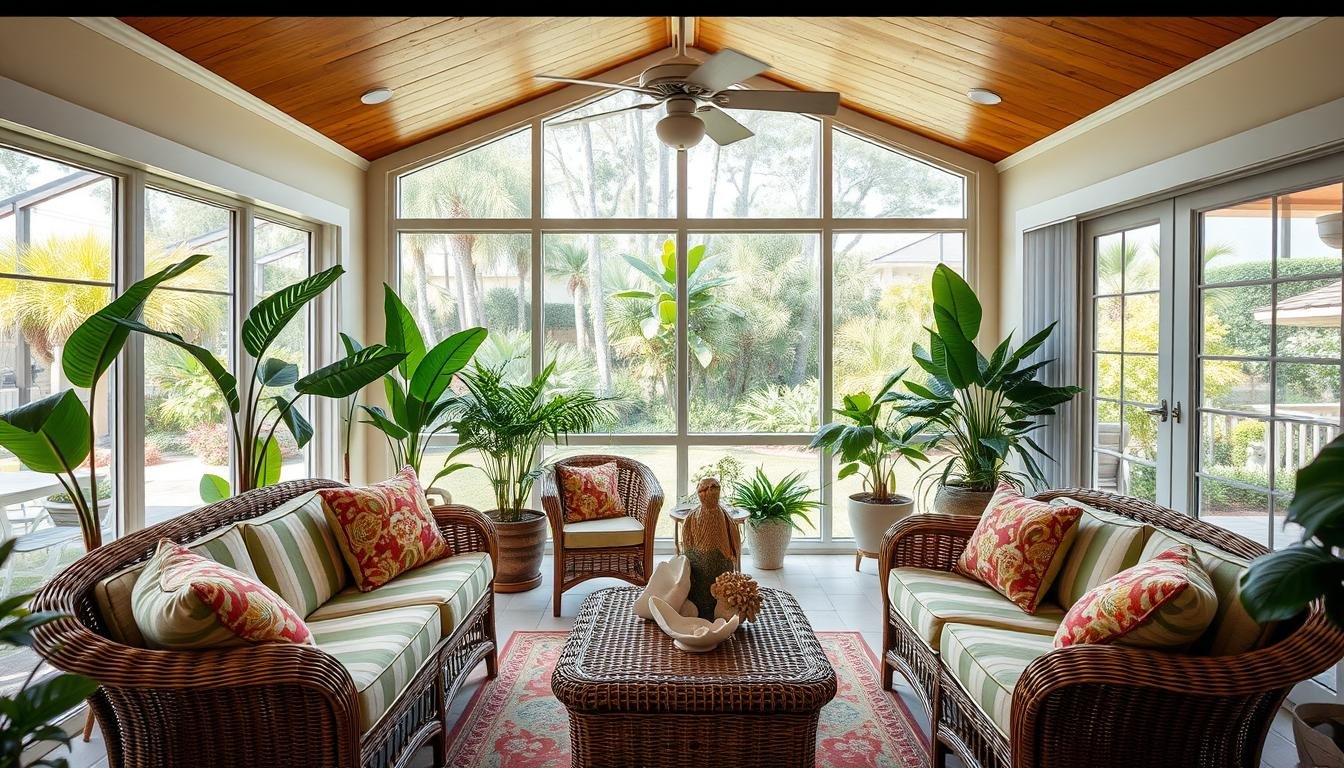
Sustainability is no longer an optional luxury in coastal regions; it is a structural necessity. Rising sea levels and increased storm intensity mean that material sourcing must prioritize durability and local availability. Sourcing coral stone, coquina, and native woods cuts down on the carbon footprint of long-distance freight shipping while ensuring the materials are naturally evolved to withstand local weathering. Additionally, incorporating smart home automation to monitor humidity sensors, adjust motorized shading, and optimize HVAC efficiency keeps energy consumption manageable during peak cooling months.
Biophilic design principles find their ultimate expression in Florida interiors. Integrating living green walls, indoor water features, and expansive views of native flora connects the human nervous system with the restorative power of nature. This approach lowers cortisol levels and enhances the restorative quality of the home, transforming your living space into a genuine psychological sanctuary away from the stresses of modern professional life.
Actionable Frameworks for Executing Your Florida Interior Design Project
Synthesizing these concepts into a cohesive design plan requires a clear operational framework. Whether you are managing a gut renovation or refreshing a vacation rental property, structuring your workflow ensures nothing gets overlooked.
Designing a home in Florida is an ongoing negotiation with nature. It requires respecting the raw power of the sun, the persistent embrace of humidity, and the casual, barefoot cadence of coastal life. By prioritizing climate-smart material science, organic color palettes, and seamless indoor-outdoor connections, you create a space that transcends fleeting design trends and stands up to the rigorous demands of the environment.
The ultimate measure of a successful Florida interior is how it feels when you walk through the front door after a long day in the tropical heat. If the air is crisp, the light is soft and filtered, and the textures under your fingertips remind you of the sand and sea just beyond your threshold, then you have captured the true essence of coastal living. Embrace the breeze, respect the climate, and let your home become a timeless sanctuary of sun-drenched elegance.