The dinner party was three courses deep when the left-front leg of my vintage mid-century teak table gave a microscopic shudder. A guest shifted their weight to reach for the Maldon salt, and the entire surface groaned. It was a subtle betrayal, but enough to ruin the rhythm of a braised short rib reduction and a heavy cabernet. That night marked my breaking point with poorly engineered furniture. Over the past decade as a furniture restorer and interior architecture writer, I have disassembled, repaired, and lived with dozens of dining table sets. I have watched particle board warp under humidity spikes and witnessed white oak joints survive toddlers, art projects, and marathon board game nights.
Choosing a dining table set is rarely just about picking a pretty silhouette from a catalog. It is a calculated exercise in spatial geometry, ergonomic clearance, and material resilience. When you bring a set home, you are anchoring the most socially active room in your dwelling. You are investing in a stage for holidays, remote work sessions, tense family debates, and quiet Tuesday morning coffees.
The dining table set has evolved dramatically from the formal, walled-off mahogany banquet tables of the Victorian era. Contemporary living spaces demand multi-functionality, forcing designers to rethink how a table interacts with open-plan layouts, shrinking square footage, and shifting domestic rituals. Understanding the anatomy of a truly exceptional set requires looking past the showroom finish and examining the structural skeleton, timber grading, joinery techniques, and surface chemistry that dictate whether a table will last five years or five generations.
Anatomy of Structural Integrity: Timber Selection, Joinery, and Manufacturing Standards
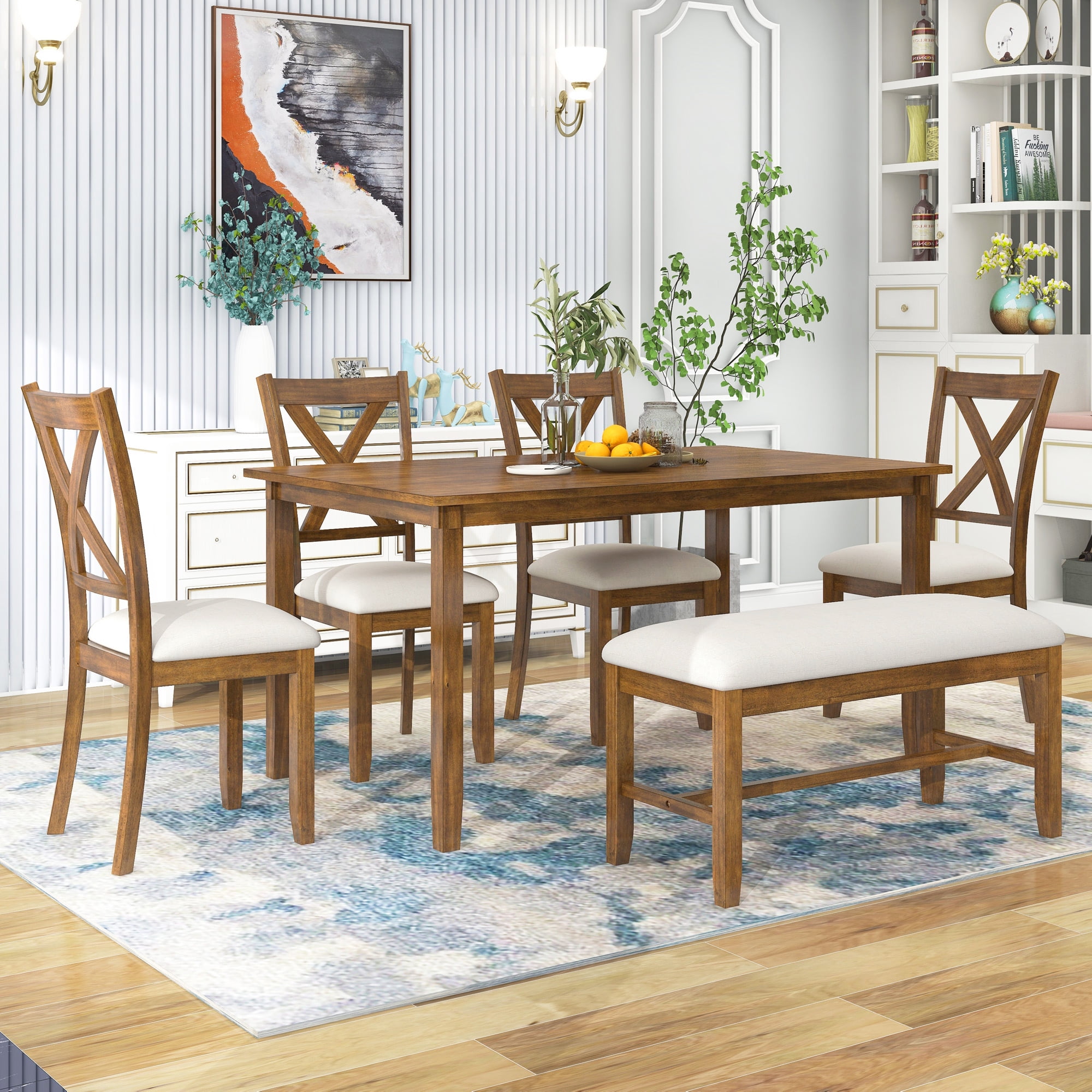
When evaluating a dining table set, the primary point of failure is almost never the tabletop surface itself; it is the underframe—the aprons, corner blocks, and leg joinery that bear the structural load. Mass-market retailers frequently rely on medium-density fiberboard (MDF) veneered with a paper-thin layer of wood print, held together by cam locks and wooden dowels. These materials cannot withstand the lateral forces applied when adults lean heavily on the edge of a table to stand up. True furniture longevity requires genuine hardwoods like American walnut, white oak, hard maple, or quarter-sawn cherry, each bringing distinct Janka hardness ratings and grain characteristics to the build.
Joinery is the invisible signature of master craftsmanship. Look beneath the tabletop. A well-built table utilizes mortise-and-tenon joints, pocket screws with slotted expansion holes, or traditional breadboard ends designed to allow the solid wood top to expand and contract across the grain without splitting. Wood is a hygroscopic material; it breathes, absorbing moisture in humid summers and releasing it in dry winter heating seasons. If a manufacturer builds a solid wood top without accounting for this natural movement, the wood will eventually crack along its glue lines.
The accompanying chairs undergo even harsher physical abuse than the table. A dining chair must withstand cyclical loading—people tilting back, sliding them across hardwood floors, and dropping their weight repeatedly. Check the chair joints for corner bracing. Dowels alone are rarely enough for heavy commercial or high-end residential use; corner blocks glued and screwed into the seat frame provide the necessary triangulation to prevent wiggling. Furthermore, pay attention to the seat construction. Sinuous springs, webbed upholstery, or contoured solid wood scoops dictate whether guests will happily linger for a three-hour dinner or begin shifting uncomfortably after twenty minutes.
The Spatial Mathematics of Room Layout and Circulation Clearance
One of the most common mistakes in interior design is purchasing a dining table set based solely on how it looks in an expansive, wide-open showroom floor. Showrooms trick the human eye by offering thirty feet of perimeter clearance in every direction. In a real-world home, a table must coexist with walls, sideboards, kitchen islands, and walking pathways. Ignoring clearance mathematics results in a cramped room where pulling out a chair requires a physical struggle and knocking into a hutch.
To calculate the proper table size, start by measuring your room and subtracting a non-negotiable perimeter buffer. You need a minimum of 36 inches—though 42 to 48 inches is vastly superior—between the edge of the table and any wall or surrounding furniture. This clearance ensures that a person can pull out their chair, sit down comfortably, and leave enough space for another person to walk behind them. For each seated diner, interior ergonomics standards recommend allocating roughly 24 to 30 inches of linear table edge to prevent elbows from colliding during a meal.
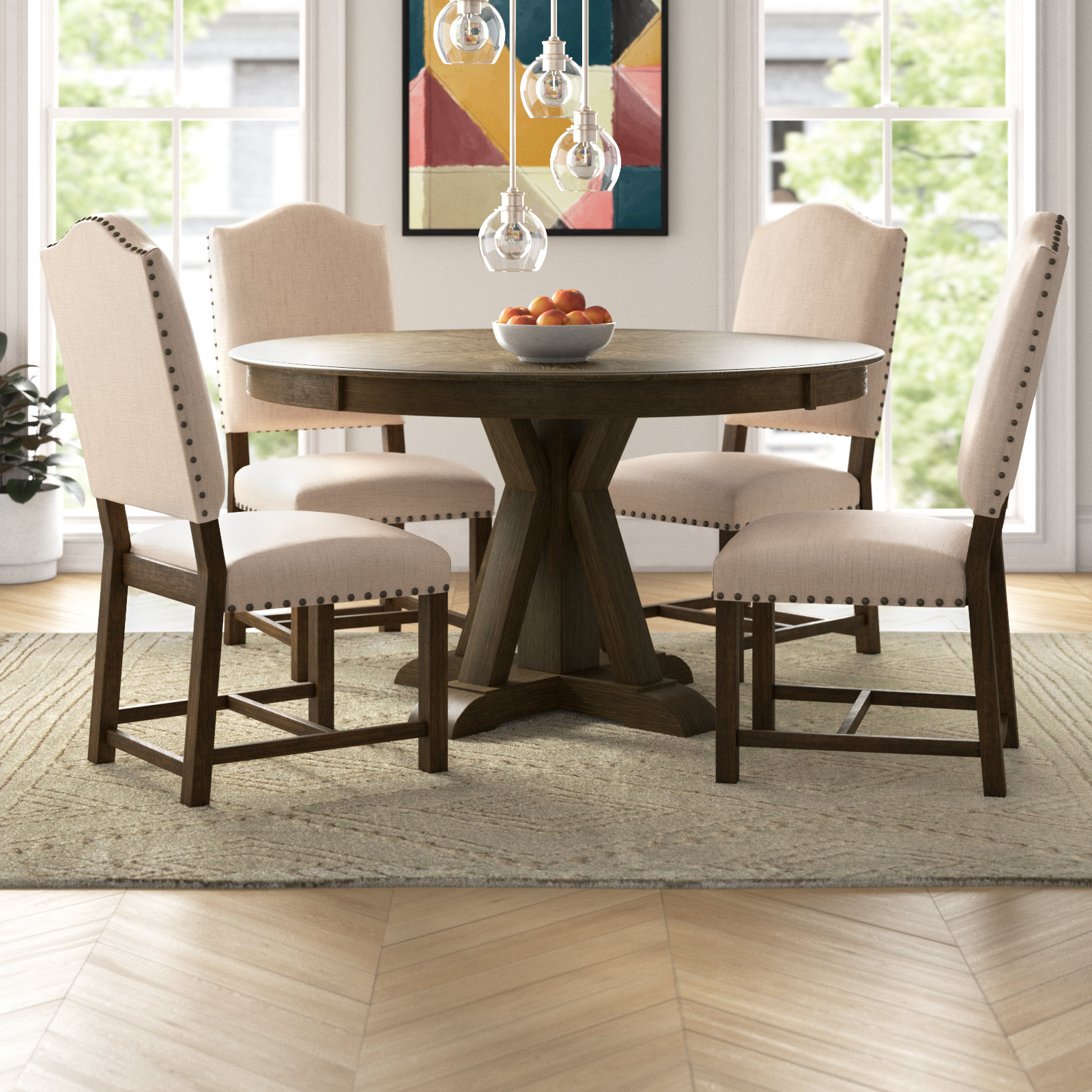
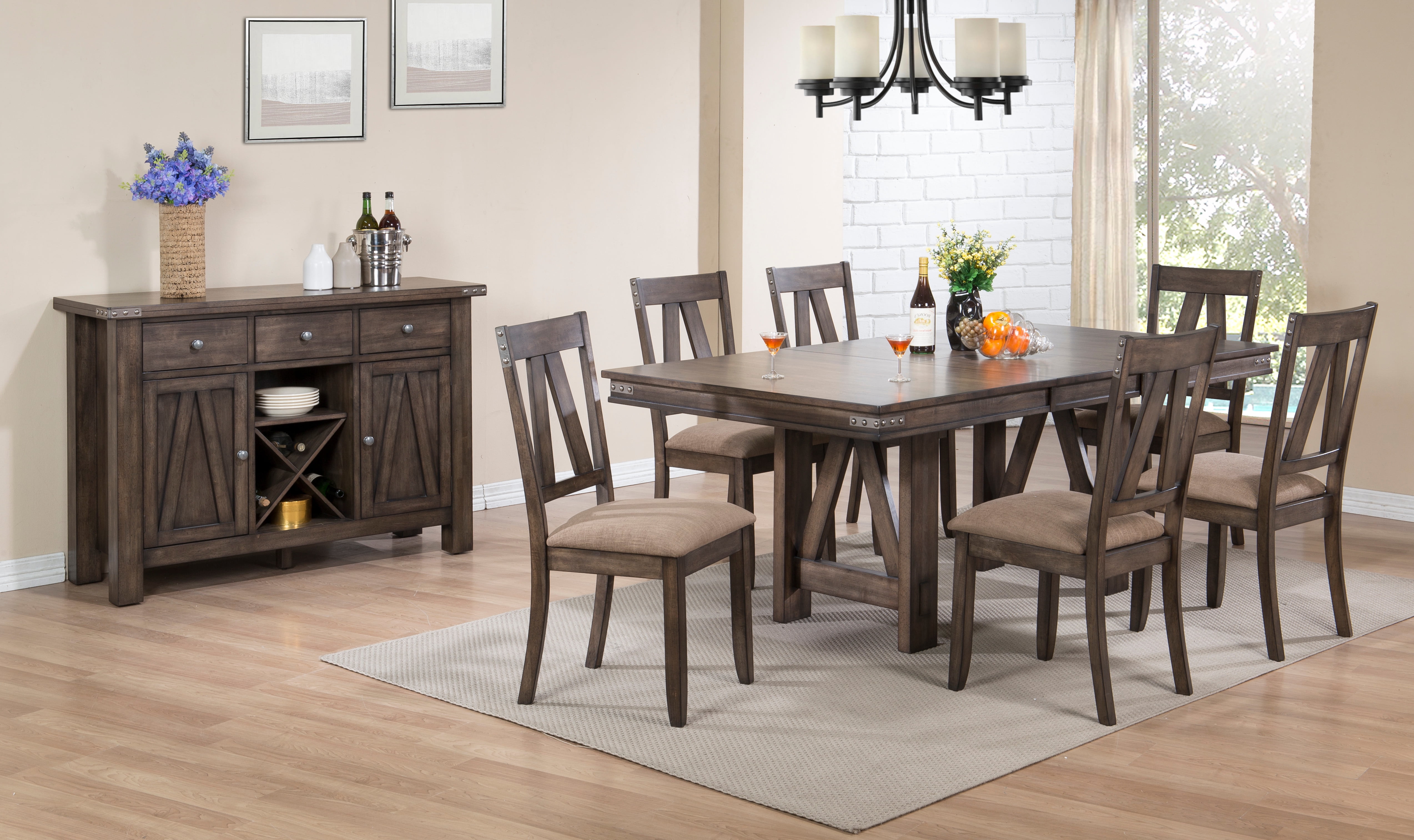
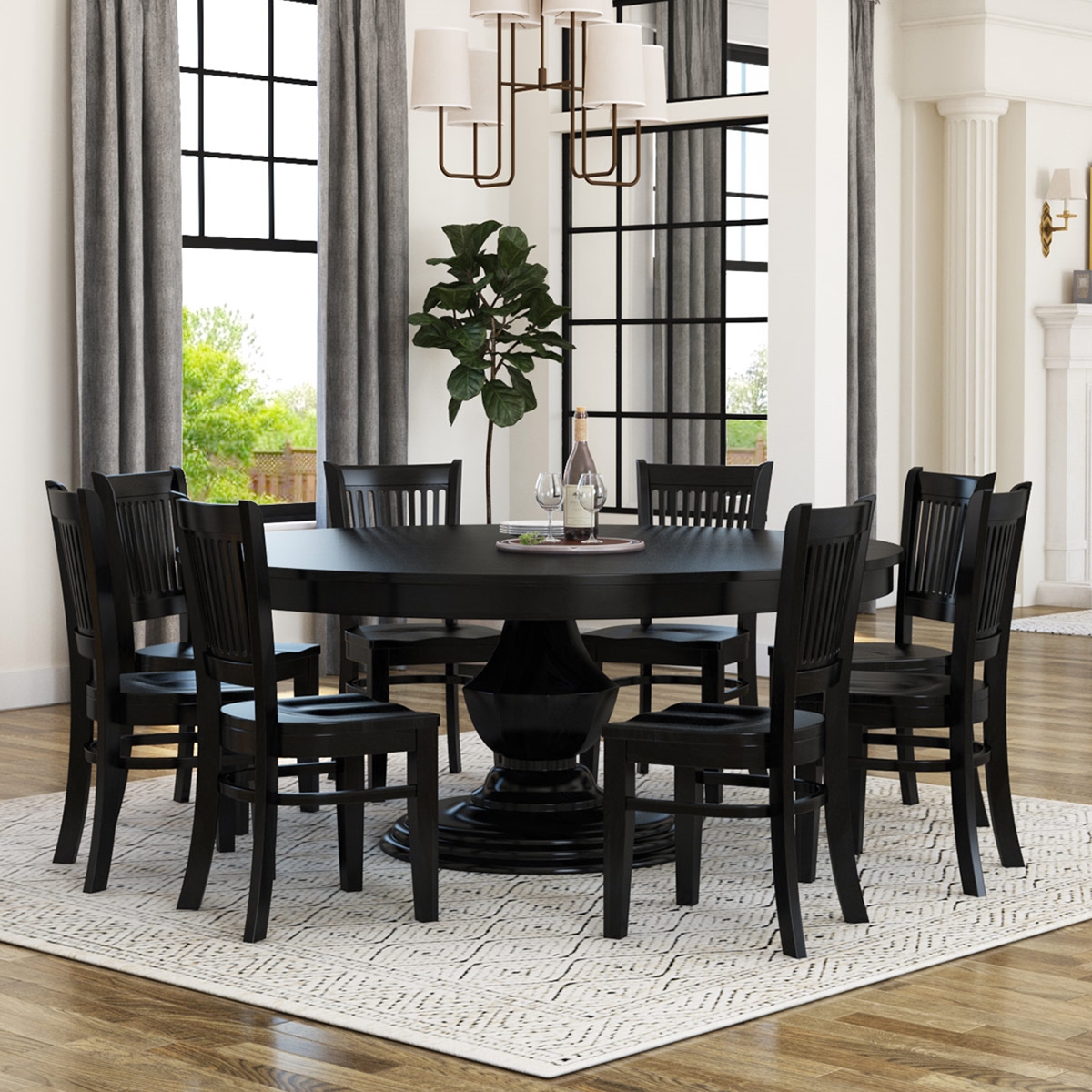
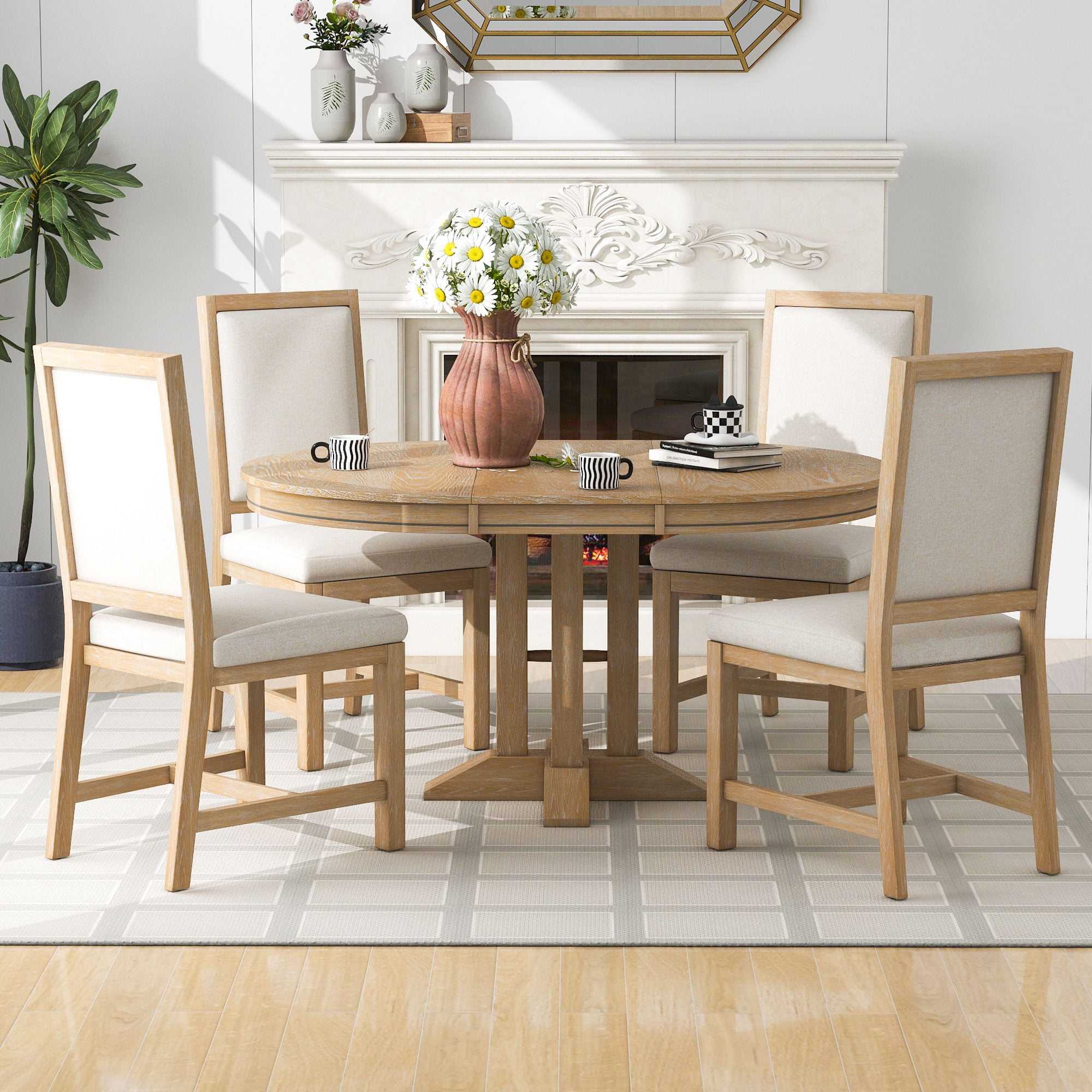
Table bases dictate seating flexibility just as much as dimensions do. A traditional four-leg table places the legs at the extreme corners, which maximizes structural stability but locks you into a rigid seating count; fitting an extra guest on the end is nearly impossible without a table leg blocking their knees. Trestle tables and pedestal bases, conversely, offer immense flexibility for legroom and chair positioning. Trestle designs shift the structural supports inward, while pedestal bases consolidate the load into a central column, making side-to-side seating adjustments effortless during large family gatherings.
Step-by-Step Methodology for Selecting and Inspecting a Dining Set
Buying a dining table set should be treated as a major capital expenditure. Approaching the market with a structured, methodical inspection framework protects you from poor construction quality and aesthetic mismatches.
Navigating Construction Pitfalls, Veneer Myths, and Finish Failures
The furniture market is rife with marketing terminology designed to obscure cheap manufacturing methods. Terms like "solid wood construction" are sometimes cleverly used to describe a piece where only the trim is solid wood, while the primary panels are fiberboard covered in low-grade veneers. Understanding these pitfalls saves you from premature structural failure and financial regret.
Another widespread misconception involves the perceived inferiority of wood veneers. High-end wood veneer—when applied over a stable core like Baltic birch plywood or high-density fiberboard—is actually structurally superior to solid wood for large flat surfaces because it does not warp, cup, or split with seasonal humidity shifts. The danger lies in "paper foil" or low-grade vinyl wraps masquerading as wood grain. These thin polymer films scratch easily, peel away at the edges when exposed to moisture, and cannot be sanded or refinished.
Finish failures represent another hidden trap. Many consumers purchase tables finished with raw, unsealed natural oils because they love the matte, organic tactile feel. However, these finishes offer virtually zero protection against red wine, lemon juice, or hot coffee rings. If you opt for an oil finish, you must commit to periodically reapplying hardening oils like Rubio Monocoat or boiled linseed oil. Conversely, thick polyurethane finishes can look plastic and artificial, and once scratched deeply, they require stripping the entire surface rather than spot-repairing.
The Intersection of Modern Material Science and Sustainable Forestry
The dining table set industry has undergone a radical transformation driven by environmental sustainability and advancements in material science. Traditional clear-cutting of old-growth forests has given way to Forest Stewardship Council (FSC) certifications, reclaimed lumber harvesting, and engineered fast-growing woods like rubberwood and bamboo. Reclaimed timber sets carry a distinct provenance—salvaged from old barns, factories, or structural beams—offering tight growth rings and a dense patina that newly milled lumber simply cannot replicate.
Concurrently, sintered stone, porcelain, and quartz have emerged as revolutionary tabletop materials. Sintered stone, formed by subjecting natural mineral powders to extreme heat and pressure mimicking metamorphic geological processes, creates a surface that is virtually impervious to thermal shock, scratching, and UV degradation. You can place a cast-iron skillet straight from the stove onto a sintered stone tabletop without a trivet. This material science breakthrough allows urban dwellers to enjoy the organic aesthetic of marble or slate without the crushing weight and high porosity that typically requires constant sealing.
These material shifts also impact the carbon footprint of domestic furniture. Heavy solid hardwood tables shipped globally incur massive shipping emissions. Sourcing from regional makers who utilize domestic hardwoods—such as Appalachian white oak or Pacific Northwest walnut—reduces transportation overhead while supporting regional craft economies and ensuring accountability in timber harvesting practices.
Strategic Frameworks for Long-Term Care, Maintenance, and Preservation
Protecting a quality dining table set requires a shift from reactive cleaning to proactive preventative maintenance. Wood furniture reacts directly to its microclimate; placing a solid wood table directly over a floor heating vent or directly beside an unshaded, south-facing window is a recipe for catastrophic splitting and finish fading. Maintain indoor relative humidity between 35% and 55% using humidifiers in winter and air conditioning in summer to keep wood movement within safe limits.
Daily cleaning should avoid multi-purpose household chemical sprays containing ammonia or silicone, which strip natural finishes and leave greasy residue build-ups that attract dust. Instead, use a wrung-out microfiber cloth with a drop of mild dish soap, followed immediately by a dry towel buffing. For solid wood surfaces, apply a high-carnauba paste wax or specialized furniture polish once or twice a year to replenish moisture and maintain water-bearding properties.
Chair maintenance is equally critical. Loose chair legs are usually caused by dry joints where the wood glue has crystallized and failed due to lack of humidity. Do not wait until a leg snaps off; periodically flip your chairs upside down, check the screw tensions, and inject wood glue into mortises that show signs of micro-separation, clamping them tightly overnight.
A dining table set is much more than an assemblage of boards, fasteners, and upholstery; it is the physical anchor of human connection within a home. From early childhood finger-painting projects to late-night discussions over spilled wine, the right set absorbs the history of your household, developing a rich patina that tells the story of your life.
By prioritizing structural joinery over superficial aesthetics, respecting spatial clearance mathematics, and committing to intelligent maintenance, you transform a routine furniture purchase into a generational heirloom. As domestic spaces continue to evolve in the coming years, investing in adaptable, sustainably sourced, and masterfully engineered dining furniture ensures your home remains grounded, welcoming, and structurally sound for decades of gatherings to come.