The scent of dry oak leaves and woodsmoke always hits me first, drifting through an open window just as the afternoon light turns the color of pale cider. It is that exact week in late September when the kitchen clock seems to slow down, and the instinct to pull heavy pottery and heavy woolens from storage takes over. For years, my approach to hosting autumn dinners was frantic—running out for orange plastic gourds at the last minute, cramming too many scented candles between water glasses, and wondering why the table felt more like a craft store display than a place where people actually wanted to sit for three hours.
True hospitality during the cooler months requires a completely different lens. Setting an autumn table is not about executing a rigid, catalog-perfect theme; it is about architectural layering, tactile honesty, and making room for lingering. When you strip away the neon novelty items and look closely at how historic dining spaces adapted to the changing seasons, you find a masterclass in resourcefulness. Our ancestors brought the fading fields indoors not to recreate nature, but to honor the transition. They used muted earth tones, heavy weights of linen, pewter that caught the amber glow of tallow tapers, and produce that had spent months ripening under a relentless summer sun.
We live in a culture that often treats home decor as an ephemeral social media backdrop, easily swapped out every three weeks for the next micro-trend. Yet, the dining table remains the ultimate anchor of domestic life. It is where we process the shift from expansion to contraction, from the frantic light of July to the long, shadowed evenings of November. When you approach fall table setting ideas through the eyes of an interior stylist and a seasoned host, you stop chasing perfection and start engineering an atmosphere. You begin to understand how the weight of a stoneware plate, the scent of unrefined beeswax, and the low profile of a botanical runner can entirely transform the cadence of a meal.
The architecture of a memorable autumn table starts long before the guests arrive at your door. It begins with understanding how light, texture, and scale interact within the specific footprint of your dining room. Over the past decade of styling spaces for editorial shoots and hosting endless harvest dinners, I have learned that the most magnetic tablescapes are those that appeal to every single sense without shouting for attention. They invite touch, allow for easy conversation across the centerpiece, and change character completely as the sun dips below the horizon and the candles take over.
Anatomy of an Autumnal Tablescape: Textiles, Weight, and Foundation
Establishing a compelling fall table begins from the bottom up, starting with the textiles that anchor the entire arrangement. Summer dining is defined by crisp cottons, bleached linens, and reflective surfaces that bounce the harsh midday glare. Autumn demands the opposite: absorption, warmth, and visual weight. Linen remains the gold standard, but for cooler months, you want a heavier GSM (grams per square meter) count—ideally washed European flax weighing upwards of 200 to 250 grams per square meter. This heavier weave drapes with a natural, tumbled slouch that feels effortless rather than stiffly ironed.
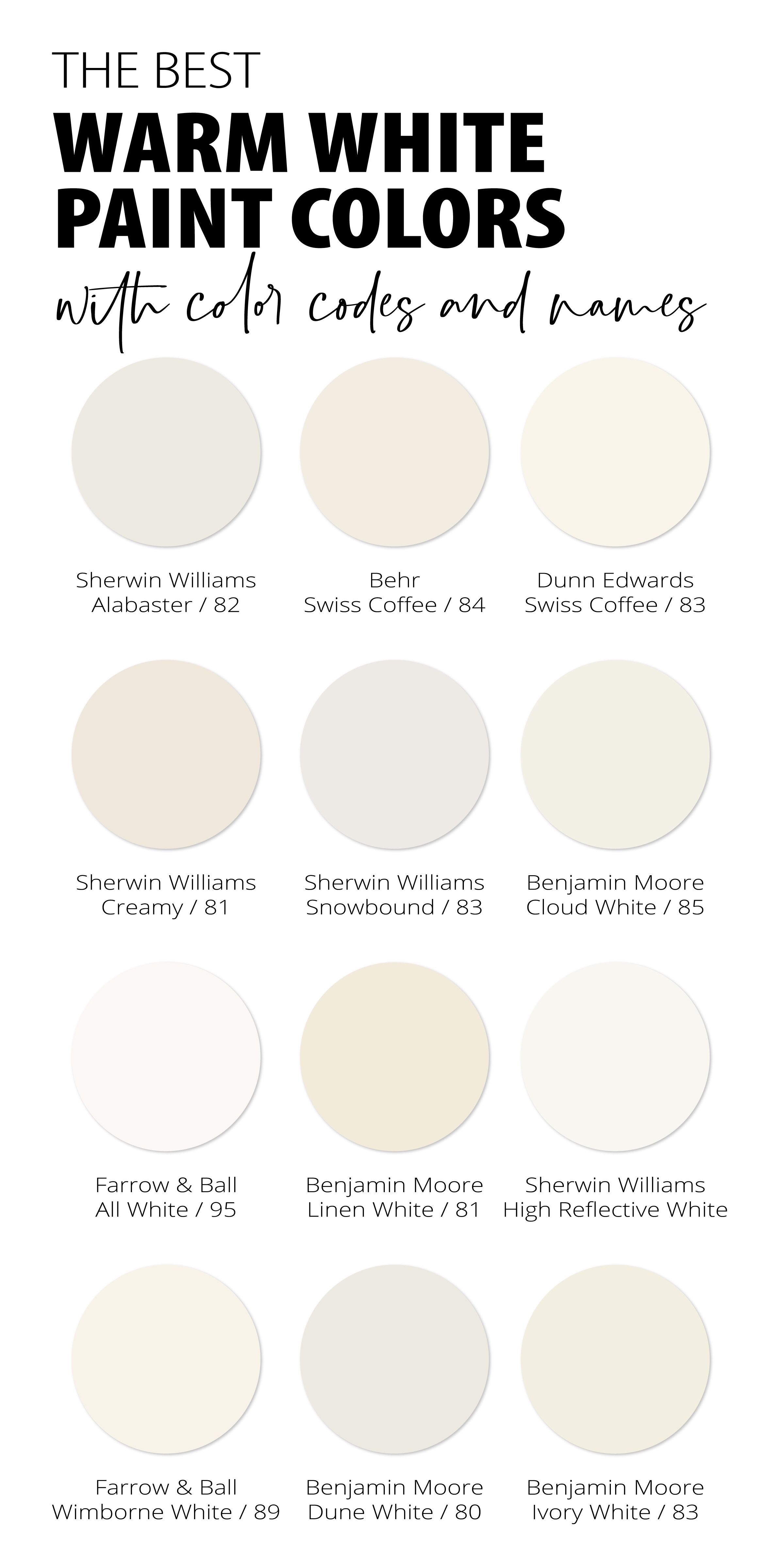
Color theory for autumn tables has evolved far beyond the neon orange and bright yellow palettes of mid-century novelty styling. Contemporary tablescapes lean into moody, complex neutrals and desaturated earth tones: raw flax, tobacco brown, olive drab, faded rust, and deep charcoal. These shades mimic the actual state of the landscape as it transitions into dormancy. By laying down a dark olive table runner or a raw silk cloth in a burnt sienna hue, you create a high-contrast canvas that makes neutral dinnerware pop.
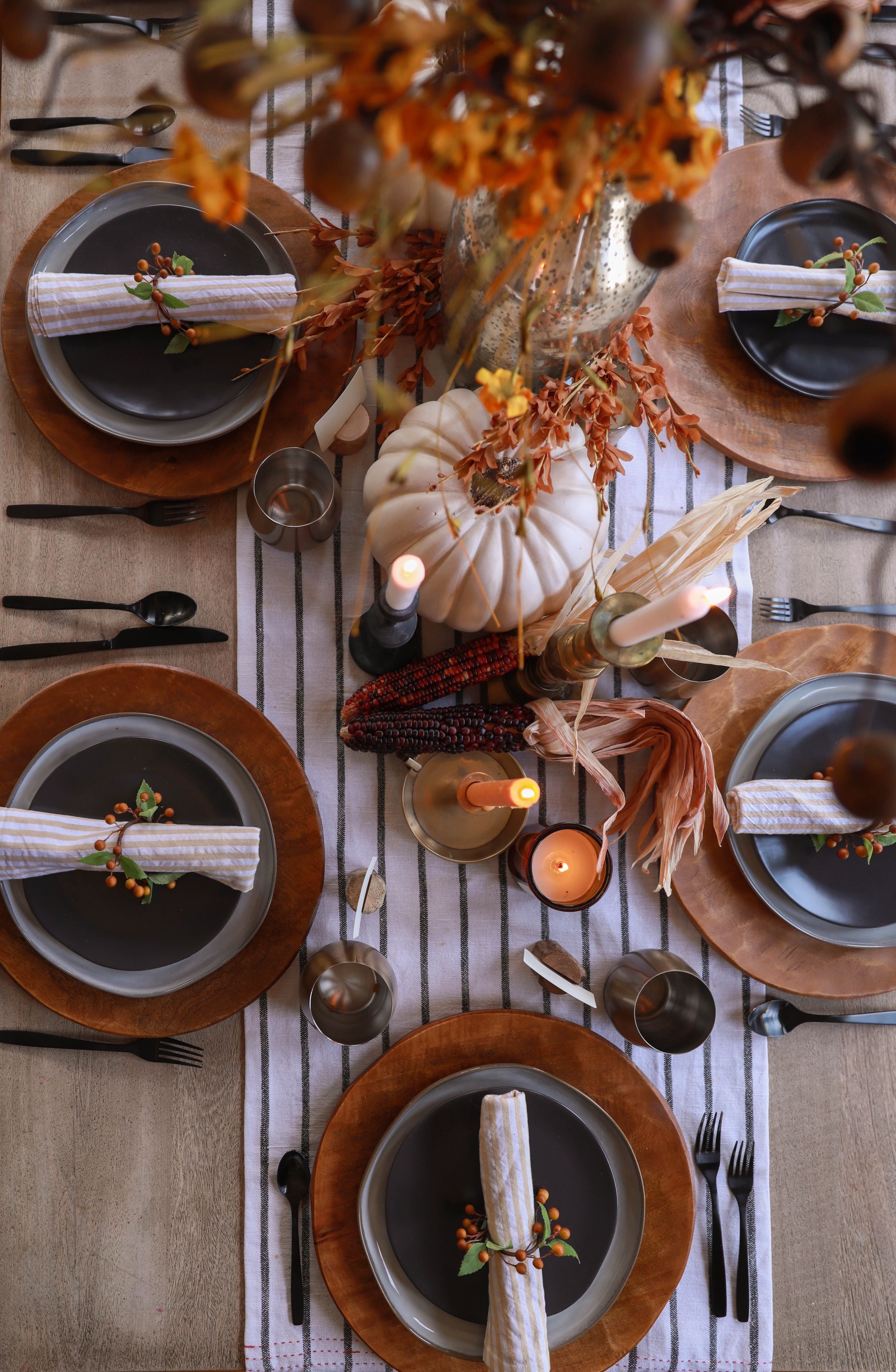
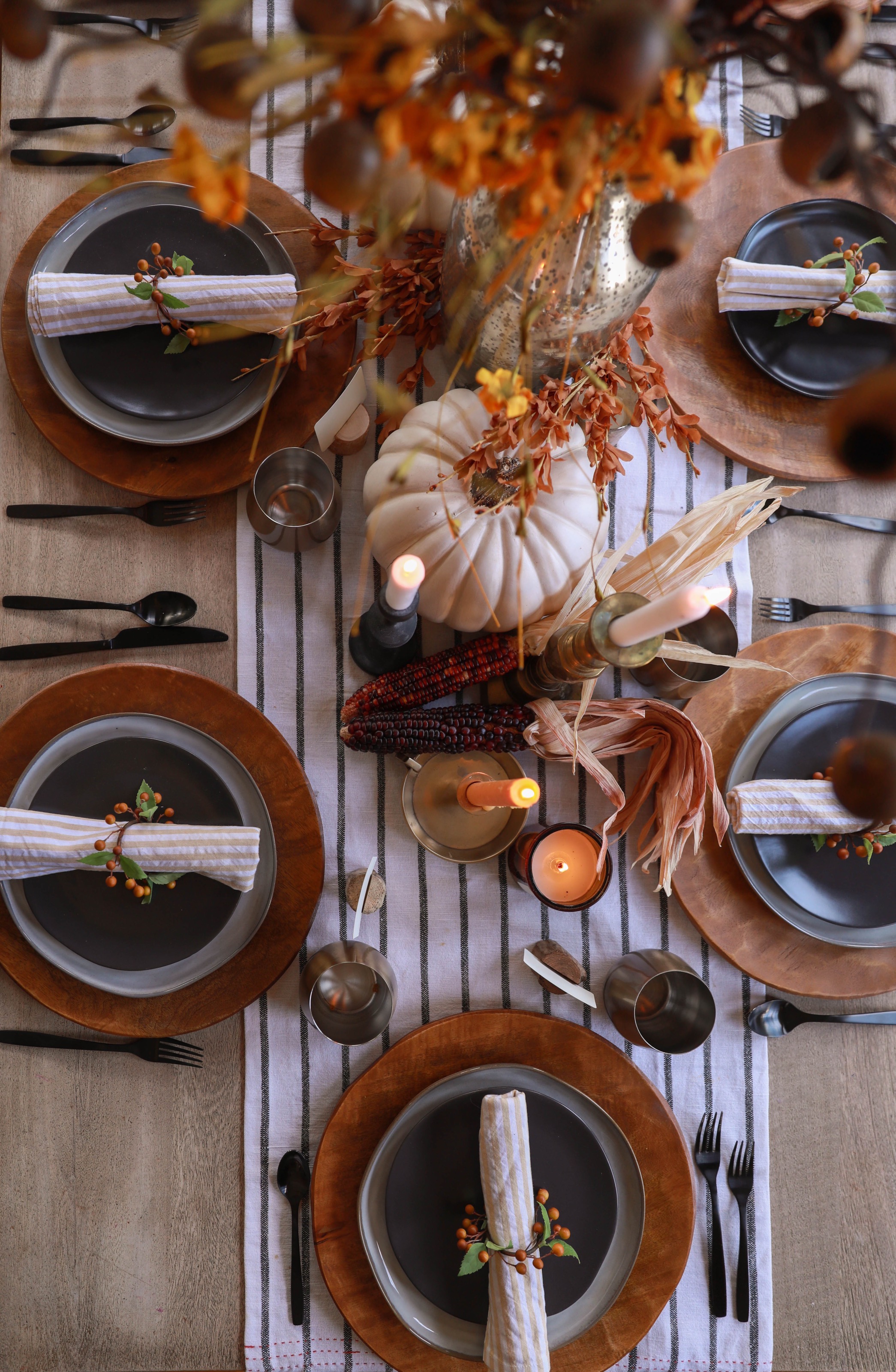
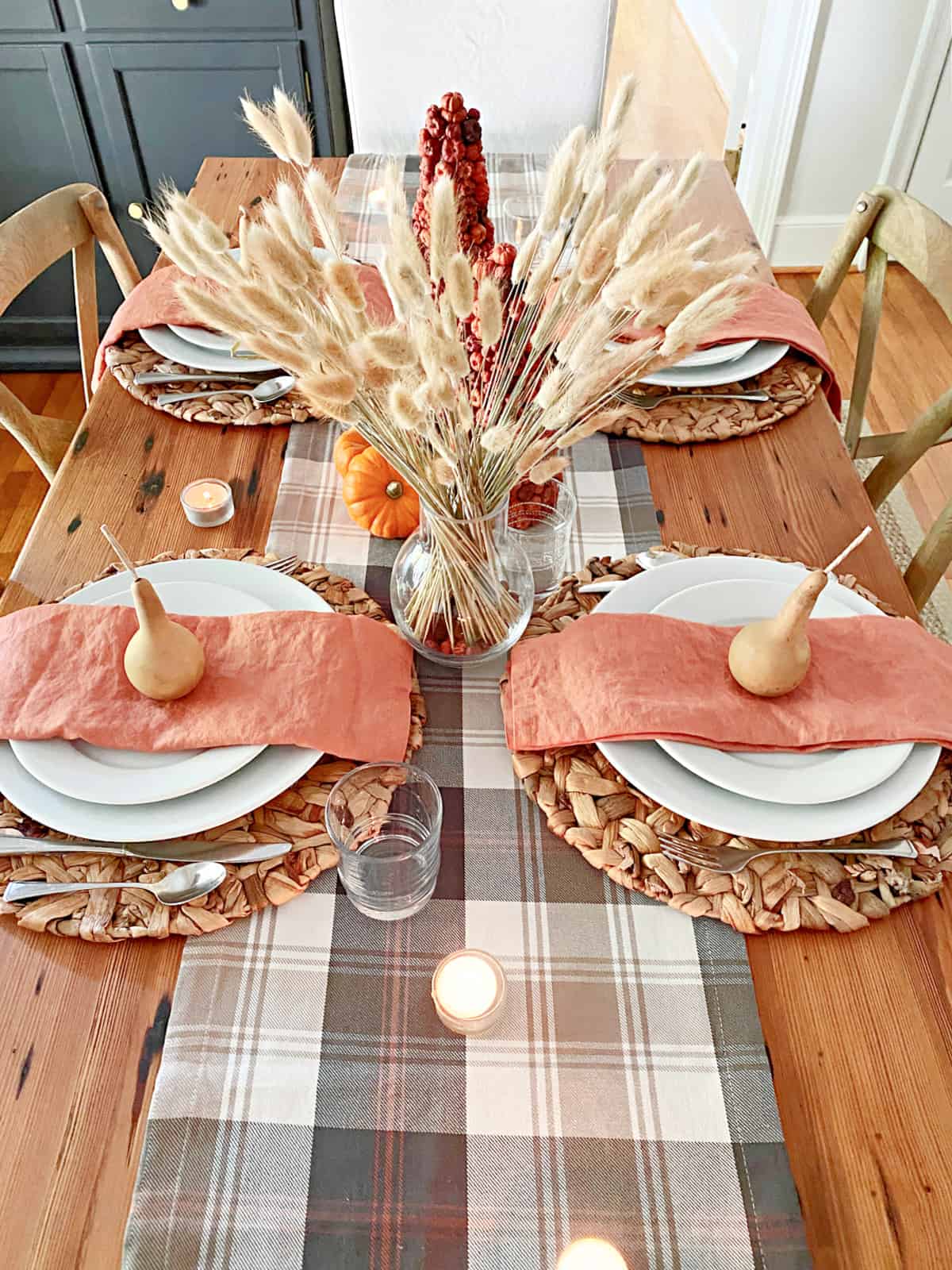
Layering is where the magic happens, and it is also where amateur hosts often make their biggest miscalculations. Instead of jumping straight from a bare table to placemats and chargers, think in strata. Start with a full-length runner or a textured tablecloth. Next, introduce woven chargers made from rattan, seagrass, or hand-beaten copper. These elements introduce a tactile roughness that contrasts beautifully with the smooth glaze of ceramic dinnerware. The goal is to create visual friction—pairing the rough with the refined, the matte with the subtle sheen of aged metal.
When selecting your foundational linens and base elements, consider how they will interact with the food you plan to serve. A stark white porcelain plate on top of a dark, rustic wooden charger creates an immediate focal point that highlights colorful harvest fare like roasted squash, pomegranate seeds, and dark leafy greens. Conversely, speckled stoneware plates blend seamlessly into a monochrome earth-toned table, offering a more rustic, farm-to-table aesthetic. The key is intentionality; every textile and hard surface should feel like a deliberate choice rather than an afterthought.
Sourcing and Styling Organic Centerpieces Without the Cliché
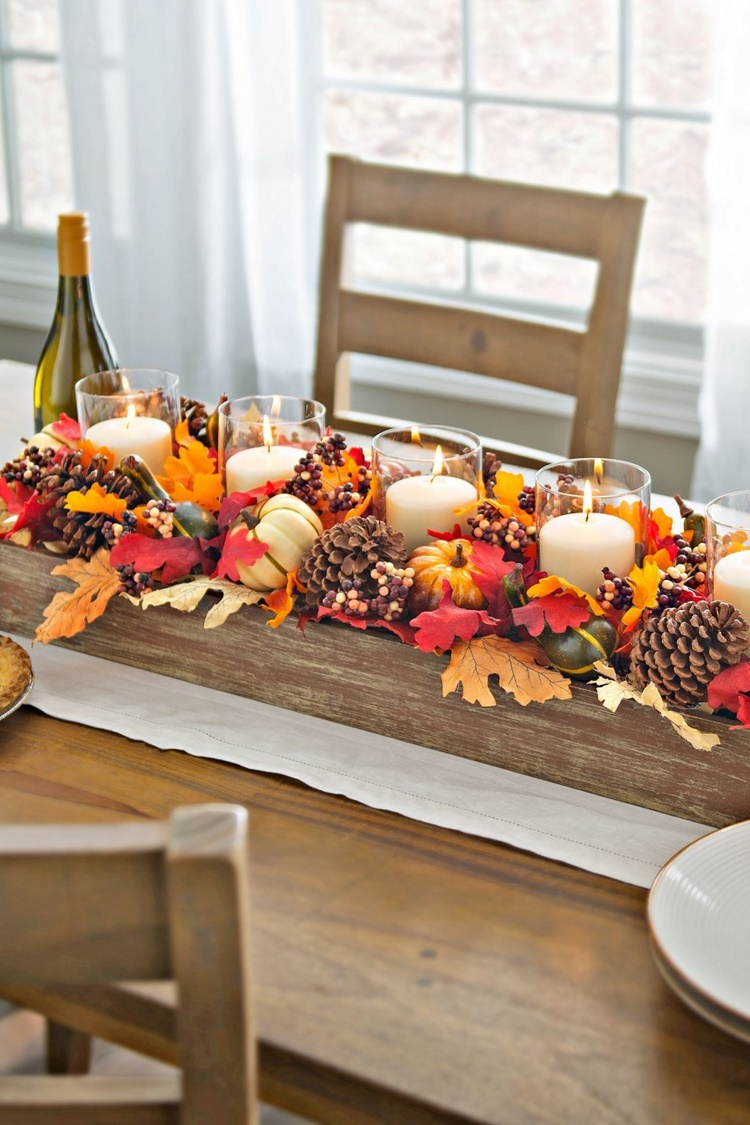
The centerpiece is invariably the gravitational pull of the dining table, yet it is also the element most prone to disaster. Walk into any big-box store in October, and you will find aisles stacked with plastic pumpkins painted in metallic gold and glitter-dusted pinecones that shed synthetic residue into your soup. Real autumn styling requires looking to the grocery store, the farmers' market, and the backyard for inspiration. The most sophisticated centerpieces are botanical, organic, and—crucially—low enough to allow guests to look each other in the eye across the table.
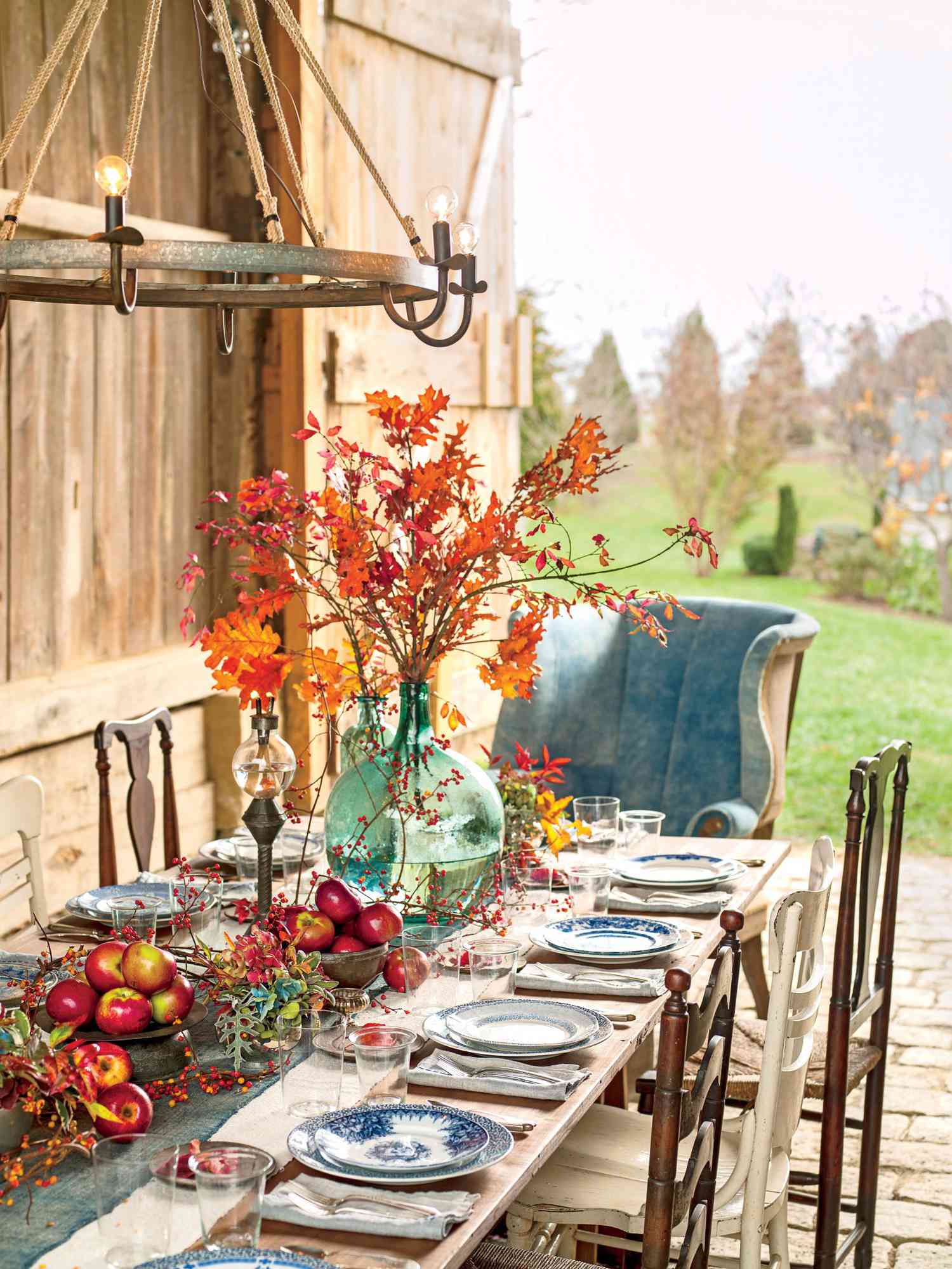
Instead of erecting a towering floral arrangement that blocks conversation, consider a linear installation or a low-slung runner made of mixed foliage and heirloom produce. Varieties like 'Cinderella' pumpkins, 'Fairytale' squash, and gnarly 'Martian' gourds offer incredible sculptural shapes and muted, chalky colorways ranging from seafoam green to deep slate blue. Group these items in odd numbers down the center of the table, weaving in cascading branches of olive leaves, seeded eucalyptus, or dried oak foliage that still holds its russet autumn crispness.
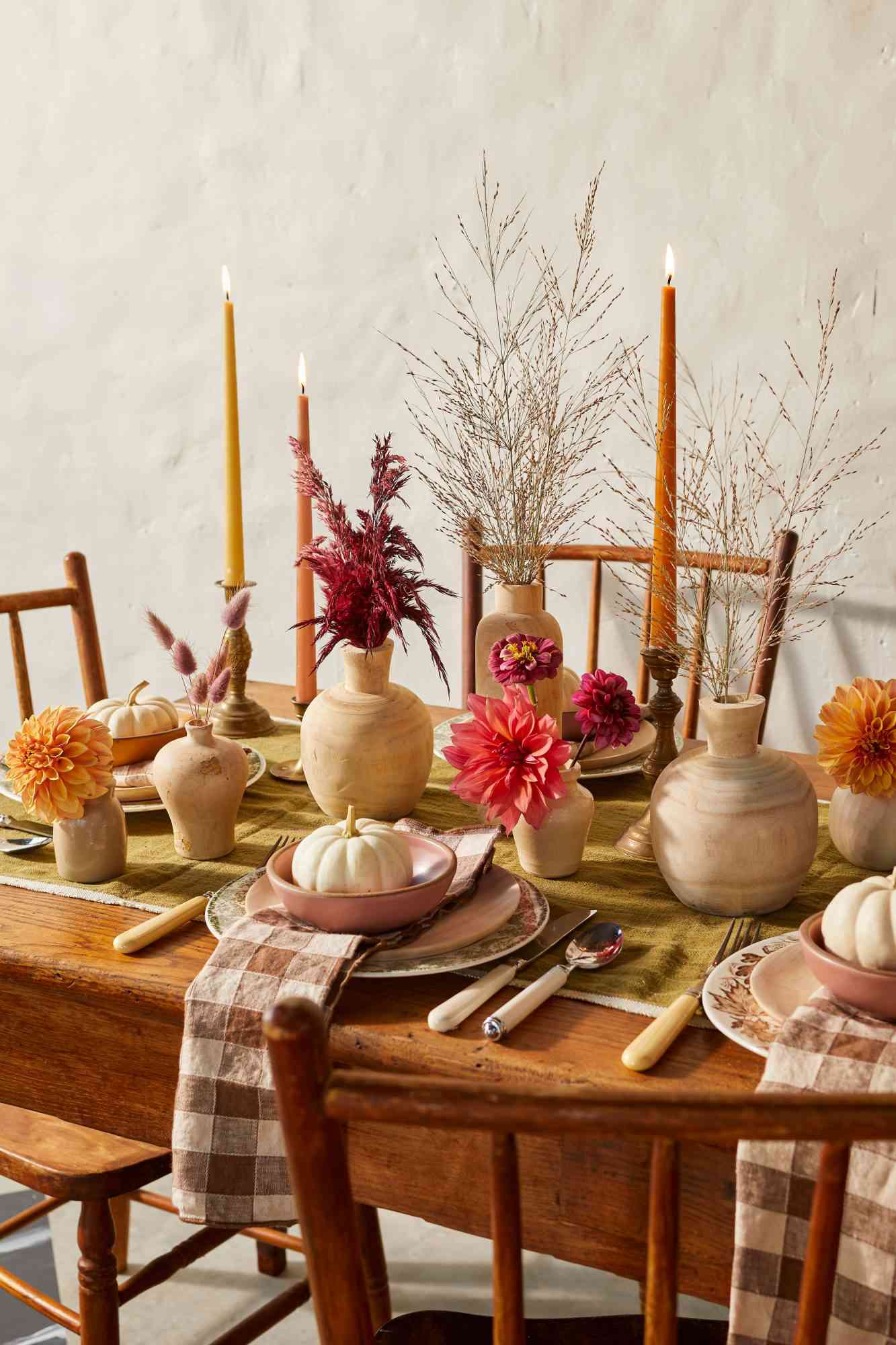
Flowers for an autumn table should feel wild and slightly untamed, reflecting the fading garden rather than a sterile spring greenhouse. Look for café au lait dahlias, chocolate cosmos, scabiosa pods, and dried artisan grasses like pampas or miscanthus. Arrange these in heavy ceramic vessels, aged terracotta pots, or vintage brass urns with patinas earned over decades. Avoid floral foam whenever possible; instead, use lead-free floral frogs or chicken wire to anchor stems naturally, allowing the arrangement to lean and sprawl organically.
Lighting is the final, non-negotiable component of a great autumn centerpiece. Overhead dining room lights are the enemy of intimacy; they flatten dimension and kill the mood. Replace them entirely with an army of candlesticks staggered among your pumpkins and foliage. Use varying heights of brass, wood, and glass holders. Taper candles made from pure beeswax are an investment, but they burn longer, smell faintly of honey rather than artificial autumn spices, and do not drip aggressively onto your linens.
The Step-by-Step Methodology for Layering a Harvest Dinner Table
Executing a professional-grade tablescape requires a systematic approach. If you try to place tableware, linens, and decor all at once, you will inevitably end up with a cluttered mess where wine glasses have nowhere to land. Follow this field-tested, five-step methodology to build a balanced, functional, and stunning fall table every single time.
Navigating Common Fall Table Styling Pitfalls and Field Workarounds
Even experienced hosts fall into common traps when styling seasonal tables. The enthusiasm for autumn decor often leads to sensory overload, spatial cramping, and practical failures that make the actual dining experience uncomfortable for guests. Recognizing these pitfalls before you begin styling saves you from scrambling to fix a chaotic table five minutes before dinner is served.
The Sustainable Evolution of Autumn Entertaining and Timeless Design
In 2026, the conversation around interior design and home entertaining has shifted decisively toward sustainability and circularity. Consumers are increasingly rejecting the disposable culture of seasonal holiday decor—items bought cheaply in October and thrown away in January. The modern approach to fall table setting emphasizes durability, multi-season versatility, and the repurposing of natural materials. Investing in high-quality linen runners, solid brass candleholders, and heirloom-quality ceramic dinnerware means building a collection that serves you not just for six weeks in autumn, but across multiple seasons and decades of hosting.
This mindset also extends to the organic components of your table. When you use real pumpkins, gourds, and squash for your centerpieces, they do not belong in a landfill at the end of the season. Once the autumn hosting calendar winds down, heirloom pumpkins can be roasted and turned into soups, pies, or purees, while unblemished gourds can be composted to enrich the soil for next year's garden. Fresh foliage can be dried and used in winter arrangements or added to garden compost heaps. This closed-loop approach to table styling connects the act of dining directly back to the rhythms of the earth.
Furthermore, sourcing your table elements locally supports regional growers and artisans. Instead of buying mass-produced plastic decor shipped across oceans, visiting a local farm stand for your pumpkins and a nearby flower farmer for your dahlias anchors your table in the specific geography of your home. It creates a narrative for the evening—a story you can share with your guests when they ask where you found those extraordinary blue-gray squash or the bittersweet vine winding its way down the center of the table.
Ultimately, the most sustainable table is the one you already own, reimagined through a fresh lens. Before purchasing a single new item for your autumn dinner party, audit your cupboards and linen closets. You may discover vintage brass candlesticks inherited from a grandparent, heavy stoneware bowls tucked in the back of a shelf, or linen napkins that simply need a good press. By combining these heirloom pieces with fresh, organic elements from the natural world, you create a tablescape that is both deeply personal and environmentally conscious.
Strategic Frameworks for Effortless Hosting and Atmospheric Impact
Mastering the mechanics of fall table setting is only half the battle; the other half is understanding how the physical environment dictates the psychological comfort of your guests. Hospitality is an invisible art. When done well, guests do not notice the hours of planning, ironing, and styling that went into the room; they simply feel an immediate sense of relaxation the moment they cross the threshold. Achieving this requires intentional structuring of your hosting workflow.
By treating the dining table not merely as a surface for eating, but as a stage for human connection, you elevate the everyday act of sharing a meal into a memorable ritual. The changing of the seasons gives us a built-in rhythm to pause, gather our people close, and light a candle against the encroaching dark.
The tables we set are silent testaments to how we care for the people we invite into our homes. In a world that constantly pressures us toward speed, convenience, and digital detachment, the act of gathering around a carefully considered autumn table is a quiet act of rebellion. It demands time, physical labor, tactile presence, and an investment in real-world beauty. When you take the extra ten minutes to polish the brass, arrange the trailing bittersweet, and write out name cards by hand, you are sending an unmistakable message to your guests: You matter, and this time together is precious.
As we move deeper into the cooler months of 2026, let your approach to seasonal entertaining be guided by authenticity rather than perfection. Embrace the slightly gnarled pumpkin, the linen that refuses to lie completely flat, and the flickering irregularity of a real beeswax candle. These small imperfections are what separate a sterile design catalog from a living, breathing home.
Next time you host an autumn supper, lean into the slower pace. Let the meal stretch long past the final course, let the candles burn down to their bases, and let the conversation wander into the night. That is the true magic of the harvest table—not the decor itself, but the memories built around it while the world turns quietly outside.