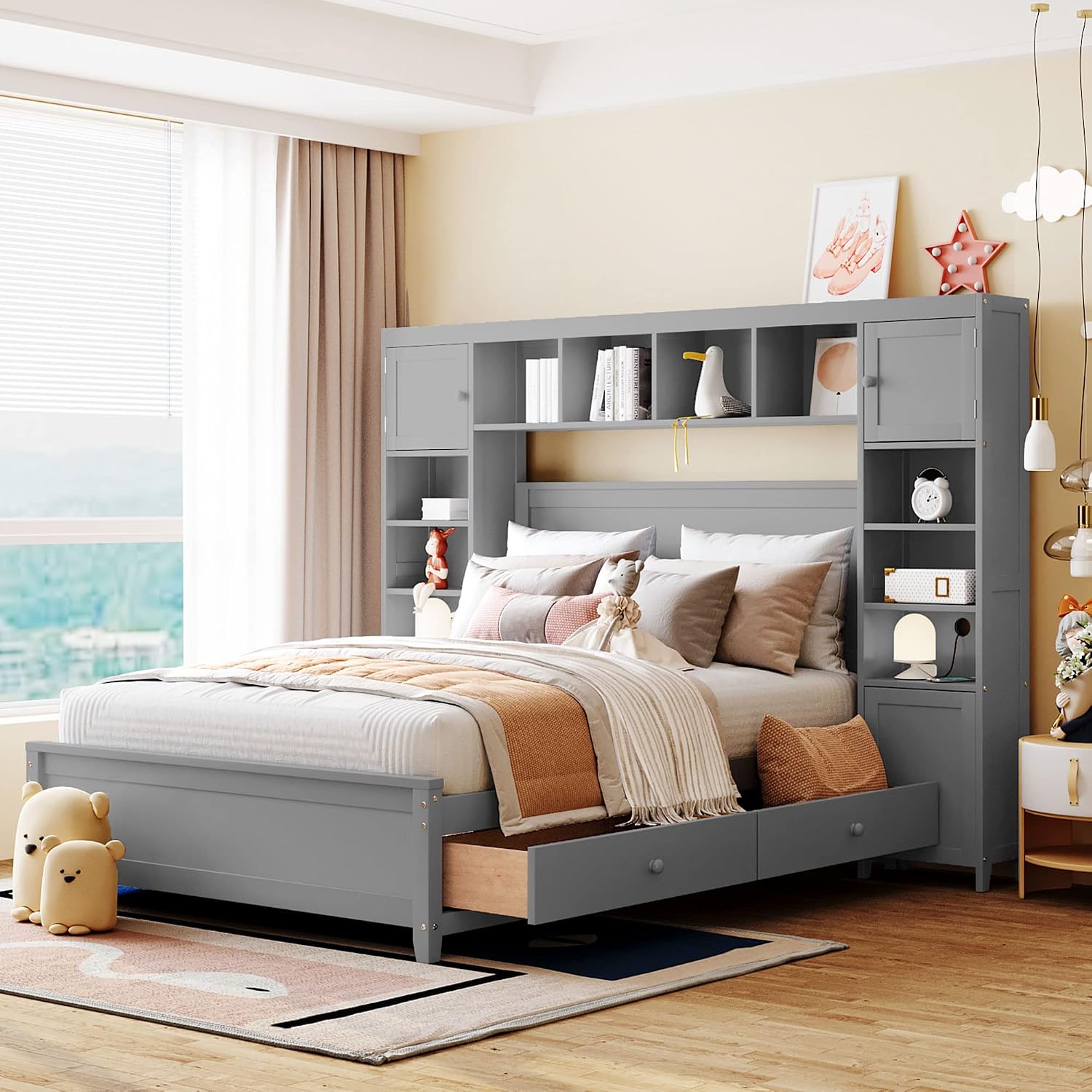
The dead of night arrives with a familiar, unwelcome sound. You shift your weight to turn over, and the bedroom erupts in a sharp, metallic groan or a dull, echoing squeak. Within seconds, your partner stirs, the heavy footprint of the disturbance radiating across the massive expanse of your mattress. For millions of sleepers, this nightly irritation has nothing to do with cheap bedding or restless habits. It stems from an invisible, neglected culprit: an inadequate or improperly assembled bed frame holding up that seven-foot-wide sleep surface.
Purchasing a standard king mattress (measuring a sprawling 76 by 80 inches) marks a major investment in physical comfort, yet the platform carrying that weight is frequently treated as an afterthought. A king mattress weighs anywhere from 80 pounds for basic foam models to over 160 pounds for high-end, multi-layered hybrid configurations. Add the collective weight of two adults and potential nighttime companions, and your support structure bears a dynamic load often exceeding 500 to 600 pounds. When a frame fails to manage this weight distribution properly, the mattress sags, premature body impressions form, and warranties are instantly voided by manufacturers who demand strict adherence to center-support requirements.
Navigating the crowded market for king-size frames requires looking past superficial aesthetics like decorative upholstery or trendy headboard designs. The true engineering of a sleep sanctuary lies in what happens beneath the surface. From precision slat spacing to robust center rail integration, understanding the structural physics of your bed frame transforms your bedroom from a creaky hazard into a silent, supportive oasis. This guide cuts through the marketing noise to deliver field-tested engineering advice, assembly secrets, and material breakdowns designed to protect your investment and secure uninterrupted rest.
Anatomy of Structural Load: Why King Mattresses Demand Engineering Precision
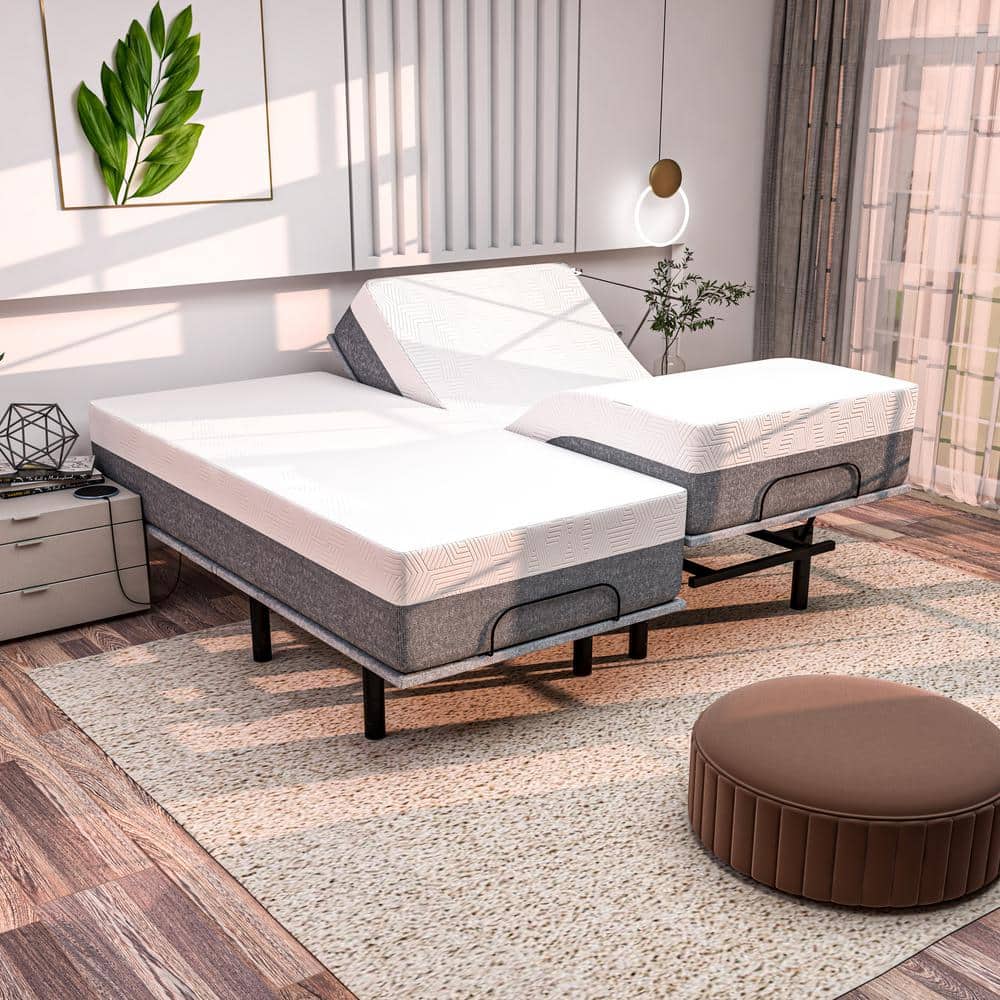
A standard queen frame is a forgiving beast. Its narrower 60-inch width means that wooden slats or center beams carry a relatively short span, naturally resisting deflection under weight. Expand that footprint to a standard king size, and physics changes entirely. Spanning 76 inches wide creates a massive leverage point in the middle of the bed. Without a heavy-duty center support beam running head-to-toe—anchored by at least two, preferably three, independent floor-touching legs—the side rails will inevitably bow outward, causing the center of the mattress to dip like a hammock.
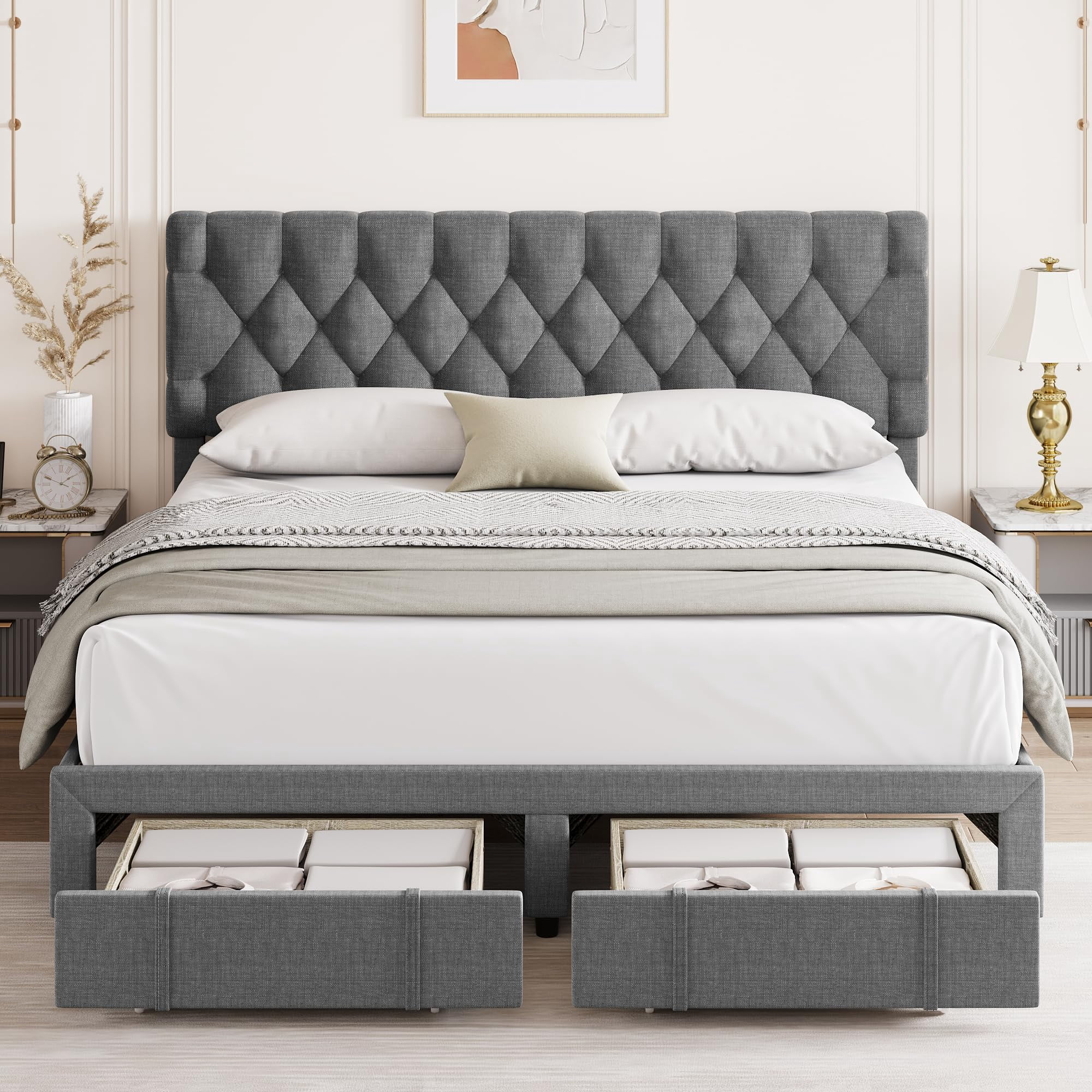
This central sagging triggers a cascade of physical discomfort. When your spine loses proper horizontal alignment because the middle of the mattress lacks underlying lift, lower back muscles remain engaged all night instead of relaxing into deep tissue recovery. Furthermore, modern memory foam and latex layers rely heavily on rigid, unyielding foundational support to compress uniformly under pressure. If the frame sags, the foam takes the brunt of that structural failure, breaking down its cellular structure years before its expected lifespan. Industry testing confirms that a king mattress paired with a poorly supported frame loses up to forty percent of its elasticity within the first twenty-four months of ownership.
Understanding this load dynamic means evaluating the entire frame as an architectural bridge. Every joint, bolt, and piece of hardware acts as a load-bearing stress point. Metal frames rely on stamped steel angles and heavy-gauge interlocking joints, while solid wood frames depend on mortise-and-tenon joinery or industrial-grade steel corner brackets. If any single component lacks structural integrity, the surrounding joints absorb extra torque, resulting in the dreaded frame wobble. Recognizing these physical realities changes how you shop, pushing your focus away from superficial finishes and toward gauge thickness, lumber density, and weight capacity ratings.
Material Selection Decoded: Hardwoods, Engineered Steel, and Upholstered Platforms
Choosing the right material for your king bed frame dictates not only the visual tone of your bedroom but also its acoustic performance and long-term durability. Solid hardwoods—such as kiln-dried oak, maple, walnut, and cherry—represent the gold standard of organic furniture construction. Hardwood possesses a dense cellular structure that absorbs vibrations rather than amplifying them. When properly joined with high-end mechanical fasteners, a solid wood king frame remains completely silent, resisting the thermal expansion and contraction that causes cheaper pine or softwoods to loosen their joints over time.
Engineered steel frames, conversely, offer unmatched strength-to-weight ratios and exceptional thin-profile aesthetics. Modern low-profile metal platforms utilize heavy-gauge tubular steel welded at critical stress points, yielding weight capacities that easily clear 1,000 to 1,500 pounds. However, metal-on-metal friction is the primary cause of bed squeaks. Selecting a metal frame requires verifying that the manufacturer incorporates nylon washers, rubber gaskets, or sound-dampening adhesive strips where crossbars meet side rails. Without these dampening elements, even a micro-gap in a steel bolt connection will turn every movement into a metallic chirp.
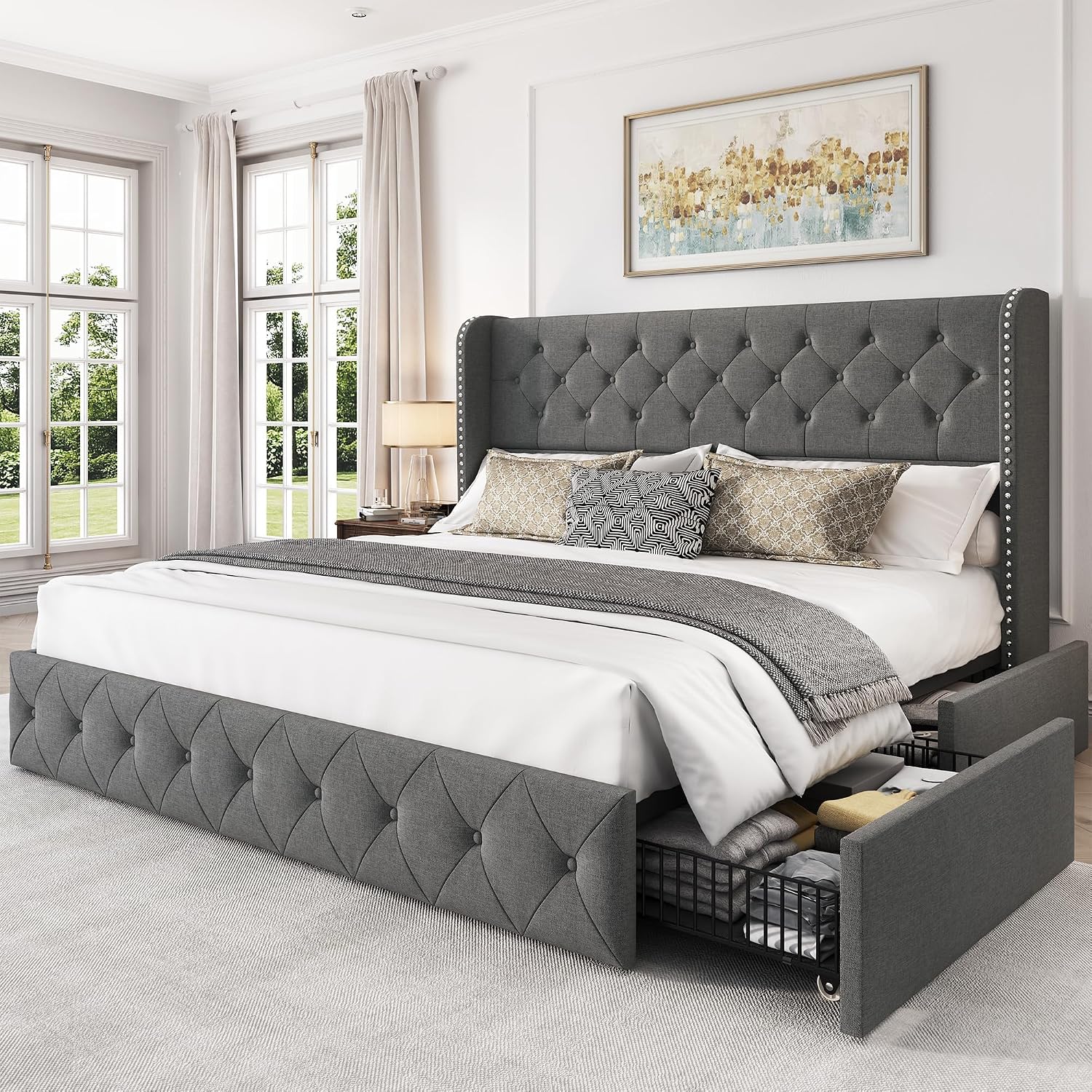
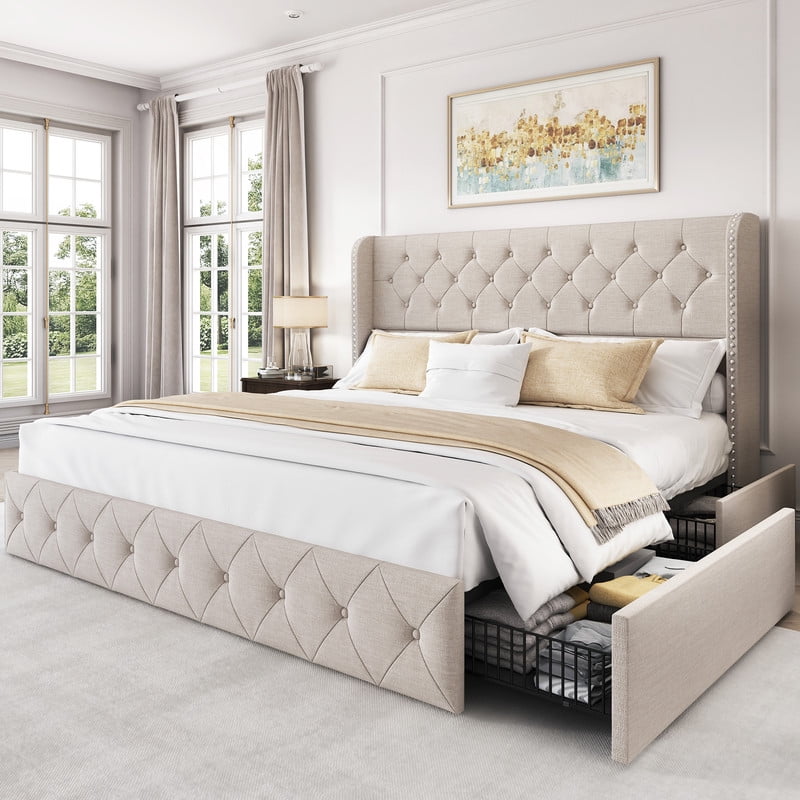
Upholstered platform beds sit at a unique intersection of design and engineering. While the outer frame presents a soft, luxurious profile wrapped in linen, velvet, or performance fabrics, the internal skeleton is typically constructed from a combination of engineered plywood and pine framing. The critical evaluation point for upholstered king frames is the hidden internal infrastructure. Low-cost manufacturers often skimp on the internal center support system, substituting flimsy particleboard ribs for solid steel rails. When shopping for upholstered styles, always request specifications on the hidden sub-frame. If the center beam is made of unreinforced composite wood, walk away.
The Slat Conundrum: Spacing, Thickness, and Material Specifications
The single most common point of failure in modern king bed frames is inadequate slat construction. Many consumers assume that as long as a frame has wooden planks across the top, the mattress is secure. In reality, mattress manufacturers enforce strict warranty guidelines regarding slat width, thickness, and spacing. A king mattress—particularly dense pocketed-coil hybrids or latex blocks—requires a minimum of 12 to 14 solid wood slats, though 16 to 20 slats spaced no more than two to three inches apart is the gold standard.
Wide gaps between slats spell disaster for modern foam mattresses. When slats are spaced four or five inches apart, the uncompressed foam of the mattress dips into the void between the boards. Over time, this creates permanent waves in the mattress surface, destroying its comfort layers. Furthermore, the slats themselves must possess adequate structural rigidity. Flimsy pine slats under half an inch thick will flex and snap under the concentrated pressure of two sleeping adults. Look for slats made from southern yellow pine, birch, or multi-ply beechwood measuring at least 0.75 inches thick and three inches wide.
Securing the slats to the side rails is another critical engineering detail that separates professional builds from budget shortcuts. Unsecured slats that merely rest in open channels will shift, slide, and eventually crash against the side rails, producing loud banging noises with every toss. The best king bed frames utilize either screw-fixed slats, Velcro-backed slat rolls, or heavy-duty plastic pocket inserts that lock each board firmly into place. This eliminates lateral movement, muffles sound, and ensures that the structural load remains evenly distributed across the entire surface of the frame.
Step-by-Step Methodology for Assembly and Structural Tuning
Assembling a king-size bed frame incorrectly is a recipe for premature squeaking, wobbly headboards, and structural failure. Because of its massive dimensions, a king frame cannot be slapped together haphazardly. Precision during the assembly process guarantees years of silent, reliable service. Follow this structured methodology to build your frame right the first time:
Advanced Troubleshooting: Diagnosing and Curing Squeaks, Wobbles, and Sags
Even carefully assembled bed frames can develop mysterious noises or structural quirks after months of dynamic loading. Diagnosing a bed frame problem requires a systematic elimination process rather than guesswork. If your king bed is making noise, the first step is isolating whether the sound originates from the mattress, the bed frame, or the interaction between the two. Strip the mattress and box spring (if applicable) completely bare, climb onto the frame, and apply targeted body weight to various sections of the perimeter and slats.
When a metal frame begins squeaking, the culprit is almost always friction between interlocking steel joints or loose bolt threads. The immediate practitioner workaround is disassembling the squeaking joint, wiping it clean of manufacturing dust, and applying a dry lubricant like PTFE spray or rubbing beeswax onto the mating surfaces. Avoid liquid oils or heavy greases, as these attract dust and hair, eventually turning into an abrasive paste that worsens the noise. For stubborn wooden frames where joints rub together, applying paraffin wax or candle wax directly to the tenons before reassembly creates a frictionless barrier that silences movement permanently.
Center leg sag is another insidious issue that manifests as a feeling of rolling toward the middle of the bed. If your center support legs are resting on thick carpeting, the legs will sink into the dense pile and padding underneath, effectively shortening the leg and leaving the center beam suspended in mid-air. The field-tested workaround for carpeted bedrooms is placing small, hard-surface caster cups or engineered wood shims underneath each center leg. This spreads the downward load across a wider surface area, keeping the center rail completely level and maintaining proper mattress elevation.
Future-Proofing Your Sleep Sanctuary: Maintenance Schedules and Upgrades
A truly exceptional king bed frame is a multi-decade furniture investment that should easily outlive the mattress resting upon it. Protecting this investment requires adopting a proactive maintenance schedule rather than waiting for structural components to fail. Every six months, strip the bed down completely and perform a thorough structural audit. Check all corner bolts, leg fasteners, and center beam brackets. Temperature fluctuations and seasonal humidity changes cause wood to expand and contract, which naturally backs out threaded fasteners over time.
Upgrading legacy frames with modern aftermarket components is another smart strategy for extending operational lifespan. If your older wooden frame suffers from sagging slats, you do not need to replace the entire furniture piece. You can purchase heavy-duty steel slat kits or universal center support systems equipped with adjustable T-legs for a fraction of the cost of a new bed. These drop-in steel systems instantly upgrade an outdated wooden frame to modern engineering standards, providing the rigid foundation required by high-density foam and latex mattresses.
Consider also the long-term impact of room layout and relocation. King-size frames are notoriously difficult to maneuver through tight hallways, sharp stairwells, and bedroom entryways. When purchasing a frame, examine how the side rails and headboard connect. Knock-down hardware utilizing heavy steel bed hooks or bolt-through corner plates allows for complete disassembly during a move, preventing the stripped screw holes and sheared joints that plague permanent glued-and-dowed furniture constructions. Selecting a design optimized for modular disassembly ensures your investment travels with you through multiple homes without losing its structural integrity.
Strategic Decision Framework for Finding Your Ideal King Frame
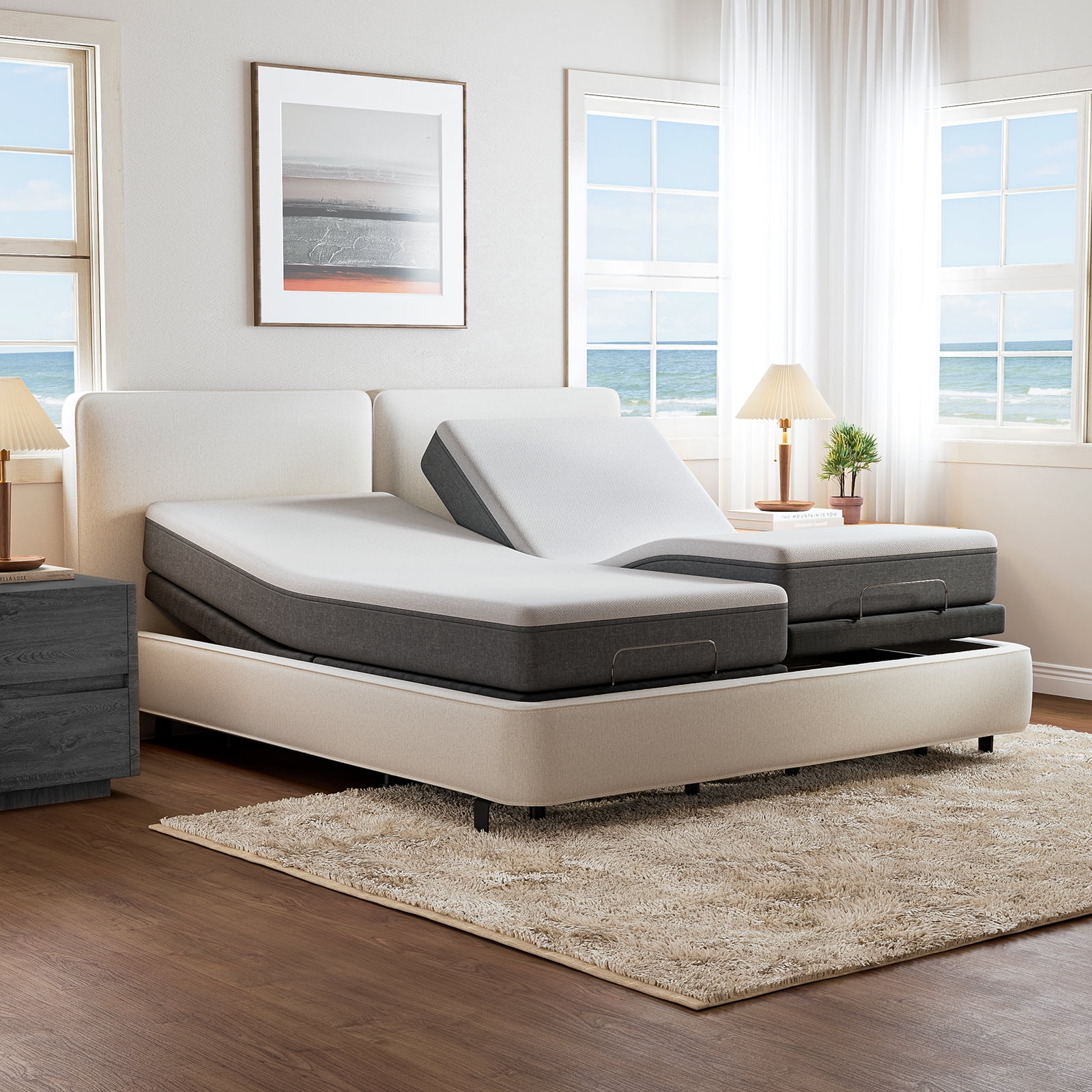
Selecting the ultimate king bed frame requires synthesizing your specific sleeping habits, room architecture, and mattress construction into a coherent purchasing matrix. If you sleep on a heavy, premium latex mattress that weighs upwards of 150 pounds, bypass upholstered platform beds with weak internal ribs and invest directly in a solid hardwood or heavy-gauge steel platform with a minimum weight rating of 1,000 pounds. If you utilize under-bed space for seasonal storage, prioritize metal platform frames with at least 12 to 14 inches of clear vertical clearance and reinforced side-entry framing that won't buckle when bumped by storage bins.
For noise-sensitive sleepers or light sleepers disturbed by partner movements, prioritize solid wood construction over hollow steel tubing. Hardwood absorbs acoustic reverberations naturally, whereas hollow metal frames can act as sounding boards unless heavily insulated with rubber gaskets and nylon washers. Always verify the slat count and spacing before finalizing any purchase. If a manufacturer's product specifications do not explicitly state the number and thickness of the support slats, treat it as a red flag and request the data directly from customer support.
The journey toward uninterrupted, restorative rest is built from a foundation of overlooked details. When you trade a squeaky, sagging, poorly engineered bed frame for a rock-solid, precisely installed support system, the transformation in your sleep quality is immediate and profound. Your mattress performs as its designers intended, your spine maintains correct neutral alignment through every sleep cycle, and the quiet sanctity of your bedroom remains undisturbed by midnight groans and structural wobbles.
As bedroom design and sleep technology continue to evolve, the distinction between decorative furniture and structural engineering becomes ever more critical. Treating your king bed frame as a vital piece of biomechanical infrastructure rather than a mere aesthetic accessory guarantees long-term durability and peace of mind. Take the time to audit your current setup, tighten those neglected bolts, upgrade inadequate slats, and build a sleep sanctuary designed to withstand the test of time. Your nights—and your back—will thank you.