Midnight arrives, and you find yourself sliding inexorably into the Grand Canyon of mattresses—that cold, unforgiving abyss right down the middle of two twin beds pushed together. Anyone who has ever tried to salvage a makeshift king bed out of guest room spares knows the physical toll: pillows sinking into the void, bodies rolling away from one another, and sheets pulling loose with an aggressive snap before dawn.
Yet, the economics and spatial realities of modern housing make the two-twin-to-one-king conversion an enduringly brilliant hack. Whether you are outfitting a historic guest suite with narrow stairwells that refuse to swallow a standard one-piece Eastern King box spring, or you simply want the modular flexibility of separate twin mattresses without sacrificing nightly spooning, merging two beds is a masterclass in domestic engineering.
The modern mattress market offers an array of specialized hardware, from heavy-duty nylon mattress connectors to high-density foam bed bridges. But achieving that elusive, hotel-quality seamless feel requires more than just shoving two box springs side by side. It demands an understanding of frame geometry, friction physics, and textile dynamics.
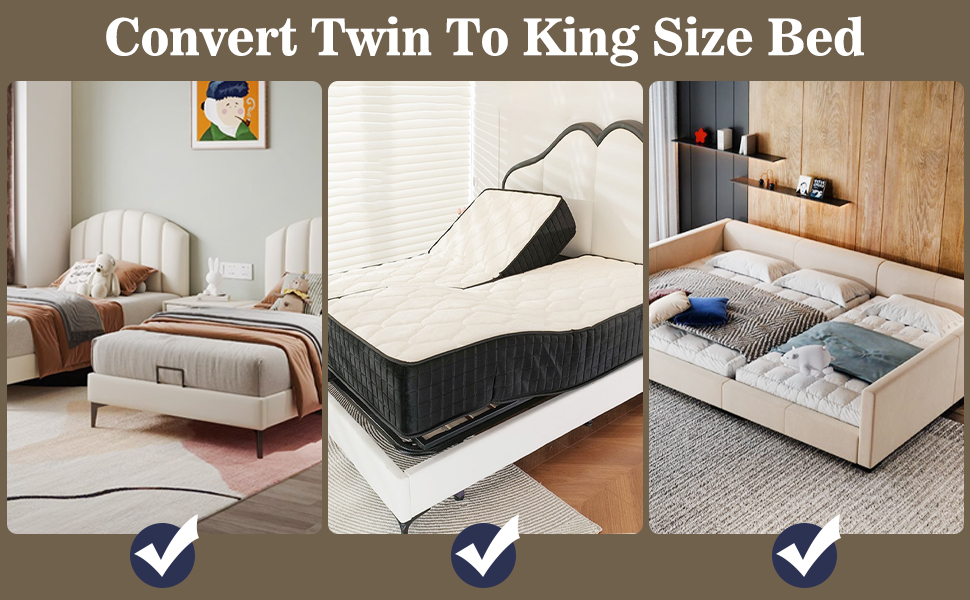
The Anatomy of Mattress Combinations: Understanding Dimensions and Frame Physics
Before you lay hands on a single tool or unpack a single box, you must confront the mathematical reality of mattress sizing. A standard twin mattress measures 38 inches wide by 75 inches long. Push two of them together, and you get a total width of 76 inches by 75 inches long. This matches the exact width of a standard Eastern King (often simply called a king), though it falls short of the 80-inch length by a full five inches. If your sleepers are taller than average, standard twin mattresses will leave feet dangling, which makes a Twin XL conversion—measuring 38 inches by 80 inches—the holy grail of DIY king setups, yielding a true 76x80 Eastern King footprint.
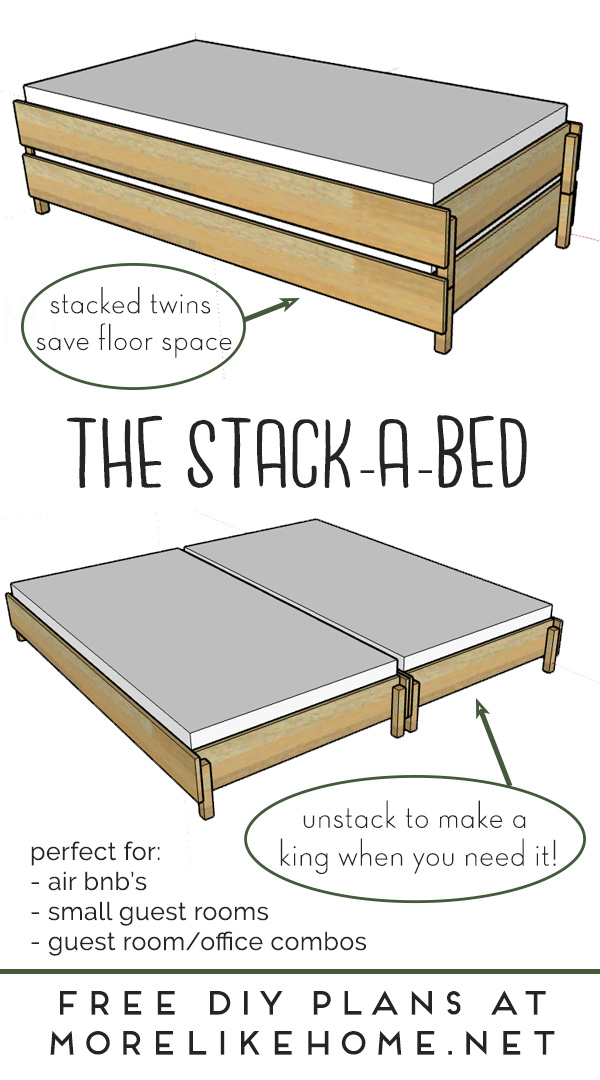
The geometry of the supporting frame is where most DIY attempts quietly fail. Two separate metal bed frames placed side by side possess independent legs that love to drift apart under the dynamic weight of human movement. If your bed frames lack perimeter lips or interlocking brackets, the mattresses will slowly migrate outward during the night, widening the center crevice until someone drops through. Professional-grade setups require either a unified custom platform, heavy-duty frame connectors that clamp the steel rails together, or a robust wooden outer frame built to house both box springs securely within a single perimeter.
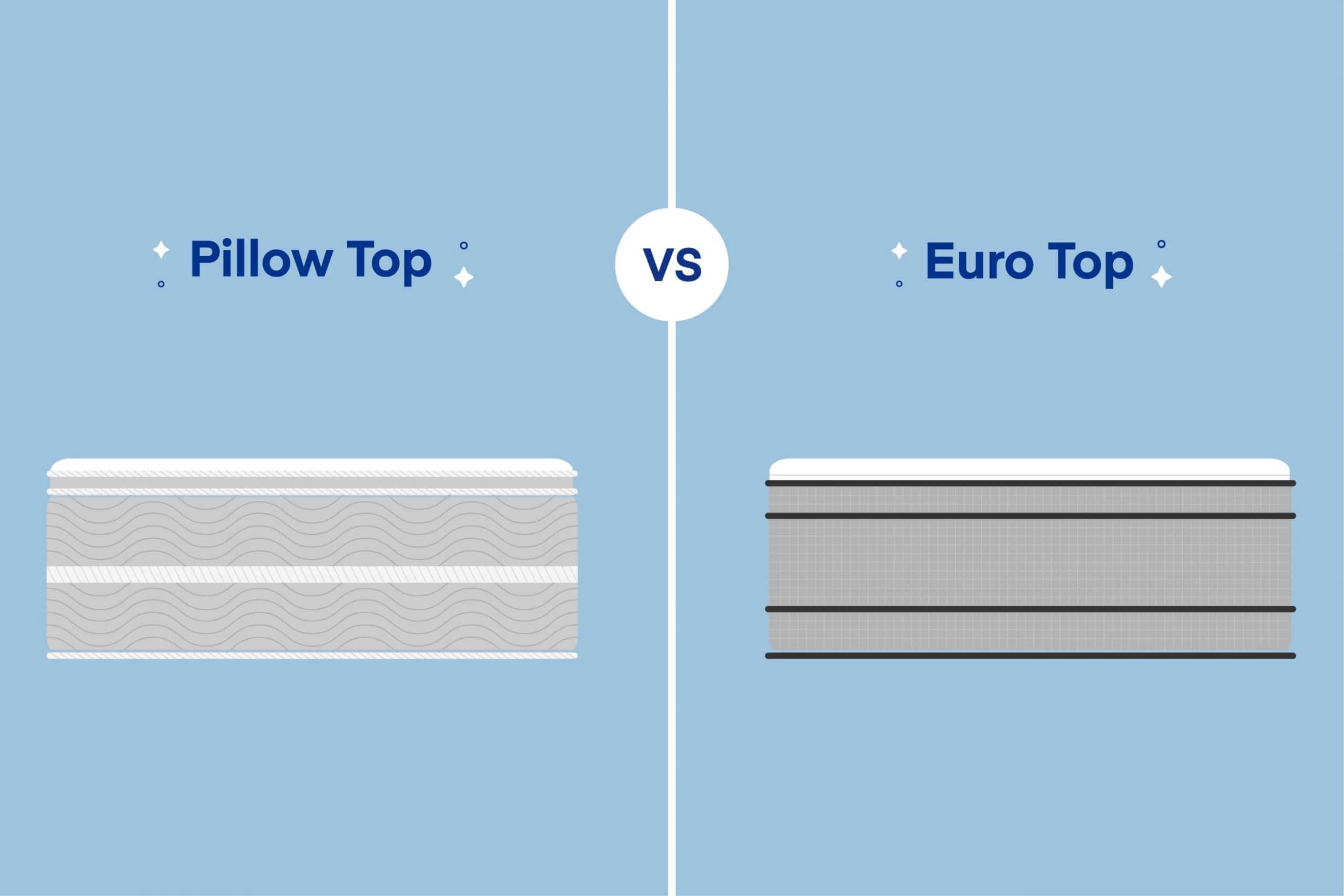
Beyond the frame, the core composition of the two mattresses matters immensely. Trying to merge an ultra-plush pillow-top twin with a firm innerspring twin is an ergonomic disaster; one sleeper will inhabit a valley while the other perches on a plateau. For an authentic king-like experience, both mattresses must feature matching heights, edge-support construction, and firmness ratings. If you are pairing old mattresses, inspect the perimeter edge coils. Sagging borders will create a soft, collapsing trench down the centerline even if you manage to bridge the top gap successfully.
Engineering the Seamless Surface: Bed Bridges, Straps, and High-Density Foam
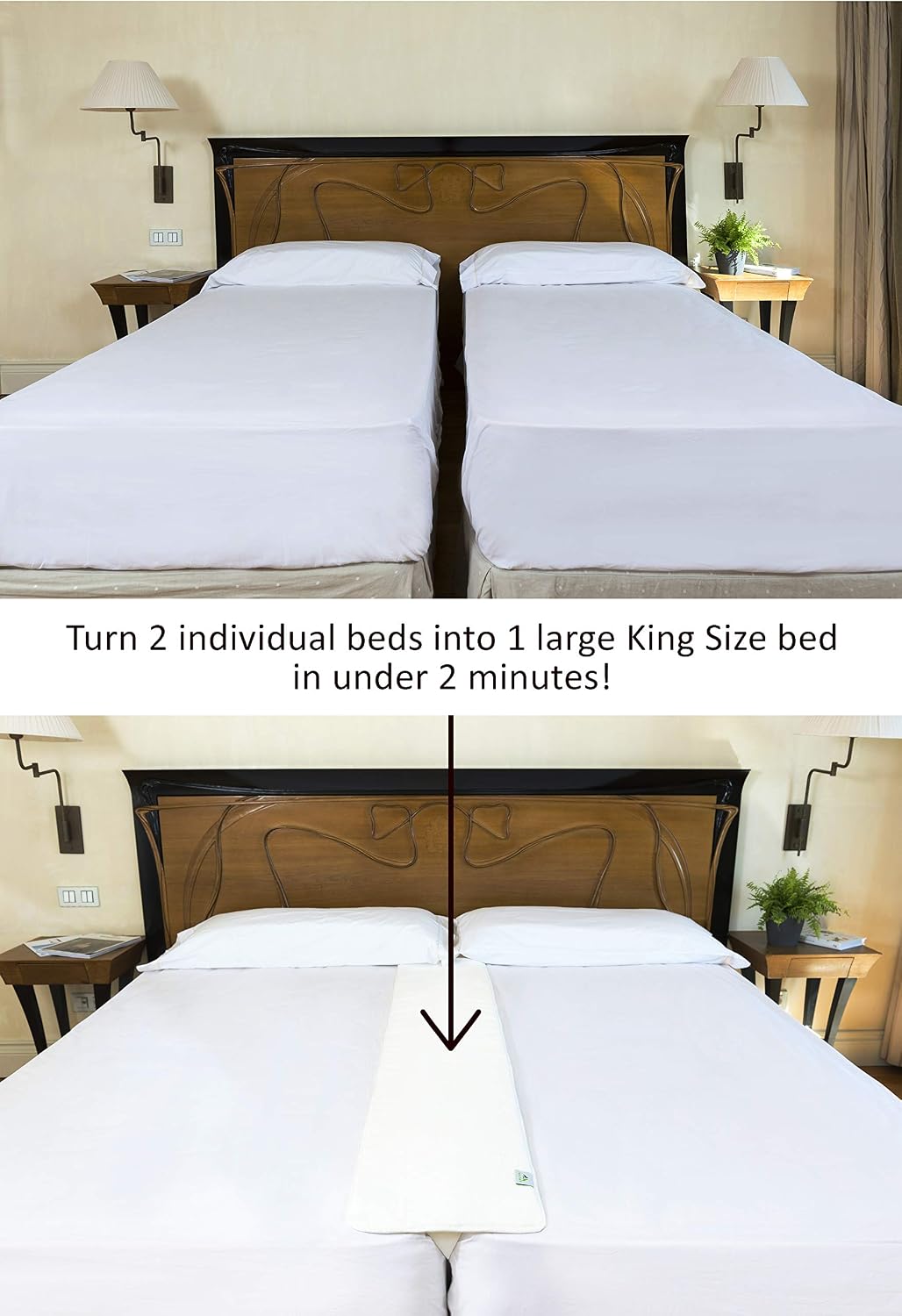
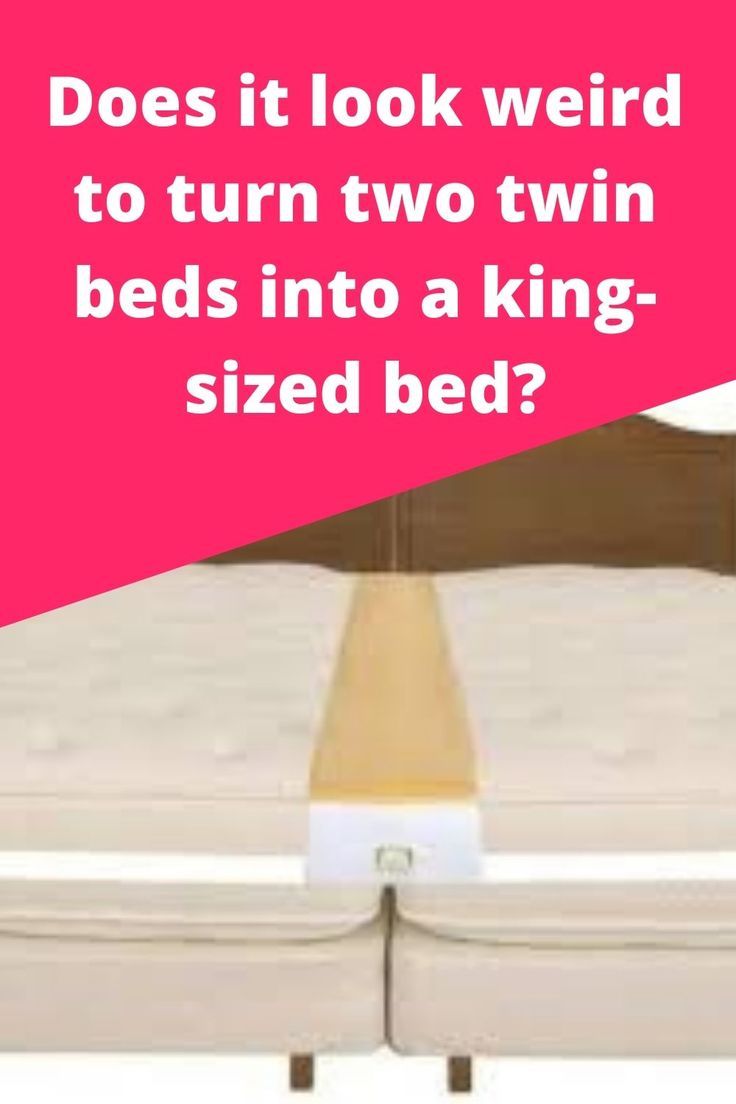
Eliminating the center crack requires mechanical intervention, and the market standard for this task is the bed bridge—sometimes called a mattress connector or gap filler. A bed bridge consists of a T-shaped or V-shaped wedge made of polyurethane or memory foam, attached to a wide strip of fabric or canvas that lays flat across the top of both mattresses. The wedge sinks neatly into the 3-inch gap between the beds, while the flat fabric wings distribute pressure evenly so you cannot feel the hard edge of the foam underneath.
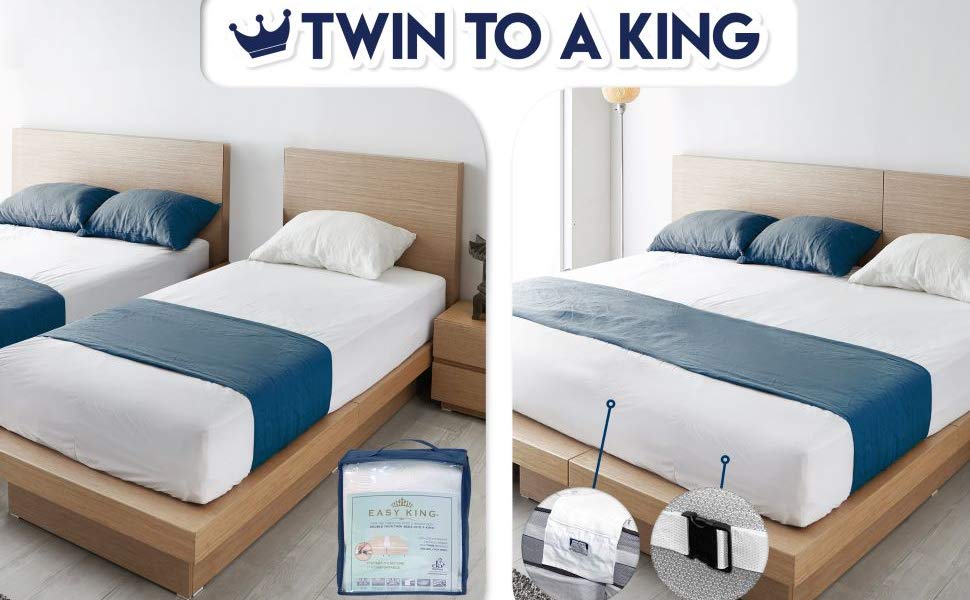
However, a foam wedge alone is useless if the mattresses are allowed to slide apart. This is why every serious conversion kit pairs the bed bridge with a heavy-duty mattress strap. These straps are typically constructed from industrial-grade woven nylon or polypropylene webbing, equipped with metal or high-impact plastic quick-release buckles. The strap wraps completely around the perimeter of both mattresses, hugging the lower third or middle section of the bed. When cranked down tightly, the strap exerts inward lateral pressure, locking the two mattress sidewalls together so firmly that the gap disappears under body weight.
Choosing the right materials dictates your long-term success. Cheap, low-density foam bed bridges will compress permanently within six months, leaving you back where you started. Look for high-resiliency (HR) foam with a density of at least 1.8 pounds per cubic foot, preferably encased in a breathable, hypoallergenic cotton or bamboo cover. For the strap, ensure the buckle mechanism features a locking tensioner—similar to cargo tie-downs—so the nylon webbing doesn't slowly slip and loosen while you sleep.
Step-by-Step Practical Implementation Guide for Your DIY King Bed
Converting your twin beds into a cohesive king requires a methodical approach. Skipping a step, such as failing to secure the frame before strapping the mattresses, will result in nightly shifting and frustration. Follow this field-tested methodology to ensure a rock-solid transformation.
Common Pitfalls and Field-Tested Workarounds for Twin-to-King Conversions
Even with the best hardware, DIY mattress conversions present unique challenges that can disrupt your sleep if left unaddressed. Anticipating these hurdles saves you from midnight readjustments and premature equipment failure.
Related Posts
Bedroom furniture ideas that make small spaces feel calmer and more useful
Understanding joinery and materials before you commit to a floating design

Navigating Regional Styles From Provence to Paris When Designing Your French Bedroom

Building a Peaceful Bedroom Environment Through Better Furniture Planning Methods
Navigating the Difference Between Flush Stitched Edges and Standard Pillow Tops
Understanding Air Valve Types to Prevent Leaks During Setup
Holistic Perspectives: Economic Value, Spatial Flexibility, and Sustainability
Beyond the immediate mechanical mechanics of straps and foam wedges, converting twin beds to a king offers profound advantages in lifecycle sustainability and household economics. Purchasing a premium, high-end Eastern King mattress often requires a steep financial investment, easily running into thousands of dollars. Furthermore, hauling a monolithic king mattress up narrow apartment stairwells, around tight hallways, or into unconventional loft spaces can be an absolute logistical nightmare.
By contrast, utilizing two existing twin or twin XL beds leverages furniture you may already own. When your living arrangements change—such as moving into a smaller apartment, setting up a guest room for visiting relatives, or separating kids' rooms down the line—you simply unbuckle the strap, remove the bed bridge, and slide the twin beds back to their independent stations. This modular versatility makes the conversion a zero-waste, highly adaptable home management strategy.
From an ergonomic and relationship perspective, independent twin mattresses configured as a king solve the universal nighttime battle over motion transfer. In a traditional king mattress, tossing and turning on one side sends ripples across the entire bed, waking your partner. When two independent mattresses are strapped together, their core structures remain mechanically separate underneath the surface topper. This dampens motion transfer significantly, allowing one sleeper to thrash, get up, or shift positions without disturbing the person snoring peacefully on the other side.
Strategic Recommendations and Best Practices for Long-Term Comfort
Achieving a permanent, hotel-grade sleep experience from two separate beds requires treating the conversion as a permanent architectural fixture rather than a temporary fix.
The transition from a fractured pair of twin beds into a unified, expansive king-size sleeping surface proves that domestic comfort does not always require opening your wallet for brand-new luxury retail items. With a modest investment in specialized hardware, a bit of patience during setup, and an appreciation for the mechanics of friction and support, you can completely redefine your bedroom's landscape.
As home design trends lean increasingly toward modular, adaptable living spaces, clever hacks like the twin-to-king conversion stand out as triumphs of practical ingenuity. You no longer have to choose between the spatial convenience of twin beds and the cozy intimacy of a king. By bridging the gap—literally and figuratively—you open the door to uninterrupted rest, restored intimacy, and a master bedroom that works exactly the way you need it to.
