Sunlight filters through tall haussmannien windows, catching the faint imperfections on the face of a cherrywood armoire that has stood quietly in a provincial farmhouse for over a century. Walking through French flea markets like the Puces de Saint-Ouen or visiting workshops in the rural Perche region reveals a distinct philosophy of domestic space. The French approach to the bedroom defies mass-produced uniformity. Instead, it balances rigorous structural craftsmanship with an effortless, lived-in ease that feels both deeply romantic and sharply functional.
To bring this aesthetic into your own home requires looking past glossy catalog reproductions and understanding the actual anatomy of French furniture design. You need to know how regional hardwoods behave, why traditional joinery matters, and how to balance ornate 18th-century silhouettes with contemporary living standards. Whether you are hunting for a mid-century walnut bed frame from designers like René Herbst or restoring a Louis Philippe-era commode, the journey demands patience, a discerning eye, and respect for material integrity.
The allure of French interior style stems from a cultural obsession with patina—the rich sheen produced by age, handling, and beeswax. Historically, French cabinetmakers (ébénistes) operated under strict guild regulations that governed everything from the drying of timber to the thickness of veneer. This historical dedication to craft means even utilitarian pieces possess an inherent structural honesty. When you place a French nightstand next to a modern mattress, you are introducing a conversation between centuries of design evolution and current comfort needs.
The Architectural Roots and Material Anatomy of French Bedroom Design
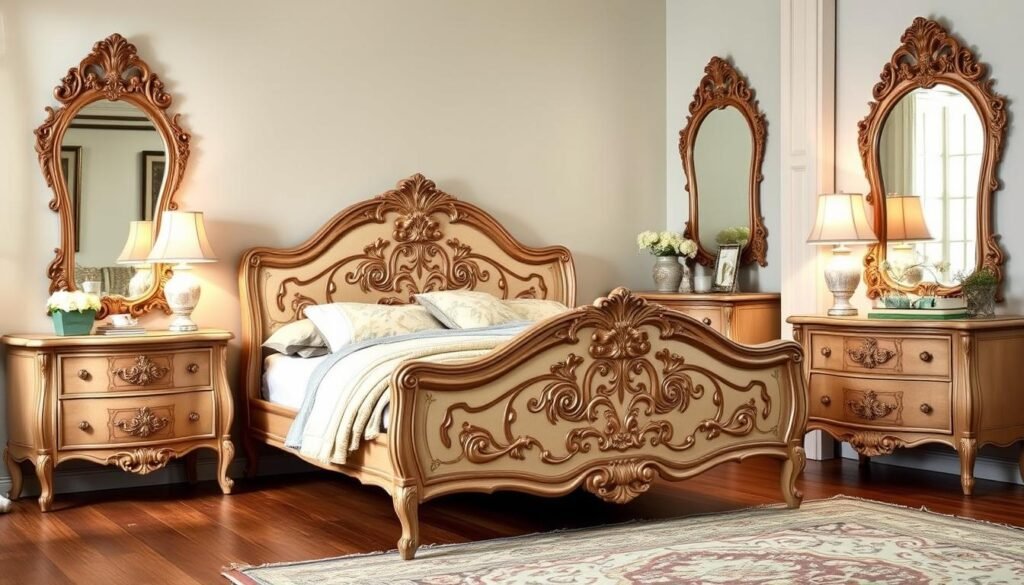
French bedroom furniture is deeply rooted in regional geography and historical periods. Unlike mass-market furniture engineered for flat-packing, authentic French pieces rely on dense domestic hardwoods like solid walnut (noyer), cherry (merisier), chestnut (châtaignier), and occasionally oak (chêne). Understanding these woods is the first step toward building an authentic collection. Walnut, prized for its deep grain and resistance to warping, dominated high-end Parisian workshops during the Empire and Art Deco eras, while cherry became the hallmark of provincial art de vivre in regions like Normandy and the Loire Valley.
Joinery practices tell the true story of a piece's origin and quality. Traditional French cabinetmakers favored mortise-and-tenon joints, dovetailing (queue d'aronde) for drawer construction, and wooden pegged joints rather than modern steel screws or industrial staples. When evaluating a vintage French commode or bed frame, inspecting the underside and drawer interiors reveals hand-cut dovetails with slight irregularities, proving human craftsmanship. The hardware is equally telling; original cast bronze or brass mounts (ormolu) carry a weight and crispness of detail that cheap reproductions fail to replicate.
The scale of French bedroom furniture also demands careful consideration. Historic French homes featured soaring ceilings and expansive floor plans, meaning furniture pieces like the traditional lit bateau (boat bed) or full-size armoires possess a commanding physical presence. Sourcing these items for modern residences requires careful room-mapping. A monumental armoire can anchor a large master suite, but in a compact urban bedroom, it risks overwhelming the spatial volume unless balanced by low-profile surrounding elements.
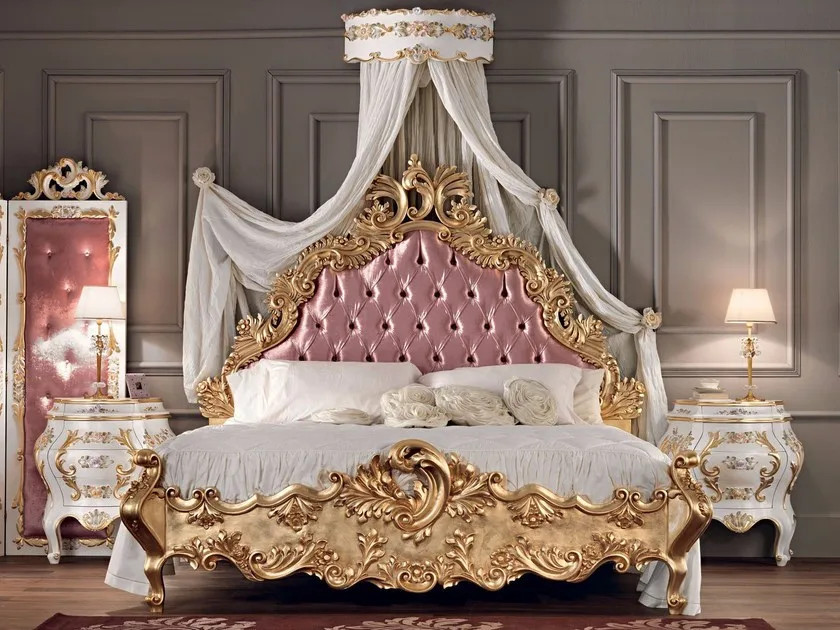
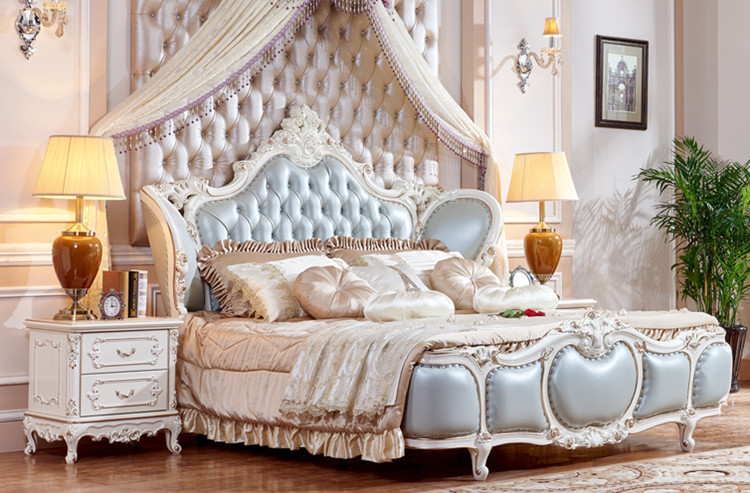
Stylistic epochs dictate the visual vocabulary of these pieces. The Louis XV style brings fluid, asymmetric curves and floral carvings (rocaille), while the subsequent Louis XVI era introduces neoclassical restraint, characterized by straight fluted legs and geometric symmetry. Moving forward in time, French provincial styles strip away courtly opulence in favor of sturdy utility, and 20th-century movements inject sleek modernist lines. Recognizing these epochs prevents stylistic clashes, ensuring that an ornate provincial headboard does not awkwardly fight with minimalist Art Deco bedside lighting.
Navigating the Marketplace: Sourcing Original vs. Contemporary French Pieces
Acquiring authentic French bedroom furniture involves navigating a vast ecosystem ranging from sprawling open-air brocantes to high-end Parisian design galleries and specialized online auction platforms. If your goal is authentic vintage or antique pieces, patience and education are your primary currencies. A common misconception is that every item found in a French country barn is a masterpiece; in reality, buyers must sift through heavily warped veneers, woodworm damage, and poor 20th-century repairs.
When buying online through platforms specializing in European antiques, demand detailed condition reports. Ask specifically about structural integrity, missing hardware, alterations to bed rail lengths, and whether the wood has been treated for xylophagous insects. European bed frames—particularly older French beds—often feature non-standard mattress dimensions that differ from standard North American or UK sizes. A classic French double bed might measure 140x190 cm (often called a lit double), which sits awkwardly between a standard full and queen size, requiring custom mattress commissioning or frame modification.
For those preferring contemporary interpretations of French style, legendary design houses and independent artisans across France continue to produce exceptional pieces. Brands rooted in traditional craftsmanship utilize sustainably harvested French oak and natural finishes like linseed oil or beeswax rather than toxic polyurethane varnishes. Investing in contemporary French craftsmanship guarantees structural warranties and modern sizing compatibility while supporting regional ateliers that keep centuries-old woodworking techniques alive.
Budgetary planning requires a realistic assessment of shipping and import logistics. Solid wood furniture from Europe is exceptionally heavy, and freight forwarding across international borders involves crating fees, customs duties, and local delivery surcharges. Savvy buyers often budget an additional thirty to forty percent of the purchase price for professional transport, restoration, and white-glove placement. Buying from domestic dealers who specialize in imported French containers can mitigate these logistical hurdles, though retail prices will reflect their curation and import efforts.
Step-by-Step Methodology for Curating and Restoring a French-Inspired Bedroom
Transforming a sleeping space with French furniture requires a deliberate sequence of decisions, starting with architectural assessment and ending with the final placement of textiles and lighting. Rushing this process leads to cluttered spaces that feel like museum sets rather than restful personal sanctuaries.
Avoiding Common Pitfalls: Sourcing and Styling Mistakes to Dodge
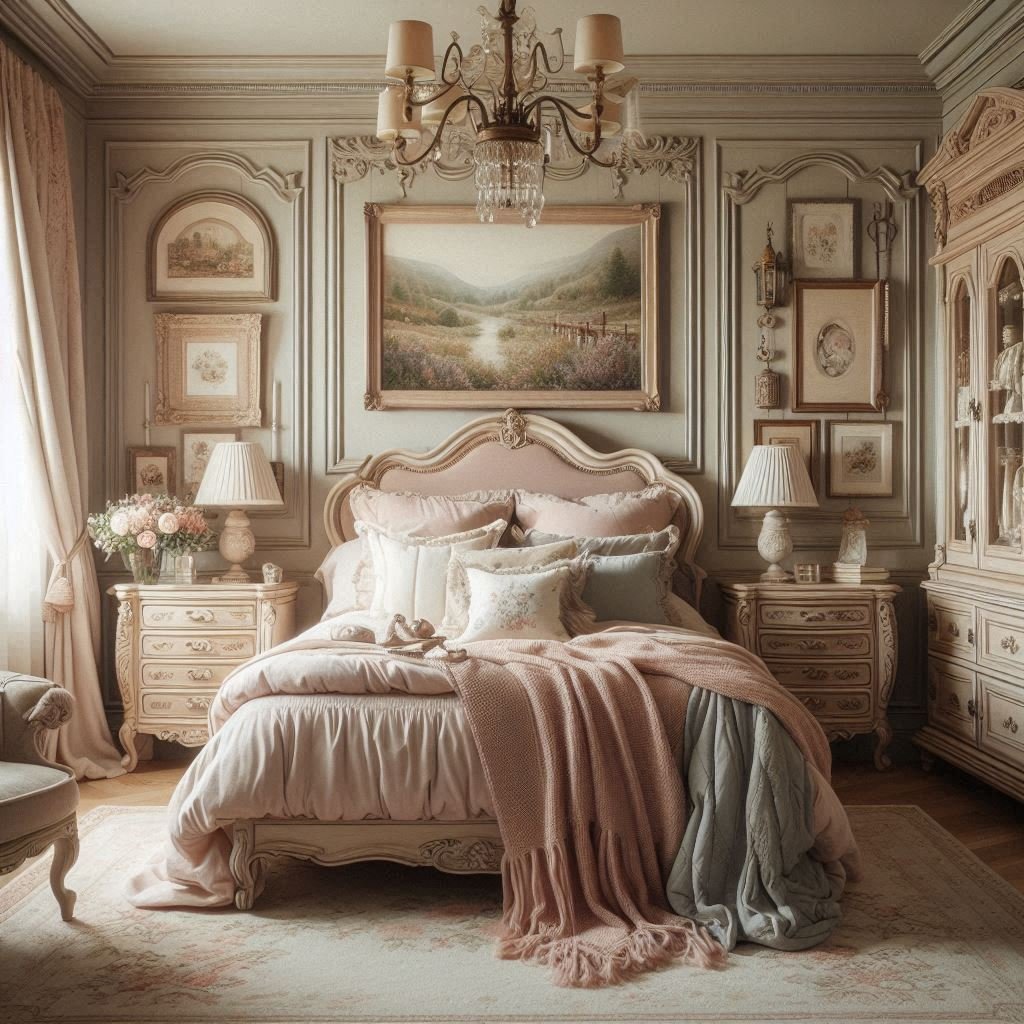
The pursuit of the effortless French aesthetic is fraught with traps that can easily turn a sophisticated room into a pastiche. Recognizing these missteps saves both financial capital and aesthetic harmony.
The Long-Term Economics, Sustainability, and Care of French Wood Furniture
Investing in authentic French furniture is an act of environmental sustainability and long-term economic prudence. In an era dominated by fast-furniture business models built on engineered particleboard and synthetic veneers, solid wood French furniture represents the opposite end of the spectrum. A well-maintained walnut bed frame or cherrywood armoire can easily endure for generations, functioning as a permanent family heirloom rather than a disposable commodity destined for a landfill within five years.
Maintaining these pieces requires understanding how solid wood responds to environmental shifts. Central heating and air conditioning create drastic relative humidity fluctuations in modern homes, causing wood to expand and contract seasonally. To prevent cracking or splitting, maintain indoor humidity levels between forty and fifty percent. Keep antique furniture away from direct heat sources such as radiators, heating vents, and direct sunlight that can bleach out natural wood dyes and dry out historical finishes.
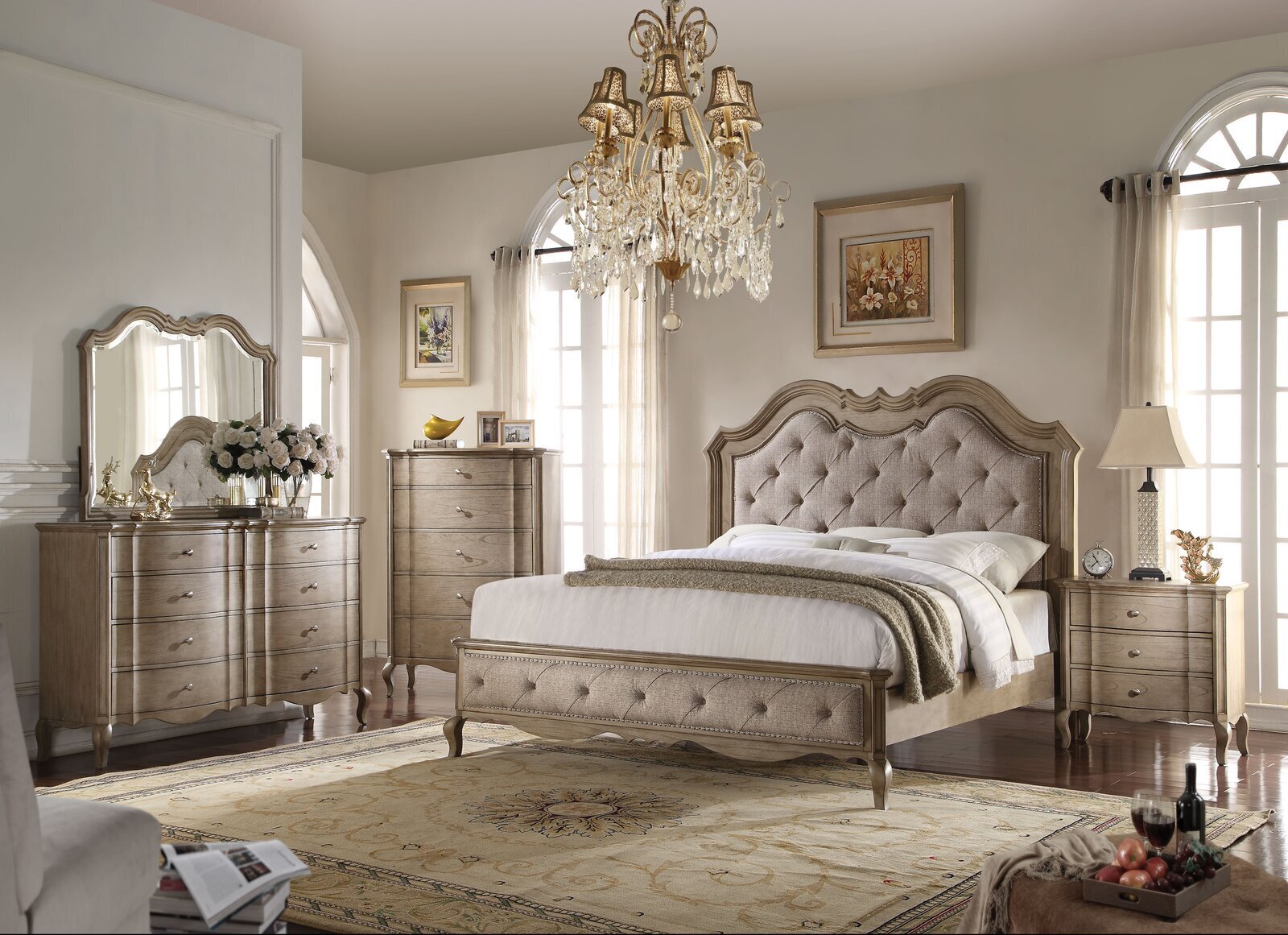
Cleaning routines should remain gentle and minimalist. Avoid commercial silicone-based aerosol polishes, which leave a gummy residue that attracts dust and degrades wood finishes over time. Instead, dust regularly with a soft, dry microfiber cloth and treat the wood once or twice a year with a pure beeswax and turpentine paste, buffing it to a soft, protective luster. This simple maintenance routine feeds the wood fibers, repels moisture, and deepens the natural patina that defines high-end European antiques.
From an economic perspective, quality antique and artisan-crafted French furniture holds its value remarkably well compared to mass-market retail goods. While new furniture loses a significant percentage of its resale value the moment it leaves the showroom floor, authenticated period pieces and high-end contemporary European designs often appreciate or retain their worth. Viewing your bedroom furniture investment through this asset-based lens reframes the initial capital outlay as a durable store of value rather than a depreciating expense.
Actionable Frameworks for Creating a Balanced French-Style Sanctuary
Designing a cohesive bedroom requires a structured approach to color theory, lighting design, and spatial layout. The French aesthetic relies heavily on restraint, allowing individual materials to speak for themselves rather than relying on loud colors or trendy patterns.
Designing a bedroom infused with the spirit of French furniture craftsmanship is ultimately about cultivating a space that honors slowness, history, and physical comfort. It moves us away from disposable trends and toward an intentional way of living where every object in the room has a provenance and a purpose.
As you embark on sourcing your pieces—whether scouring dusty barns in the French countryside or commissioning a contemporary artisan in Lyon—remember that perfection is never the goal. The chipped edge of a carved headboard, the gentle wobble of an ancient drawer, and the soft glow of wax on walnut are reminders of human hands at work. By prioritizing material honesty, structural integrity, and thoughtful curation, you create more than just a place to sleep; you build a personal sanctuary designed to weather the decades with grace.