The midnight tug-of-war is an intimate, quiet battle known to millions of couples. One person rolls over, pulling the fabric taut, while the other is left exposed to the chill of the room, shivering under a skimpy patch of batting. This domestic friction rarely stems from a lack of affection; rather, it is the predictable byproduct of a poorly sized comforter trying to bridge an impossible physical gap. Buying bedding should feel like a straightforward retail transaction, yet countless bedrooms feature blankets that hover awkwardly inches above the box spring or pool excessively on the floor, collecting dust bunnies like a giant lint trap.
Shopping for a king bed introduces unique scaling challenges that go far beyond standard retail terminology. A mattress labeled "king" gives the deceptive impression that all related accessories share a universal, standardized blueprint. In reality, the textile industry operates with astonishing variance. Manufacturers cut comforters anywhere from 92 inches to well over 112 inches wide, leaving consumers vulnerable to mismatch disasters. Navigating this landscape requires understanding the anatomy of your bed frame, accounting for modern mattress profiles, and knowing how to measure your sleeping space before clicking "add to cart."
Decoding the Anatomy of Standard King versus California King Bed Dimensions
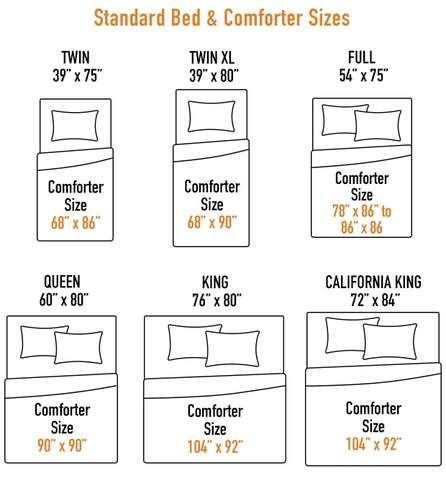
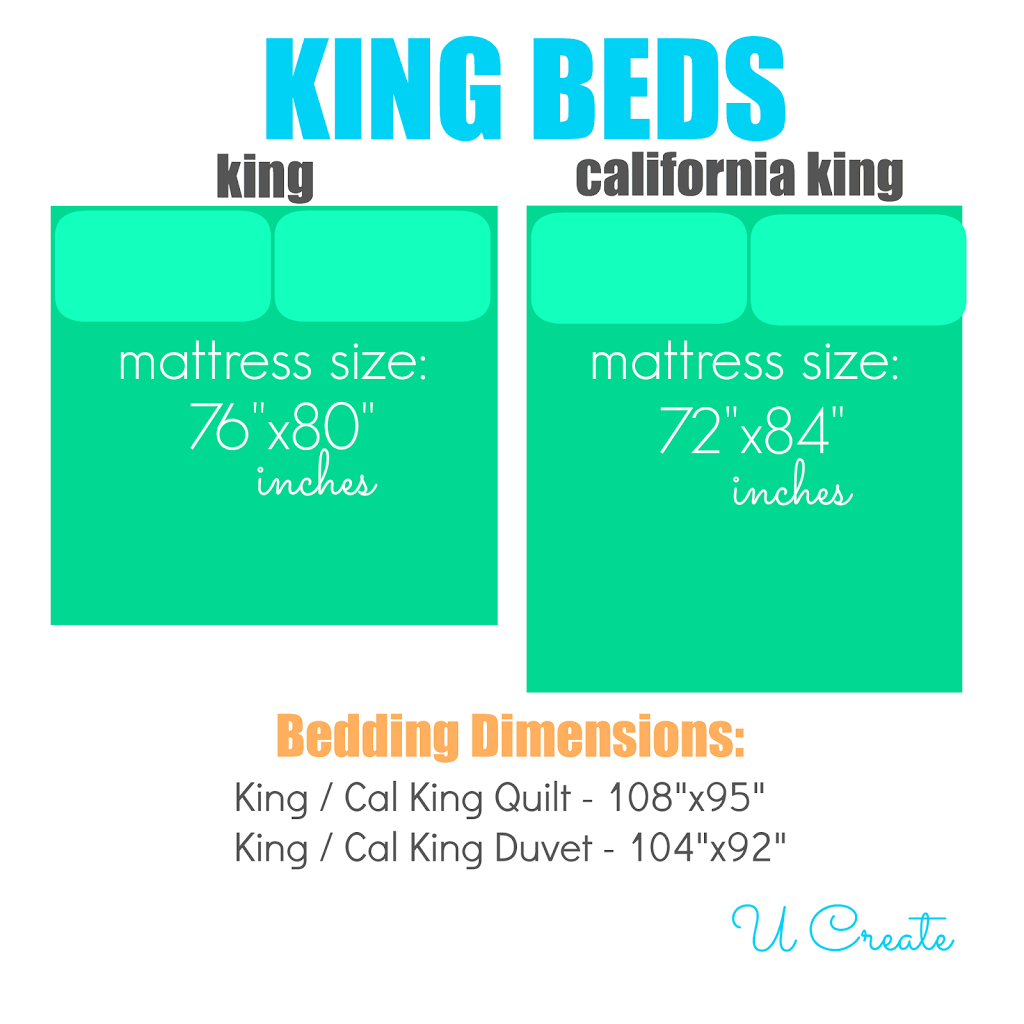
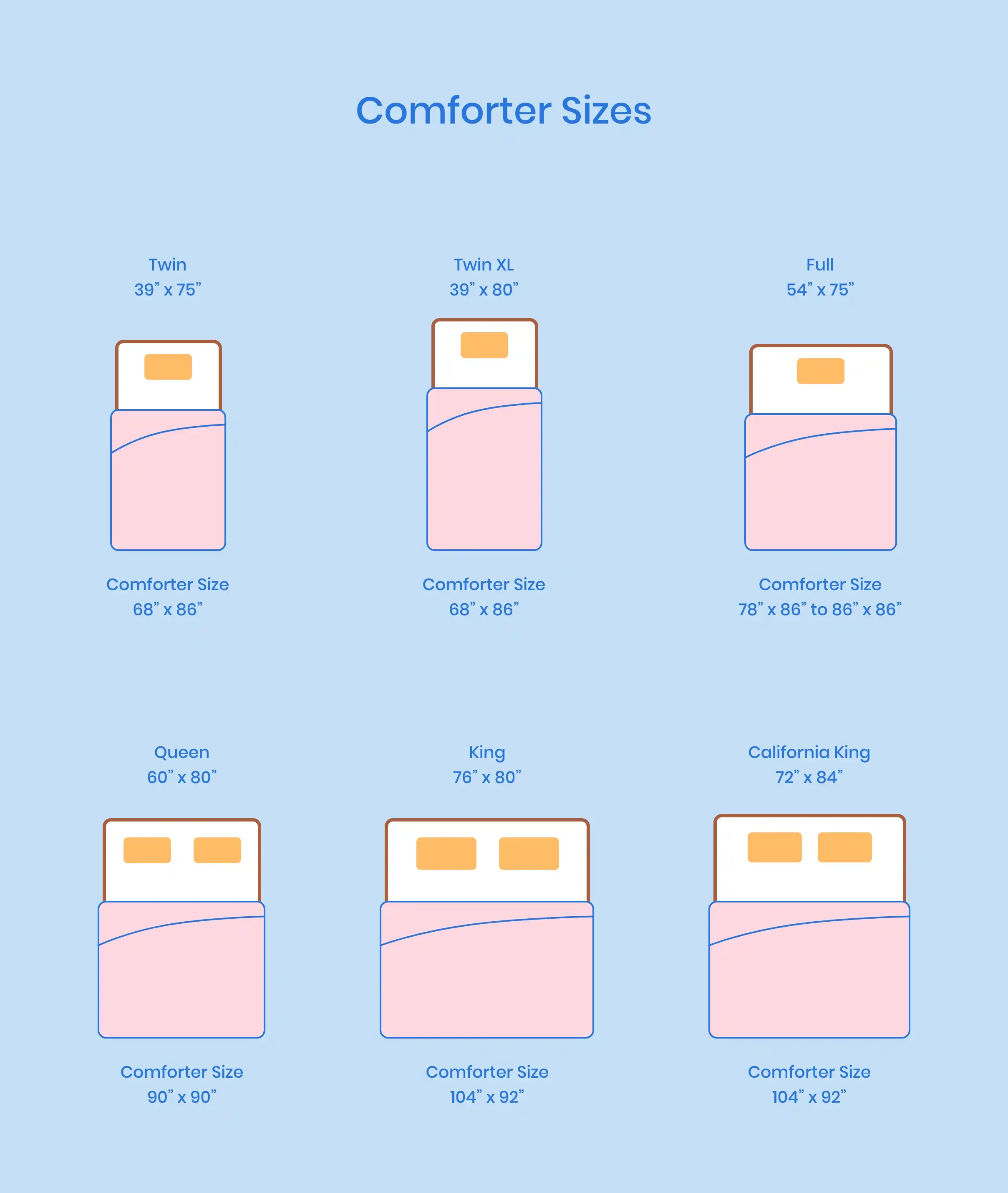
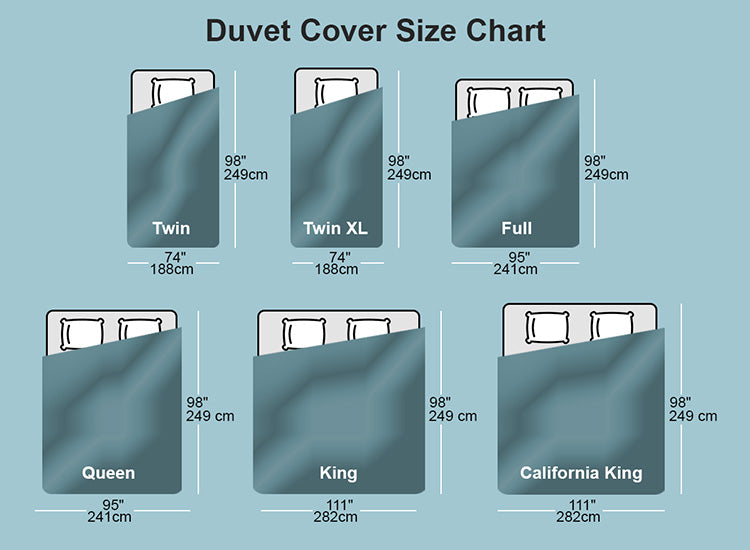
A standard Eastern king mattress measures approximately 76 inches wide by 80 inches long, while a California king stretches narrower at 72 inches wide but compensates with a length of 84 inches. These four inches of difference completely alter how bedding hangs, shifts, and drapes. A standard king comforter typically hits shelves measuring roughly 106 to 110 inches wide by 92 to 96 inches long. This generous width ensures that when the fabric drapes over the 76-inch mattress, you are left with roughly 15 to 17 inches of drop on either side.
The trouble begins when a standard king comforter meets a California king mattress. Because the Cal king is narrower, the sides might look acceptable, but the length often falls short. Conversely, placing a standard king comforter on a deep-profile standard king mattress leaves the sides looking pinched and insufficient. Textile engineers factor in loft, which is the vertical fluffiness or thickness of the filling down, feathers, or synthetic microfibers. High-loft comforters consume more linear fabric just to arch over the top of the mattress, reducing the effective side drop significantly compared to a flat quilt.
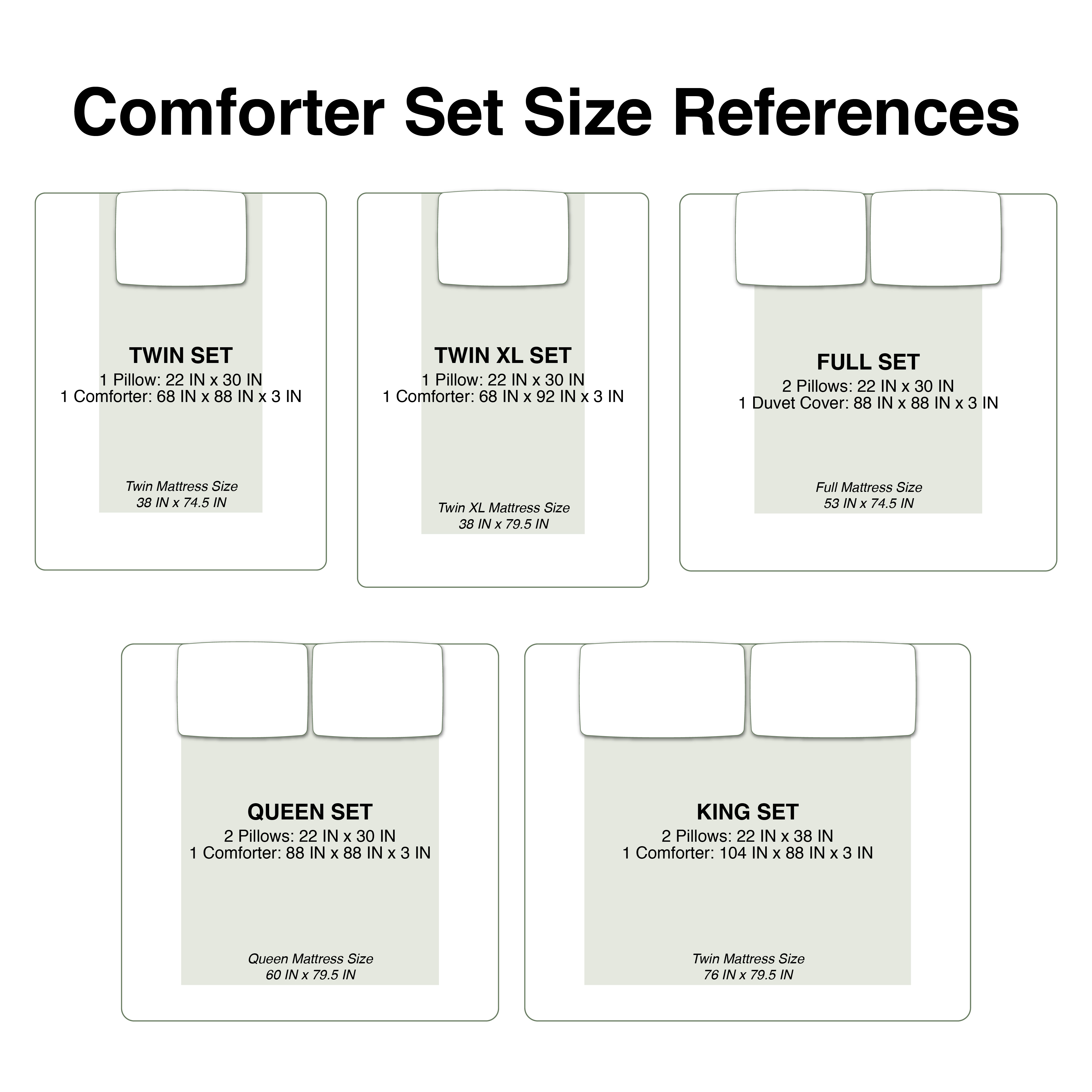
Manufacturers do not adhere to a single governing board of sizing standards, meaning a "king" from one luxury boutique might measure 108x96 inches, while a budget brand’s version measures 102x90 inches. This variance accounts for why your previous bedding looked tailored and crisp, while your current purchase looks like a postage stamp on top of the bed. Recognizing these millimeter-level discrepancies stops the cycle of expensive trial-and-error shopping. It forces a shift from trusting labels blindly to demanding exact measurements that match your specific sleep sanctuary.
The Hidden Variable of Mattress Depth and Its Impact on Vertical Drop
Mattress profiles have evolved dramatically over the past decade. The sleek, eight-inch innerspring mattresses of the mid-twentieth century have been replaced by towering hybrid creations, memory foam blocks, and pillow-top monoliths that routinely measure anywhere from 14 to 20 inches thick. When you calculate the physical surface area a comforter must cover, vertical depth plays a far greater role than horizontal mattress width. A standard 106-inch wide comforter on a 76-inch wide mattress leaves 30 inches of total fabric to distribute between both sides, translating to a 15-inch drop per side.
If your mattress is a modest 10 inches thick, a 15-inch drop leaves a healthy five inches of fabric cascading past the bottom edge of the mattress, neatly concealing the box spring or platform frame. However, slide that exact same 106-inch comforter onto a towering 16-inch luxury hybrid mattress, and your side drop shrinks to a meager 13 inches. Because the top surface must traverse a taller vertical wall before heading downward, the fabric gets pulled upward, exposing the fitted sheet and creating an unbalanced, unkempt appearance.
This geometric reality explains why oversized king and "Super King" or "Alaskan King" categories have surged in popularity. For beds featuring dense mattress toppers or adjustable bases that sit high off the ground, standard retail dimensions simply lack the physical surface area to provide proper coverage. Ignoring mattress depth leads to exposed sheets, drafty gaps during winter nights, and a bedroom aesthetic that feels disjointed rather than intentional. True luxury requires measuring not just the footprint of the bed, but the total perimeter including altitude.
A Step-by-Step Practical Methodology for Measuring Your Bed and Selecting the Right Comforter
Achieving that effortless, hotel-style drape requires a systematic measuring process before spending a single dollar on new linens. Skipping this workflow guarantees frustration when the package arrives.
Navigating Common Pitfalls and Field-Tested Workarounds for Bedding Mismatches
Even with careful measuring, unexpected sizing traps can ambush even the most experienced home stylists. Recognizing these hazards saves time and money.
The Broader Economics and Material Science of Oversized Bedding
Related Posts
Bedroom furniture ideas that make small spaces feel calmer and more useful
Understanding joinery and materials before you commit to a floating design

Navigating Regional Styles From Provence to Paris When Designing Your French Bedroom

Building a Peaceful Bedroom Environment Through Better Furniture Planning Methods
Navigating the Difference Between Flush Stitched Edges and Standard Pillow Tops
Understanding Air Valve Types to Prevent Leaks During Setup
The modern demand for oversized comforters is more than an aesthetic trend; it reflects shifts in home architecture, mattress engineering, and consumer preferences for sanctuary spaces. As primary bedrooms expand in square footage, low-profile minimalist platform beds have given way to grand, upholstered headboards and multi-layered sleep systems designed to mimic five-star boutique hotels. This architectural scale makes standard-cut bedding look disproportionately small. Furthermore, the material science of modern fill materials—ranging from ethical down clusters to thermal-regulating silk and advanced hollow-core synthetic fibers—demands specific casing dimensions to loft correctly.
When a comforter is too small for a bed, the filling compresses unnaturally against the edges, straining the stitching along the seams and leading to premature seam failure and feather leakage. Conversely, an appropriately sized or oversized comforter allows the internal fill to distribute its weight evenly across the thermal envelope of the bed. This structural integrity maximizes heat retention without adding oppressive weight, improving microclimate regulation during sleep. Economically, investing in high-quality, properly dimensioned textiles reduces replacement frequency, proving that getting the math right the first time pays financial dividends over years of use.
Sustainability also intersects with sizing accuracy. When consumers buy poorly fitted bedding that must be returned or discarded because it leaves the mattress exposed, it contributes to textile waste streams. Selecting durable, correctly proportioned king comforters made from sustainably sourced organic cotton or recycled down aligns personal comfort with ecological mindfulness. Treating bedding as a tailored garment rather than a generic commodity elevates the bedroom into a deeply personal, long-lasting sanctuary engineered for restorative rest.
Actionable Recommendations and Key Takeaways for Flawless Bedroom Styling
Translating raw measurements into a cohesive, beautifully styled master bedroom requires adherence to a few time-tested interior design principles.
The humble bed comforter is far more than a simple blanket; it anchors the visual weight of the entire bedroom and directly dictates the quality of your nocturnal recovery. Moving past the vague terminology of retail labels and embracing precise measurements transforms the bedroom from a source of daily frustration into a tailored haven of comfort. By understanding the interplay between mattress depth, linear width, and fill loft, you eliminate the midnight tug-of-war once and for all.
As you step forward to refresh your primary suite, let measurement guide your decisions rather than guesswork. A well-fitted, luxuriously draped king comforter does not happen by accident—it is the deliberate result of honoring the physical dimensions of your space. Invest the time to measure accurately, choose materials that suit your climate, and enjoy the profound peace of a bed that fits your life down to the very last inch.
