The bedroom should be a sanctuary, yet many of us spend our nights hovering over a ticking time bomb of flat-pack furniture. You hear it every time you turn over: a faint, metallic groan of a loose cam-lock bolt, or the hollow, vibrating shudder of compressed particleboard. For years, the furniture market flooded homes with disposable veneer frames designed to last just long enough to survive a single apartment lease. But a shift is happening. Homeowners are reclaiming their sleep environments, turning away from synthetic composites and toward the unmatched structural integrity and organic warmth of a natural wood bed frame king.
Choosing or building a king-size bed frame requires a completely different mindset than outfitting a twin or full. A standard eastern king mattress spans a massive 76 by 80 inches, weighing anywhere from 70 to well over 150 pounds before accounting for sleepers. When you scale up to these dimensions, physics takes over. Inferior frames sag in the middle, joints wobble under lateral stress, and cheap slats snap under localized pressure. A properly engineered natural wood bed frame isn't merely a piece of furniture; it is a permanent architectural anchor for your home, built to shoulder heavy loads, withstand decades of daily use, and age with a rich, personalized patina.
Anatomy of Structural Integrity: Understanding Hardwoods vs. Softwoods for Large Spans
When investigating what makes a natural wood bed frame king endure for decades, the conversation starts and ends with wood species selection. Not all lumber behaves the same way under structural stress. Softwoods like pine and fir are affordable and accessible, but they have a low Janka hardness rating. Pine dents easily if bumped by a vacuum cleaner, and over a wide seven-foot king-size span, softer woods are prone to sagging and warping as ambient indoor humidity fluctuates through changing seasons.
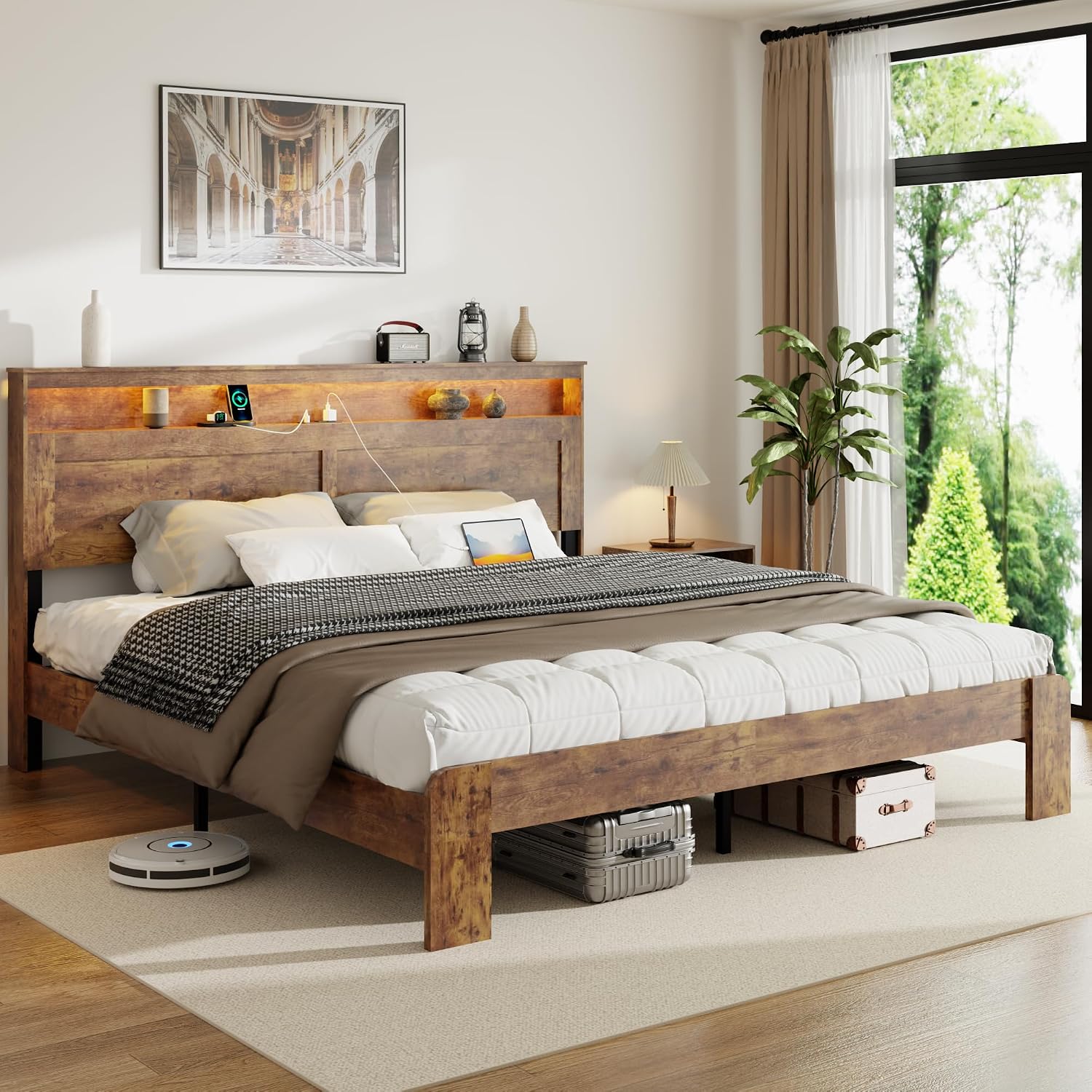
Hardwoods—such as white oak, hard maple, walnut, and cherry—offer the density and tensile strength required for heavy-duty furniture engineering. White oak, for instance, boasts closed cellular structures that resist moisture absorption and provide phenomenal load-bearing capacity. When crafting or buying a king-size frame, the thickness of the material is just as critical as the species. True structural stability demands nominal 2-by-6 or 2-by-8 lumber for side rails and headers, rather than thin 3/4-inch appearance boards that flex under weight.
Beyond raw strength, wood possesses hygroscopic properties. It breathes, expanding and contracting with seasonal relative humidity shifts. Expert builders account for this natural movement by designing joinery that allows the wood to shift without cracking or throwing the frame out of square. Understanding how timber reacts to your home's microclimate ensures that your investment remains completely silent, level, and rock-solid year after year, regardless of whether you live in a humid coastal zone or a dry desert climate.
Engineering the King Span: Why Center Support Systems and Slat Spacing Matter
The single most common point of failure in any king-size bed is the center. Because a king mattress is wide enough to accommodate two adults and frequently children or pets, the center of the bed bears immense downward force. If a bed frame relies solely on two side rails and a flimsy center beam resting on plastic feet, the mattress will inevitably develop a hammock-like sag within months. This destroys expensive mattress warranties and ruins spinal alignment during sleep.
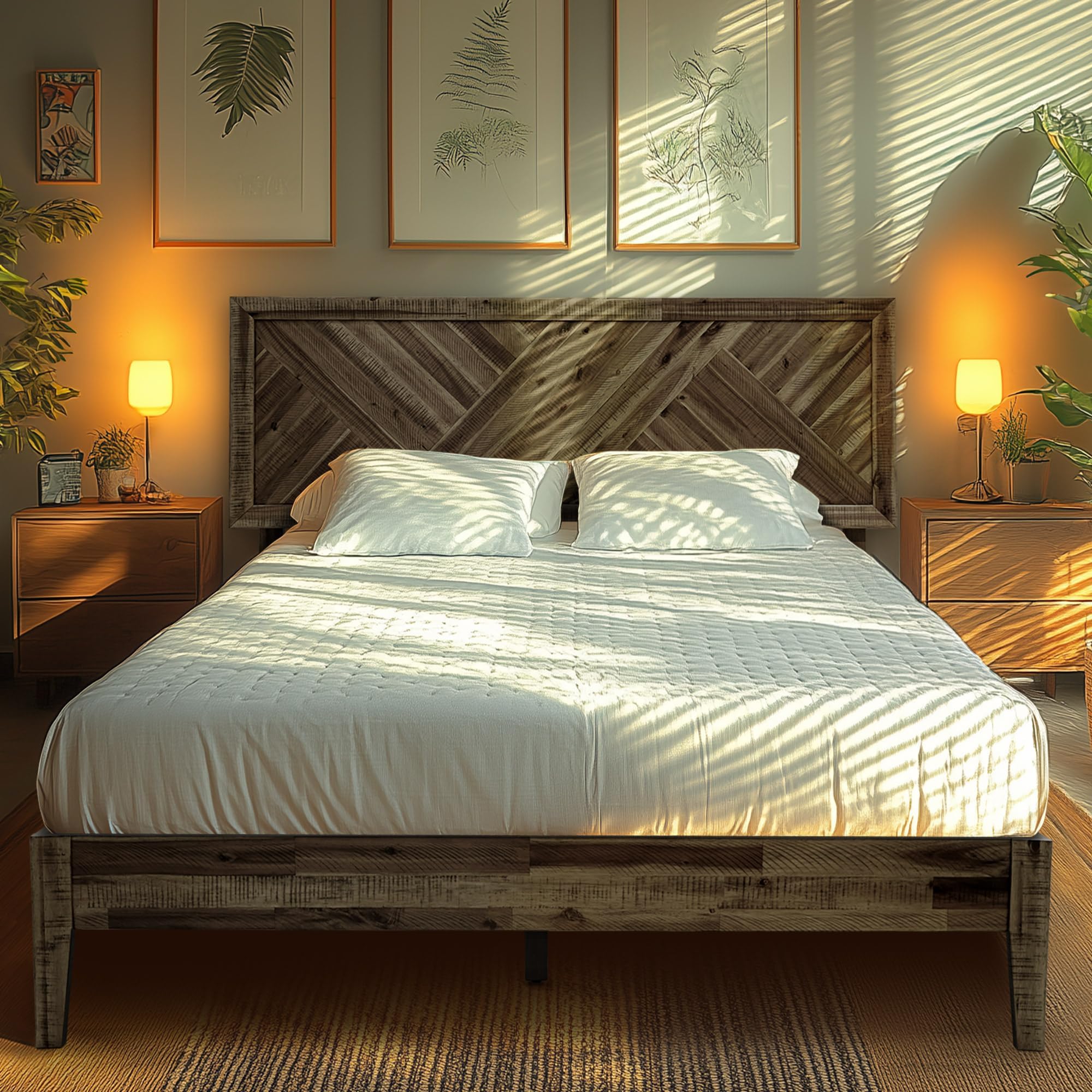
An expertly engineered natural wood bed frame king utilizes a robust three-part vertical load distribution system. First, the center beam must be constructed from heavy stock—ideally a 4x4 or doubled 2x6 timber—running uninterrupted from the headboard to the footboard. Second, this center beam must be supported by a minimum of three heavy-duty adjustable steel or solid wood floor legs, rather than weak hanging brackets that pull out of thin plywood.
Equally important is the slat layout. Modern memory foam and hybrid mattresses require a solid, breathable foundation with maximum spacing of no more than two to three inches between individual slats. Wider gaps cause foam to dip into the voids, accelerating material degradation. Furthermore, slats must be secured to the side rails using screws, velcro channels, or notched battens to eliminate lateral shifting and the dreaded squeak caused by wood rubbing against wood.
Master Blueprint: Step-by-Step Methodology for Sourcing and Assembly
Whether you are purchasing a high-end artisan frame or undertaking a rewarding weekend woodworking project, executing the assembly or build phase requires meticulous attention to alignment and geometry. A king frame that is out of square by even a fraction of an inch will stress every joint, resulting in premature squeaking and structural fatigue.
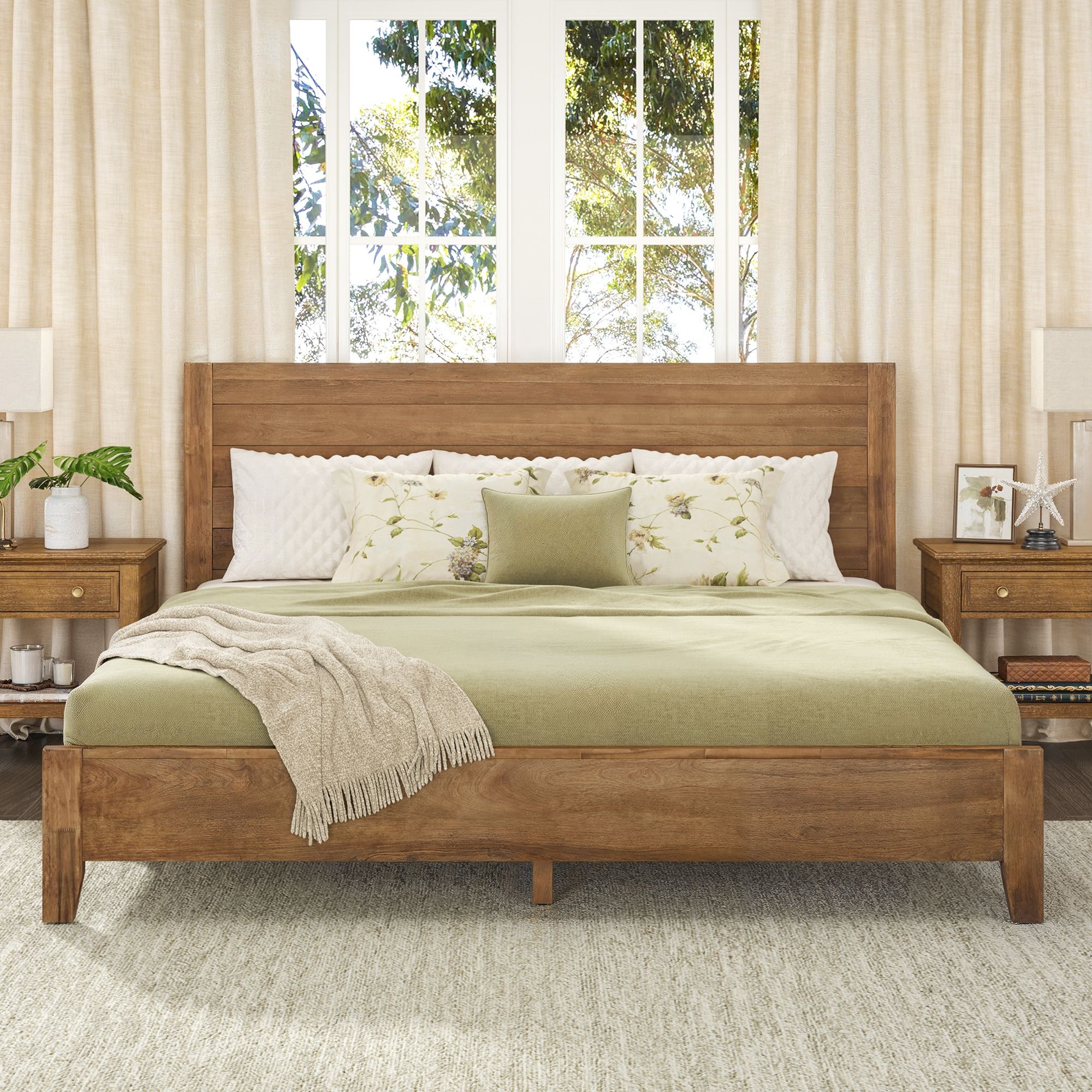
Navigating Structural Hazards: Common Pitfalls and Field-Tested Workarounds
Even experienced DIYers and careful buyers encounter hidden traps when dealing with king-size timber frames. Recognizing these engineering blind spots before they compromise your furniture saves hours of frustration and prevents costly damage to your home and mattress.
The Sustainable Economics and Environmental Value of Solid Wood
In an era dominated by fast furniture culture, buying or building a solid natural wood bed frame king represents a profound shift toward environmental responsibility. Mass-market flat-pack furniture relies heavily on Medium-Density Fiberboard (MDF) and particleboard bound together by synthetic urea-formaldehyde resins. These materials off-gas volatile organic compounds (VOCs) into your sleeping environment for years, and when they inevitably break down, they cannot be repaired and usually end up in landfills.
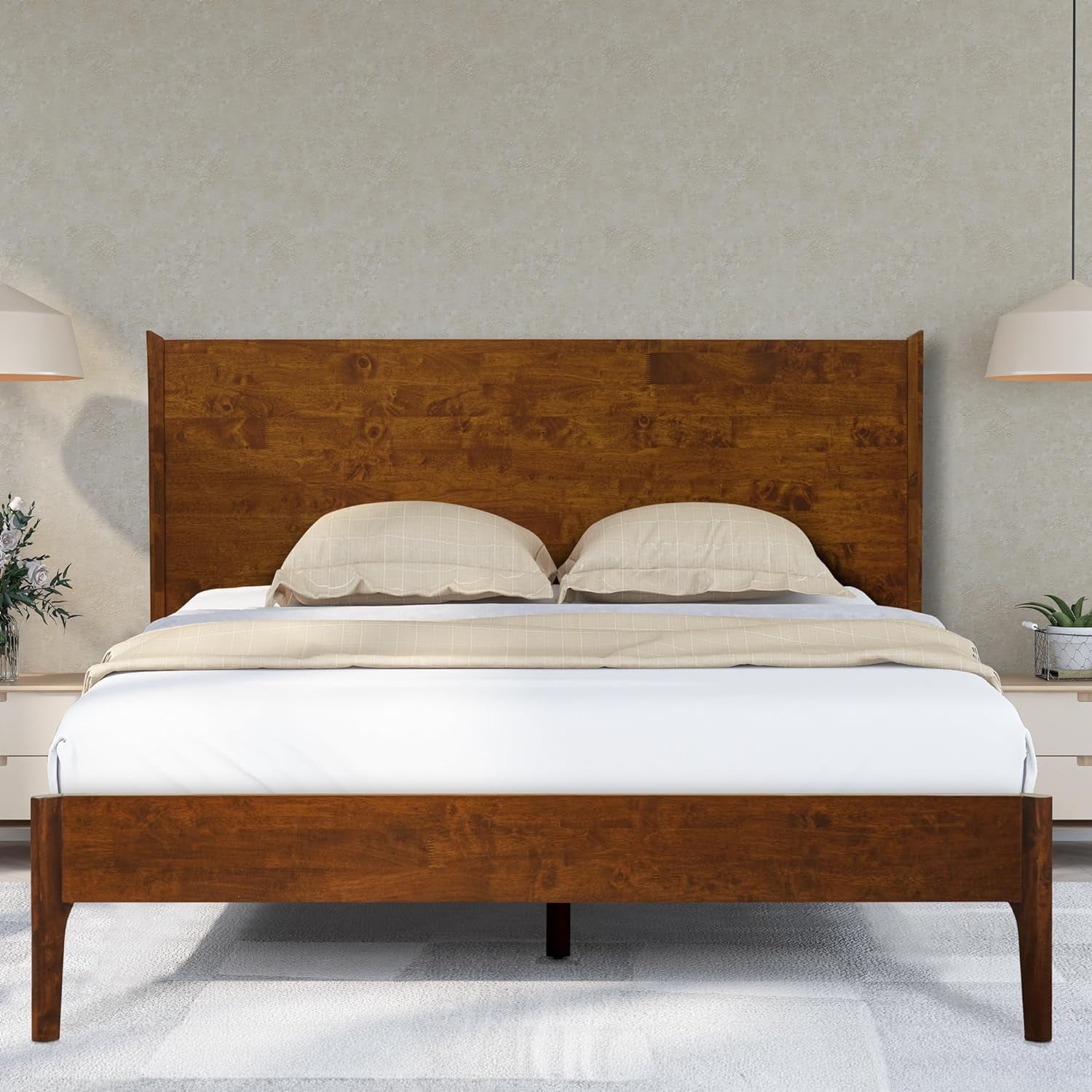
Conversely, responsibly harvested domestic hardwoods—such as sustainably managed oak, maple, and walnut—act as carbon sinks. When crafted into heirloom-quality furniture, that carbon remains locked away for generations. Furthermore, solid wood is fully repairable. If a scratch occurs, it can be sanded out and re-oiled. If a joint loosens after a decade of hard use, it can be re-glued and reinforced.
Investing in an authentic wood frame changes your relationship with household goods. Instead of treating furniture as a temporary commodity to be replaced every few moves, you acquire a generational artifact. The initial financial investment in high-grade hardwood is quickly offset by its multi-decade lifespan, making it far more economical than purchasing three or four cheap veneer replacements over the same timeframe.
Curating Your Sleep Sanctuary: Design Harmony and Maintenance Best Practices
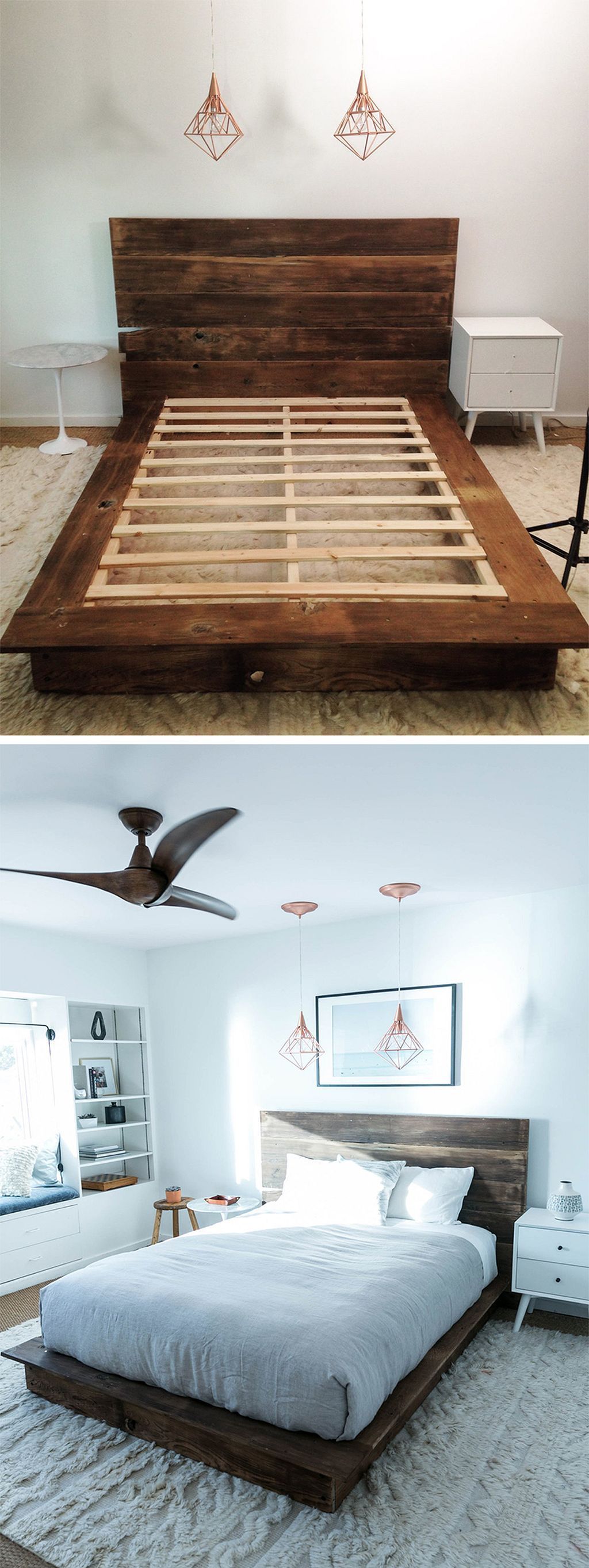
A king-size bed is visually dominant in almost any master bedroom layout. Because of its sheer scale, the natural grain, color variation, and texture of the wood frame dictate the aesthetic tone of the entire space. Pairing a live-edge or warm walnut natural wood bed frame king with minimalist white linens and brushed brass lighting creates an immediate sense of organic luxury and calm.
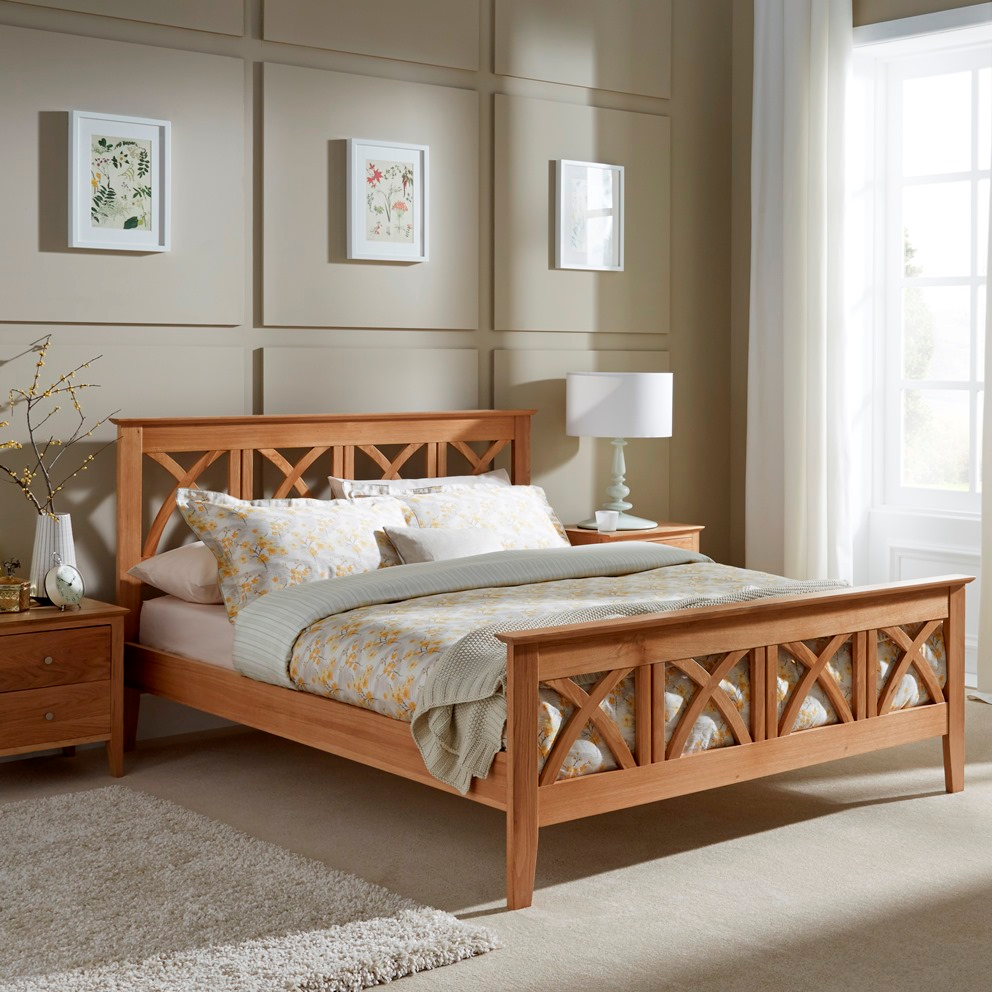
Maintenance for a solid wood bed frame is refreshingly straightforward compared to upholstered alternatives that trap dust mites, allergens, and pet dander. Weekly maintenance requires little more than dusting with a microfiber cloth to prevent surface grit accumulation. Every twelve to eighteen months, depending on your home's indoor climate, applying a fresh coat of maintenance wax or hardwax oil restores the wood's natural luster and replenishes its protective barrier against drying out.
Avoid placing your wooden bed frame directly against heating vents or in unbroken, harsh direct sunlight, as localized thermal stress can cause uneven drying and micro-checking in the timber. By treating the wood with the same care you would accord fine hardwood flooring or cabinetry, you ensure that your sleeping sanctuary remains visually breathtaking and structurally unyielding for decades to come.
The decision to invest in a natural wood bed frame king goes far beyond mere interior design preferences. It is an intentional choice for durability, health, and craftsmanship in a world that too often prioritizes disposability. By understanding the vital differences between softwoods and dense hardwoods, engineering a bulletproof center support system, and committing to proper joinery and maintenance, you establish a foundation of stability that transforms your nightly rest.
Take the time to evaluate your space, source materials or makers with uncompromising standards, and execute your build or assembly with precision. The result will be more than just a place to sleep—it will be a magnificent, heirloom-quality centerpiece that anchors your home, silences the night, and serves you faithfully for generations.