The cardboard box arrives on the front porch, heavy and dense, wrapped in layers of reinforced plastic that hiss open to reveal a compressed cylinder. Within hours, that vacuum-sealed block expands, sucking in air until it takes its final shape across the bed frame. But as you stand back to make the bed, something feels off. The fitted sheet slips off the corners like a loose rubber band, or the top of the mattress sits awkwardly low beneath the headboard, exposing the cold metal brackets of the frame.
We obsess over firmness, coil counts, and whether memory foam will trap our body heat, yet we rarely interrogate the vertical dimension. We assume every mattress follows a universal rule of depth, treating thickness as an afterthought rather than a core structural pillar.
The reality of sleep ergonomics is far more complex. Thickness is not merely an aesthetic choice that dictates whether a bed looks plush or minimalist; it is the physical runway that determines how weight is distributed, how joints are cushioned, and whether your spine maintains neutral alignment through the night. Navigating the world of sleep surfaces requires looking past marketing jargon to understand how profile depth interacts with body weight, sleep posture, and hardware setup.
The Anatomy of Mattress Depth and What Counts as Standard
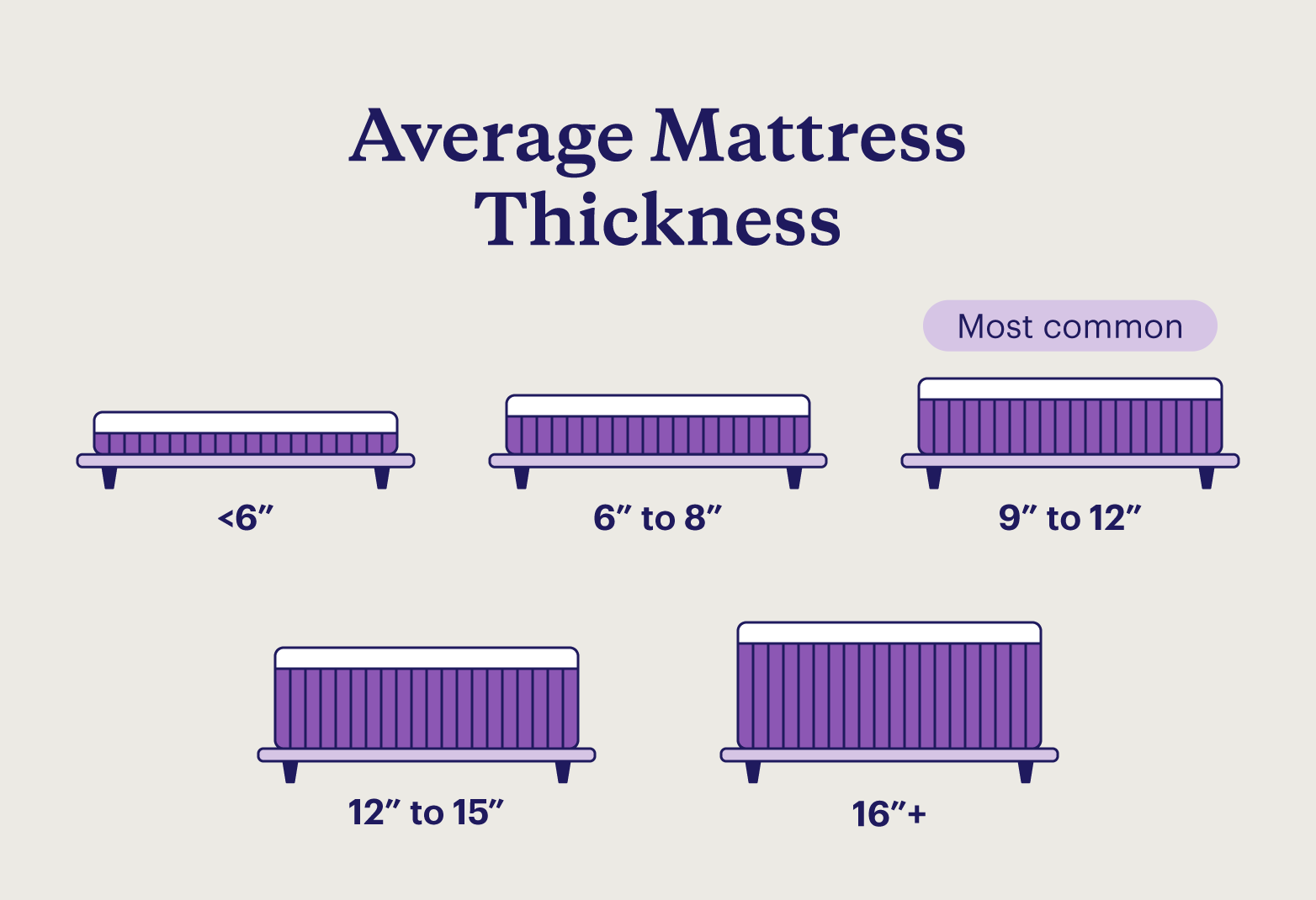
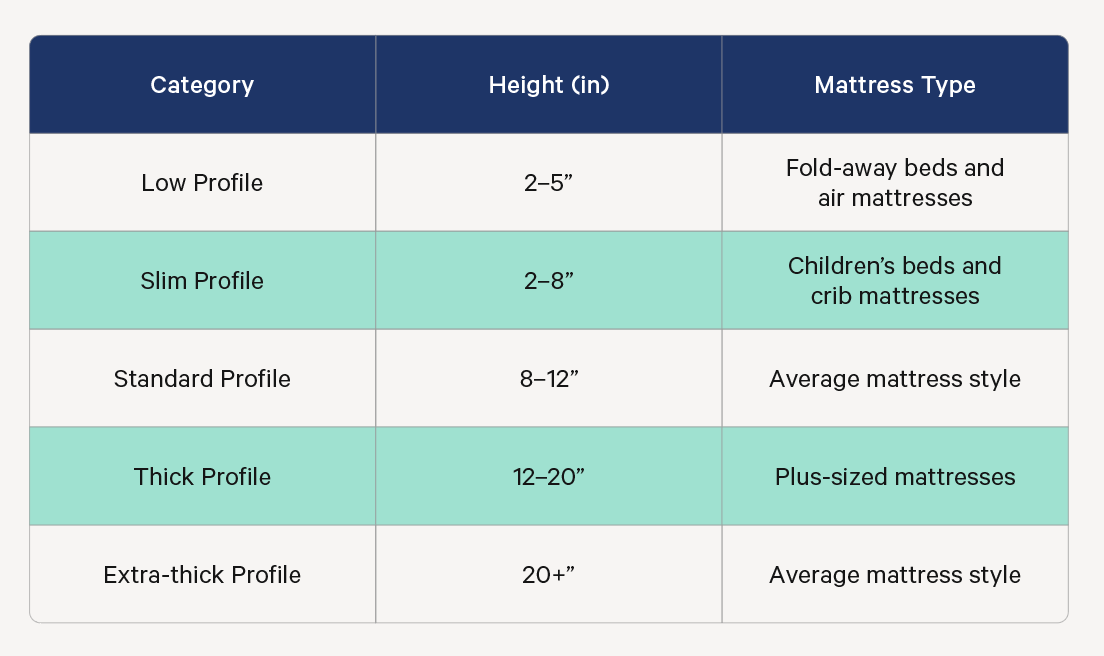
For decades, the standard mattress hovered reliably around 8 to 10 inches thick, built primarily with a traditional inner-spring grid topped by a thin layer of cotton padding or quilting. Today, the landscape has fractured into a wider spectrum. A standard mattress generally falls between 8 and 12 inches thick, striking a balance that accommodates most sleepers, standard bed frames, and conventional bedding.
However, modern manufacturing techniques have pushed luxury models well past the 14-inch mark, sometimes reaching towering heights of 16 to 18 inches. This extra vertical space houses complex multi-layer construction: high-density base support foam, transition layers of latex or gel-infused memory foam, pocketed coils for targeted contouring, and advanced cooling quilt covers.
It is vital to separate thickness from firmness. A common misconception equates a tall bed with plushness and a thin bed with rock-hard rigidity. In practice, a low-profile 8-inch latex block can offer cloud-like contouring if crafted with the right material density, while a towering 14-inch hybrid can be engineered to feel extra firm. Thickness dictates how much material is working to support your body, whereas firmness dictates how that material reacts to pressure. Understanding this separation prevents costly mistakes when shopping for a bed that matches your physical needs.
Why Mattress Thickness Dictates Support, Weight Distribution, and Longevity
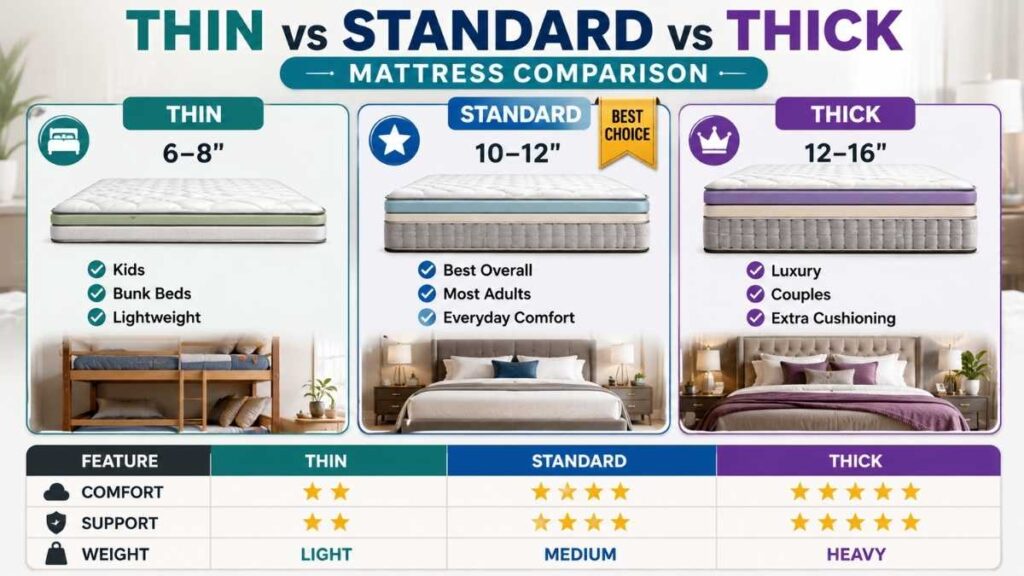
Every extra inch of material inside a mattress serves a specific engineering purpose. When you lie down, your body creates pressure points at the shoulders and hips, while the lumbar region requires firm upward resistance to prevent sagging. Thinner profiles—those ranging from 6 to 8 inches—have limited runway to absorb and dissipate this kinetic energy. They work exceptionally well for lightweight individuals, children, or guest rooms where usage is occasional, but they force heavier bodies to compress the comfort layers rapidly down to the rigid foundation base, causing premature wear and morning aches.
Heavier sleepers or couples sharing a bed require a thicker profile, typically 12 inches or more, to ensure there is enough foundational depth to distribute weight evenly without bottoming out. Thicker mattresses incorporate distinct zones: a durable high-density polyfoam or heavy-gauge steel coil base that bears the brunt of the load, a middle transition layer that prevents you from feeling the support core, and a top comfort layer that cradles the body.
Longevity is directly tied to this depth architecture. When a mattress lacks sufficient thickness, the materials are subjected to intense, concentrated compression every single night, accelerating structural breakdown and body impressions. A robust, well-constructed profile distributes the mechanical stress across a larger volume of material, preserving the integrity of the comfort layers over years of nightly rotation.
Step-by-Step Methodology for Determining Your Ideal Mattress Thickness
Finding the exact height you need requires evaluating your body weight, sleeping position, furniture constraints, and physical mobility. Moving through a structured evaluation process ensures your final purchase integrates seamlessly into your bedroom ecosystem.
Common Pitfalls and Field-Tested Workarounds for Mattress Depth Issues
Navigating mattress dimensions often leads to unexpected friction between your new bed and your old bedroom accessories. Recognizing these pitfalls ahead of time saves you from frustrating returns and incompatible bedroom layouts.
The Intersection of Mattress Thickness, Material Science, and Modern Sleep Engineering
The evolution of mattress thickness is deeply intertwined with advancements in material science. Traditional innerspring mattresses relied heavily on steel coils for both support and bounce, capping their functional height because extra padding often led to instability and roll-off. The introduction of viscoelastic memory foam in the late twentieth century, followed by advanced latex processing and high-density gel-infused polyfoams, changed the calculus entirely. Engineers realized they could stack specialized layers with distinct viscoelastic properties to fine-tune temperature regulation, motion isolation, and pressure relief.
This multi-layer approach explains why luxury profiles have expanded. A contemporary high-end mattress is essentially a multi-tiered ecosystem. The bottom layer provides structural rigidity; the middle core handles transition and weight dispersion; the upper strata focus on pressure relief and micro-climate control.
Yet, thicker does not automatically mean better. Poorly engineered thick mattresses often use cheap, low-density transition foams that break down quickly, creating deep sinkholes that trap body heat and compromise spinal alignment. Conversely, minimalist Japanese futons and thin organic latex mattresses prove that strict adherence to a slim profile can deliver exceptional orthopaedic support when crafted from ultra-dense, high-resilience materials. The true measure of quality lies in the density and breathability of the materials used, rather than a tape measure reading.
Strategic Recommendations for Every Sleep Space and Lifestyle
Translating these insights into a purchasing decision requires matching profile depth to your specific living situation. A guest room in a vacation home demands a completely different strategy than a primary master suite shared by a couple with differing body weights and sleep styles.
For primary master bedrooms, prioritize a mattress thickness between 10 and 13 inches. This sweet spot accommodates the vast majority of sleepers, works well with standard headboards, and provides enough structural depth to house durable support cores and comfortable pressure-relieving layers. If you or your partner are heavyweight sleepers, lean toward the upper end of this spectrum (12 to 14 inches) to ensure long-term durability and proper spinal support.
For guest bedrooms, children's rooms, and multi-purpose spaces, a standard 8 to 10-inch mattress is often the most practical choice. It keeps costs reasonable, fits standard sheets effortlessly, and provides adequate support for lighter occupants or occasional visitors. For children, a moderate thickness also makes it easier to climb into bed independently without requiring step stools.
For specialized setups like loft beds, RV bunks, pull-out sofa beds, and trundles, strict vertical constraints dictate your choices. Look for specialized low-profile mattresses ranging from 5 to 8 inches. Modern high-density foam and hybrid technologies allow these slim profiles to offer surprising comfort despite their compact height, ensuring you never have to sacrifice a good night's sleep when space is at a premium.
Choosing a mattress is an exercise in balancing comfort, ergonomics, and spatial physics. While marketing campaigns often push the narrative that taller equals more luxurious, the truth is far more nuanced. Thickness is a functional specification, a design parameter that dictates how your body interacts with support systems, how your furniture accommodates your room, and how easily you can maintain your sleep sanctuary.
As bedroom designs continue to evolve and material innovations introduce smarter, more responsive foams and coils, our approach to sleep ergonomics will keep maturing. By looking past surface-level aesthetics and evaluating profile depth through the lens of your unique body mechanics and lifestyle constraints, you can cut through the noise of the mattress market. Measure your space, understand your support requirements, and select a depth that anchors your bedroom in comfort, stability, and restful nights for years to come.