In the world of kitchen remodeling, few materials have sparked as much curiosity as Madison reinforced acrylic countertops. These modern surfaces promise the look of traditional stone with the practicality of synthetic materials. But do they really live up to the hype? Let's dive into how they stack up against the competition.
When it comes to kitchen countertops, homeowners face a maze of choices. From classic granite to sleek quartz, each material brings its own set of pros and cons. Among the newer contenders, Madison reinforced acrylic countertops have been gaining attention for their unique blend of aesthetics and functionality. But what exactly makes them different? And more importantly, how do they really perform compared to time-tested options like granite, marble, and even laminate? This deep dive will explore everything from durability to maintenance, helping you understand whether Madison acrylic might be the right fit for your kitchen.
What Makes Madison Reinforced Acrylic Different
Madison reinforced acrylic isn't just another countertop surface. It's engineered with a special reinforcement process that makes it stronger than standard acrylic. The material combines acrylic polymer with fiberglass or other reinforcing agents, creating a surface that's both beautiful and robust.
Unlike regular acrylic, which can be prone to scratches and dents, Madison's reinforced version offers enhanced durability. The reinforcement creates a surface that's more resistant to heat, impact, and daily wear. Think of it as giving your countertop an extra layer of protection without sacrificing the elegant appearance that makes acrylic so appealing.
The manufacturing process involves layering multiple materials together, then heating and pressing them to create a seamless, solid surface. This results in countertops that are virtually seamless, with no joints or seams that could harbor bacteria or stains.
Durability Compared to Granite and Marble
Granite and marble have long been considered the gold standard for kitchen countertops, but they come with their own challenges. Granite is incredibly hard and scratch-resistant, but it requires regular sealing to prevent staining. Marble, while stunning, is softer and more prone to scratches and etching from acidic substances.
Madison reinforced acrylic holds its own in terms of durability. While it won't match granite's hardness, it's more resistant to scratches than marble. The reinforced structure means it can handle daily kitchen activities better than many natural stone options. You won't need to worry about sealing it regularly, unlike granite.
The material also handles temperature changes well. Unlike some natural stones that can crack under extreme heat, Madison acrylic maintains its integrity even when exposed to hot pots and pans. This makes it particularly appealing for busy kitchens where cooking happens frequently.
Real-world testing shows that Madison countertops can withstand the rigors of daily life better than many people expect. They resist chips and cracks from normal kitchen use, though they may show signs of wear from heavy impacts or sharp objects.
Cost Analysis and Value Proposition
Price is always a major factor when choosing kitchen surfaces. Madison reinforced acrylic countertops typically fall somewhere between laminate and natural stone in terms of cost. You're looking at roughly $40-$80 per square foot installed, depending on the complexity of the design and the specific finish you choose.
This pricing puts it in a sweet spot for many homeowners. It's more affordable than high-end natural stone options like premium marble or exotic granite, but more durable and low-maintenance than most laminates. The value proposition becomes clearer when you consider the long-term costs.
Laminate countertops often need replacement every 10-15 years due to wear and tear. Natural stone requires ongoing sealing and can be expensive to repair if damaged. Madison acrylic offers a middle ground that balances initial investment with longevity.
The cost savings become apparent when you factor in maintenance. There's no need for regular sealing, and cleaning is straightforward. Most homeowners find that the total cost of ownership over a decade is lower with Madison acrylic than with many traditional options.
Maintenance and Cleaning Requirements
One of the biggest selling points of Madison reinforced acrylic is how easy it is to maintain. Unlike granite that needs periodic sealing or marble that requires special cleaners, this material is remarkably simple to care for.
Daily cleaning is as easy as wiping down with mild soap and water. The non-porous surface resists stains, so spills don't penetrate the material. This means you can clean up messes quickly without worrying about permanent marks.
The material also handles common household cleaners well. Most standard bathroom and kitchen cleaners work fine, though it's best to avoid harsh chemicals that could damage the surface. The surface is also resistant to most household acids, making it suitable for areas where citrus juices or wine might spill.
Deep cleaning is straightforward too. For tougher stains or buildup, a gentle abrasive cleaner can be used without fear of damaging the surface. The material's resistance to fading means that even prolonged exposure to sunlight won't cause discoloration.
Aesthetic Versatility and Design Options
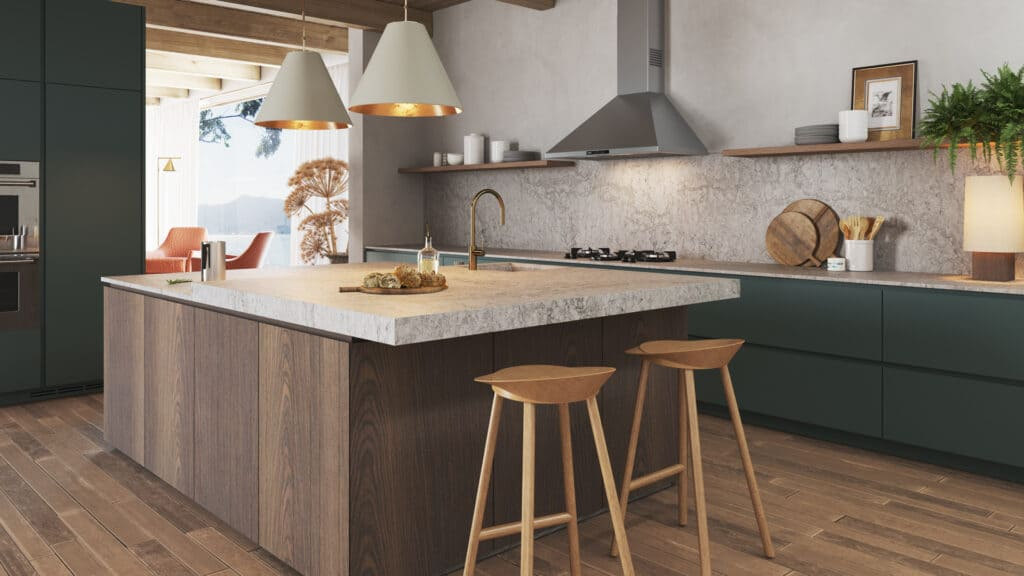
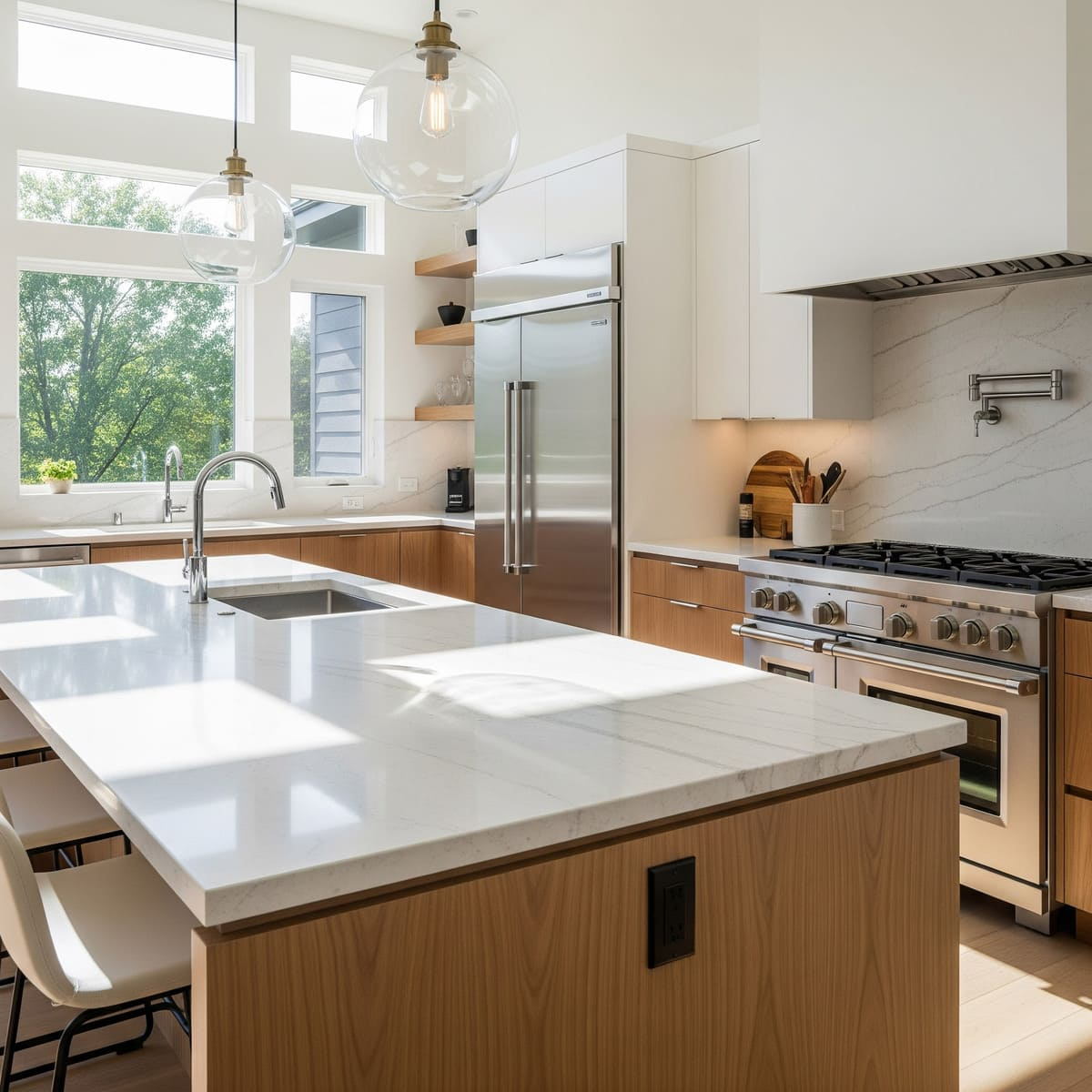
Madison reinforced acrylic countertops offer incredible design flexibility. The material can be manufactured in countless colors, patterns, and finishes, making it possible to match almost any kitchen style.
Whether you prefer the look of natural stone with realistic veining, or want something more abstract with bold patterns, there's likely a Madison option available. The company offers finishes ranging from matte to glossy, and textures that mimic wood grain, marble, or even metal.
The seamless nature of the material allows for continuous patterns across large surfaces, something that's difficult to achieve with traditional stone. This means you can get that elegant, unbroken look without the expense and complexity of natural stone installation.
Installation is also simpler than many alternatives. The material is lighter than stone, so it doesn't require the same structural support. This can be a significant advantage in older homes or spaces with limited load-bearing capacity.
Limitations and Considerations
No material is perfect, and Madison reinforced acrylic has a few limitations to consider. The main drawback is that it can still show signs of wear from heavy use. While it's more durable than standard acrylic, it's not indestructible.
Sharp objects can still cause scratches, especially if they're dragged across the surface. Heavy pots and pans dropped from height might cause dents. These issues aren't unique to Madison, but they're worth noting for anyone planning extensive cooking or commercial use.
The material also has some sensitivity to very high temperatures. While it handles typical kitchen heat well, placing extremely hot items directly on the surface could potentially cause damage. A trivet or hot pad is always recommended.
Another consideration is the availability of certain designs. While Madison offers many options, the selection may not be as extensive as traditional materials like granite or marble. Some homeowners might find that their preferred aesthetic isn't available in the Madison line.
Madison reinforced acrylic countertops present a compelling alternative to traditional kitchen surfaces. They offer a unique combination of durability, ease of maintenance, and design flexibility that many homeowners find appealing. While they may not match the raw hardness of granite or the timeless beauty of marble, they provide a practical middle ground that works well for most households.
The key advantages include low maintenance requirements, consistent performance, and a wide range of design options. Homeowners who want the look of natural stone without the upkeep will likely appreciate the simplicity of Madison acrylic.
However, it's important to consider your specific needs and usage patterns. If you have a very heavy-duty kitchen or plan to use the surface extensively for food prep, you might want to weigh the pros and cons carefully. For most families, though, Madison reinforced acrylic provides excellent value and performance.
Ultimately, the best choice depends on your priorities. If you value low maintenance, consistent appearance, and reasonable durability, Madison acrylic countertops deserve serious consideration. They represent a smart evolution in countertop technology, combining the best aspects of traditional materials with modern engineering.
Related Posts
How Ceramic Vessel Sinks Enhance Bathroom Aesthetics and Functionality
How to Choose the Right Wall Mounted Corner Sink for Your Bathroom Space
Design and Durability Analysis of the Kingston Brass GLTS37225 Brushed Basin
Transforming Your Bathroom with Textured Stone Surfaces
Choosing the Perfect Small Undermount Sink for Your Home Decor