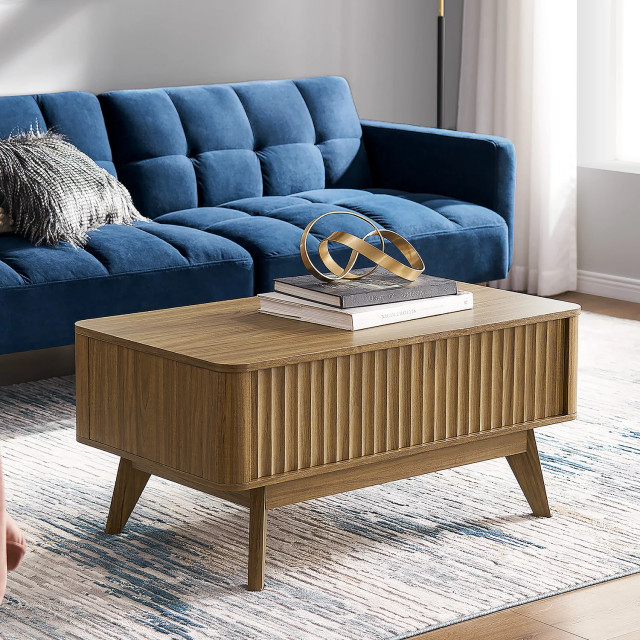
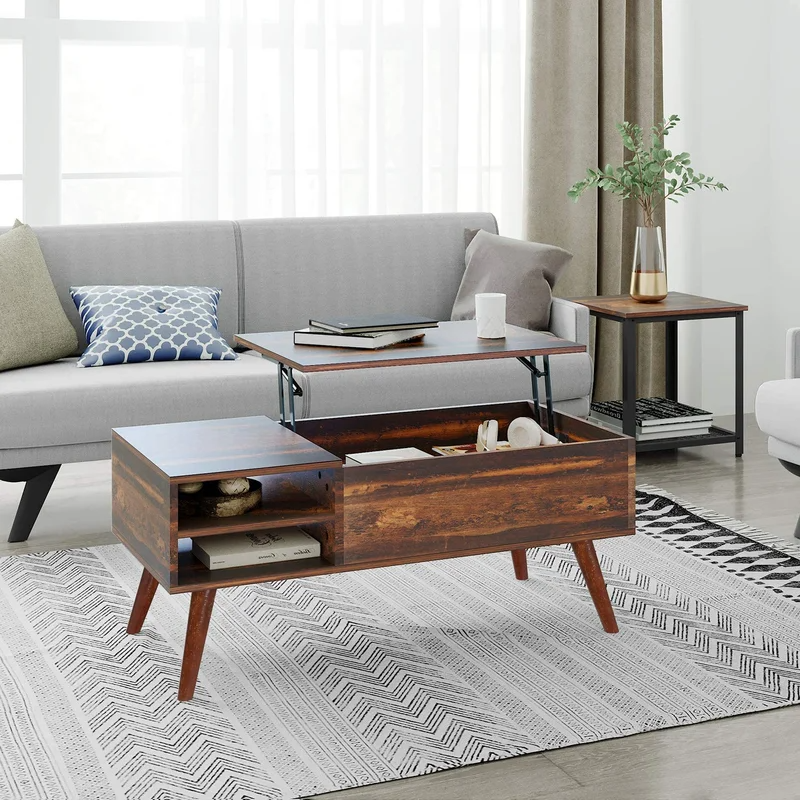
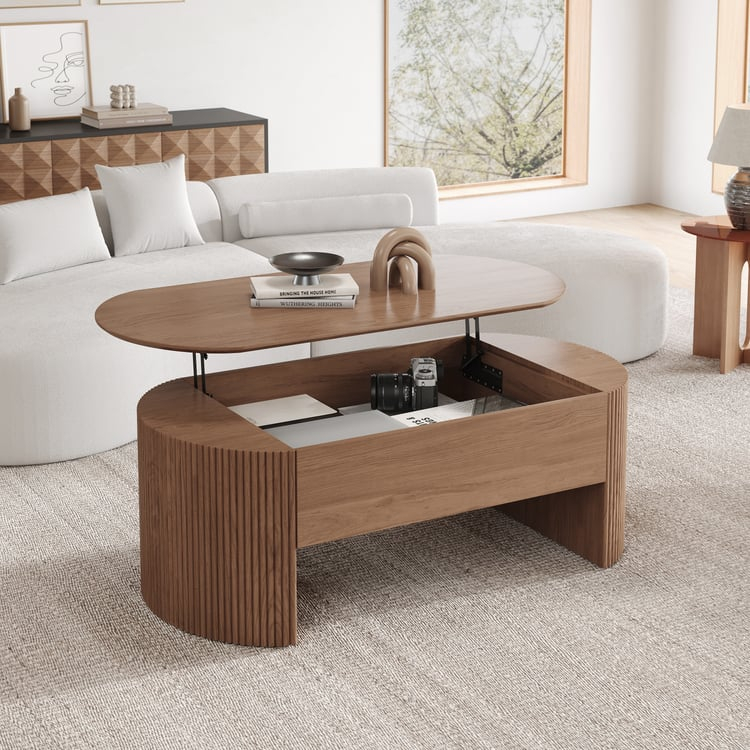
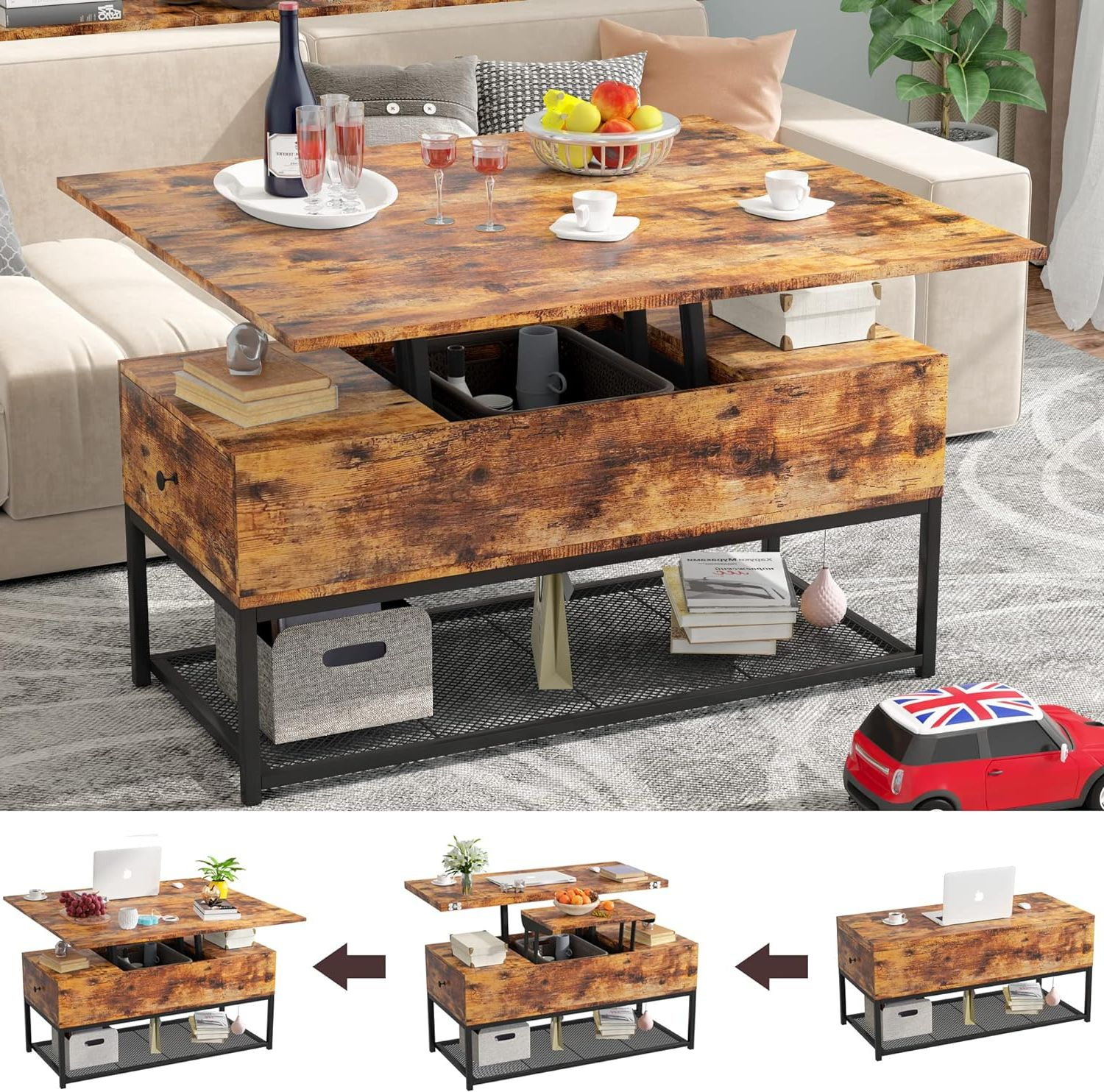
Ever looked at a piece of furniture and wondered about its story? How did it come to be? Who thought it up? Well, if you've ever admired a sleek, warm walnut coffee table with a top that magically lifts up, you're looking at a true design icon. These pieces aren't just pretty; they're clever, practical, and tell a tale of innovation and changing lifestyles. Let's delve into the rich history and lasting charm of the mid-century walnut lift-top coffee table.
Imagine the post-war era. Homes were getting smaller, living rooms were becoming the central hub for family life, and people needed furniture that could do more than one thing. Enter the mid-century modern movement, a period defined by clean lines, organic shapes, and a deep appreciation for natural materials. It was a time when designers really thought about how people lived, and how furniture could make their lives a little easier, a little more stylish. And what emerged from this thoughtful approach? The lift-top coffee table, especially those crafted from beautiful, rich walnut.
The Dawn of Dual-Purpose Design: Why Lift-Tops Appeared
Back in the day, the coffee table was, well, just a coffee table. You put your drinks on it, maybe a magazine or two. But as homes evolved and living spaces became more compact, the need for multi-functional furniture grew. People weren't just sitting in their living rooms; they were eating casual meals, working on projects, or even playing board games. A regular coffee table just wasn't cutting it. Designers began to ponder: how can we make this piece of furniture more useful without making it bulky or ugly? The answer, it turned out, was to give it a secret. A lifting top that could transform it from a low-slung surface to a comfortable height for dining or working. It was a game-changer, really.
Walnut's Reign: The Material That Defined an Era
Why walnut, you ask? It wasn't just a random choice. Walnut was the darling of mid-century furniture for several excellent reasons. Its deep, warm hue and beautiful grain patterns gave pieces an instant sense of sophistication and natural elegance. It was also incredibly durable, able to withstand the rigors of daily life without showing too much wear and tear. Plus, it was relatively easy to work with, allowing designers to create those sleek, clean lines and subtle curves that are so characteristic of the era. The combination of walnut's inherent beauty and strength made it the perfect canvas for the innovative lift-top mechanism, creating pieces that were both visually striking and built to last. Think about it, a piece of furniture from the 50s or 60s still looking fantastic today? That's the power of good design and great materials.
Ingenious Mechanisms: How They Worked (and Still Work!)
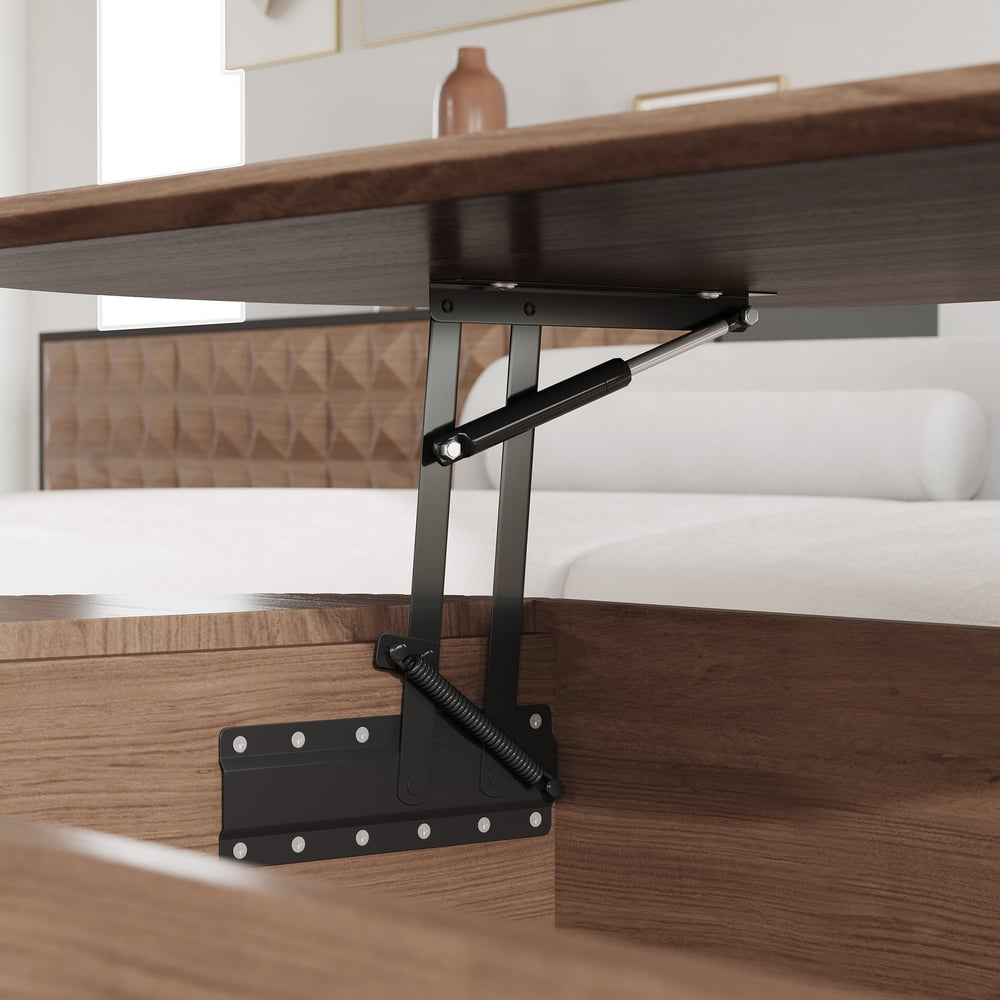
The magic of the lift-top table lies in its clever mechanics. Early designs often used simple spring-loaded or counterbalanced systems. You'd pull the top up, and it would smoothly ascend and lock into place. Sometimes, there were even hidden storage compartments underneath, adding another layer of utility. These mechanisms were designed to be robust and reliable, a testament to the era's focus on quality craftsmanship. While the basic principle remains the same, modern versions might incorporate more advanced pneumatic lifts for an even smoother, quieter operation. But the core idea—a top that effortlessly rises to meet your needs—is a brilliant piece of engineering that has stood the test of time.
Iconic Shapes and Styles: From Sleek to Sculptural
Mid-century walnut lift-top coffee tables weren't all cut from the same cloth. While they shared the common thread of functionality and material, their forms varied wonderfully. Some were sleek and rectilinear, embodying the minimalist aesthetic of the period. Others featured more organic, sculptural bases, perhaps with tapered legs or subtly curved edges. Think Danish modern influences, with their emphasis on clean lines and natural forms, or the slightly more robust American designs. Regardless of the specific style, each piece aimed for a harmonious balance between form and function. They were designed to be beautiful objects in their own right, even when not in their 'lifted' state. This attention to detail is what makes them so desirable even now. It's not just a table; it's a piece of art that also happens to be incredibly useful.
A Timeless Treasure: Why They're Still Loved Today
Fast forward to today, and these mid-century walnut lift-top coffee tables are more popular than ever. Why? Well, the demand for multi-functional furniture hasn't gone away; if anything, it's increased. People are still looking for smart solutions for smaller living spaces. But it's more than just practicality. There's a timeless quality to their design. They blend seamlessly into a variety of decor styles, from ultra-modern to more traditional. The warmth of the walnut, the elegant lines, and the sheer ingenuity of the lift-top mechanism make them incredibly appealing. They represent a period when design was about solving problems beautifully, and that's a philosophy that never goes out of style. Plus, there's a certain charm to owning a piece of history, a table that has seen decades of family meals, late-night work sessions, and countless cups of coffee.
Finding Your Own Piece of History: Tips for Collectors
If you're thinking of adding one of these beauties to your home, there are a few things to keep in mind. First, look for the quality of the walnut. Is the grain consistent? Are there any major scratches or dents that can't be easily repaired? Check the mechanism; does it lift smoothly, and does it stay in place? Sometimes, older mechanisms might need a little lubrication or minor adjustment. Don't be afraid of a piece that needs a bit of tender loving care; often, a good cleaning and a fresh coat of oil can bring these tables back to life. Estate sales, vintage shops, and online marketplaces are great places to hunt for these treasures. And when you find one, remember you're not just buying a table; you're investing in a piece of design history, a functional work of art that will continue to serve and delight for many years to come. It's a smart choice, really.
The mid-century walnut lift-top coffee table is far more than just a piece of furniture. It's a tangible representation of a design philosophy that prioritized both aesthetic beauty and practical utility. It speaks to an era when innovation was driven by a genuine desire to improve everyday living. Its journey from a clever solution for evolving homes to a highly coveted design icon is a testament to its enduring appeal. So, the next time you see one, take a moment to appreciate the thoughtful design, the warm glow of the walnut, and the ingenious mechanism that makes it such a timeless and beloved object. It's a small piece of history, still making life a little bit easier, and a lot more stylish.