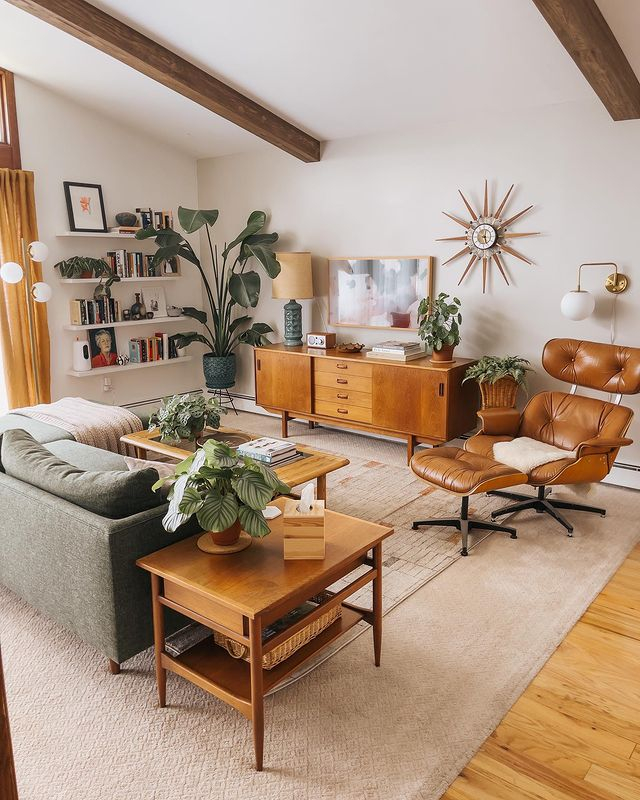
As someone who has spent decades immersed in the captivating world of Mid Century Modern design, I can tell you that it's more than just a style; it’s a philosophy. It’s about clean lines, organic shapes, and a purposeful elegance that continues to resonate today. But how do you, the aspiring curator, go about selecting those key pieces for your own living room without it looking like a museum exhibit or, worse, a thrift store explosion. That's the real trick, isn't it? It's about finding that sweet spot, that perfect balance.
When people talk about Mid Century Modern, they often conjure images of Eames chairs and teak sideboards. While these are certainly hallmarks, the true essence lies in its principles: functionality, simplicity, and a deep appreciation for natural materials. This era, roughly spanning from the mid-1940s to the late 1960s, emerged from a desire for a fresh start after the war, embracing innovation and a forward-thinking aesthetic. It was about making well-designed, accessible furniture for the average American home. So, before we even think about specific pieces, we need to understand this foundational spirit. It's not just about what something looks like, but why it was designed that way.
The Foundation: Anchoring Your Space with Iconic Seating
Every great living room needs a strong anchor, and in Mid Century design, that often means your seating. Think about the iconic shapes – the low-slung profiles, the splayed legs, the elegant curves. You're not just buying a couch; you're investing in a statement piece that will define the room's character.
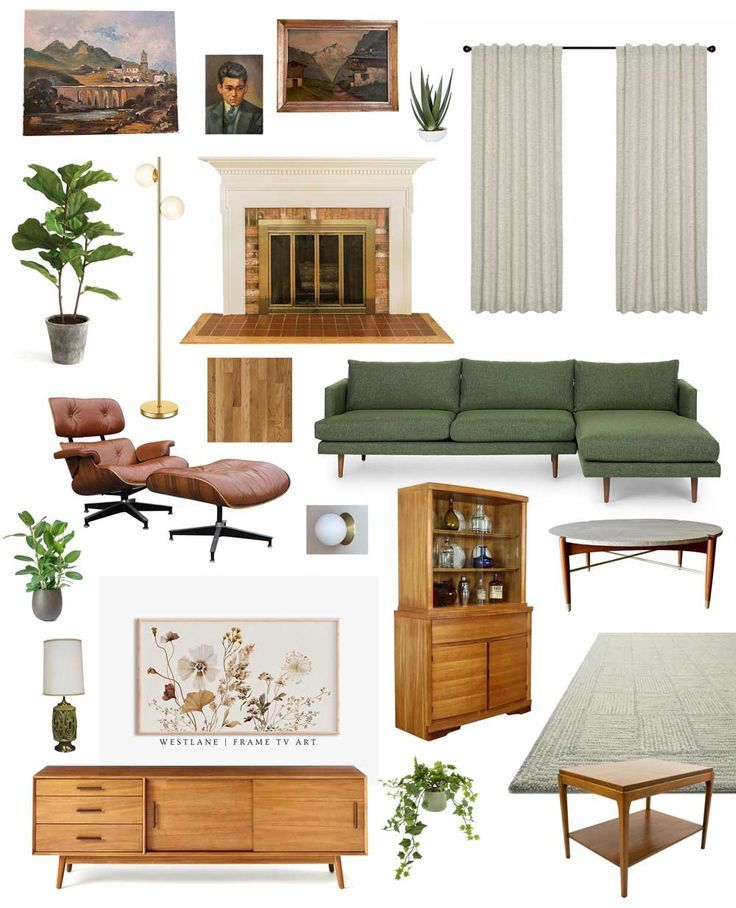
- Sofa Selection: A classic Danish modern sofa, perhaps in a rich walnut frame with tailored upholstery, can be a perfect starting point. Or consider a more sculptural piece, like a Florence Knoll sofa, for a touch of refined elegance. The key is comfort and visual appeal. You want something that invites you to sit down and relax, but also something that looks like a work of art.
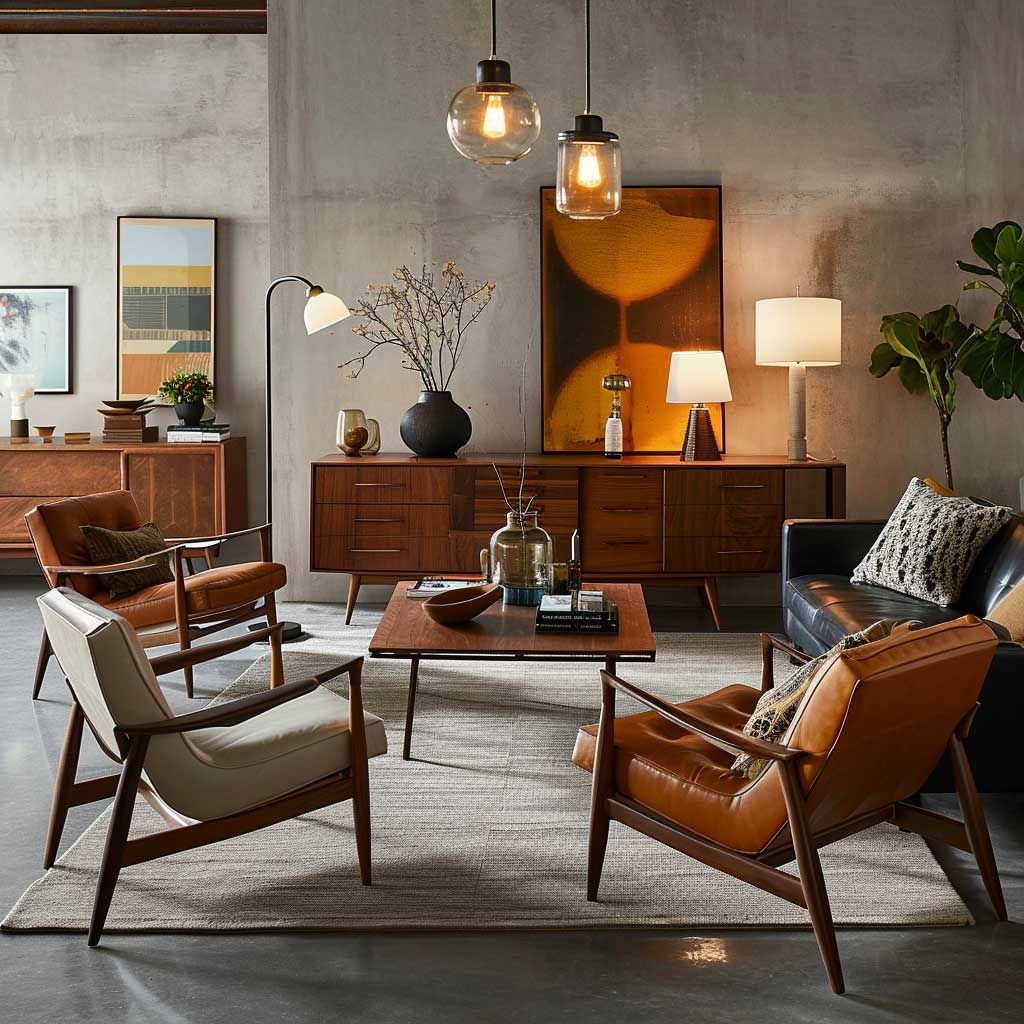
- Accent Chairs: This is where you can truly play. An Eames Lounge Chair and Ottoman, while a significant investment, is an unparalleled piece of comfort and design. But there are many other fantastic options. Perhaps a Bertoia Diamond Chair for a touch of industrial chic, or a Saarinen Womb Chair for ultimate coziness. Don't be afraid to mix and match materials here – leather, fabric, even some rattan can work beautifully if chosen thoughtfully. Remember, it's about balance, not uniformity.
Surface Matters: Coffee Tables and Side Tables as Sculptural Elements
Coffee tables and side tables in Mid Century design are rarely just flat surfaces for your cuppa. They are often sculptural elements in their own right, designed to complement the seating and add visual interest.
- Form and Function: Think about Noguchi's iconic coffee table – a true piece of art that also serves a purpose. Or a simple, elegant teak coffee table with clean lines. The material choice is crucial here. Teak, walnut, and rosewood were popular for their warmth and durability. Glass tops, sometimes with brass or chrome accents, were also common, offering a sense of lightness.
- Strategic Placement: Side tables are perfect for adding layers and displaying smaller curated items. A small tripod table or a simple drum table can provide a spot for a lamp or a carefully selected book. Don't overcrowd; each piece should have room to breathe and be appreciated.
Storage with Style: Sideboards, Credenzas, and Bookcases
Mid Century design was all about practicality and efficiency, and storage solutions were no exception. Sideboards, credenzas, and bookcases were designed to be both functional and beautiful, often becoming focal points in their own right.
- The Versatile Sideboard: A long, low sideboard or credenza is a quintessential Mid Century piece. It provides ample storage for anything from records to dinnerware, and its top surface offers a perfect display area for art, ceramics, or a well-placed lamp. Look for pieces with interesting hardware or unique wood grains.
- Open and Closed Storage: Bookshelves from this era often feature a mix of open and closed compartments, allowing for both display and discreet storage. Think about Danish modular shelving systems that can be configured to fit your specific needs. This flexibility is a hallmark of the period.
Illuminating the Space: Lighting as Art and Atmosphere
Lighting in a Mid Century living room isn't just about functionality; it's about creating atmosphere and highlighting your carefully chosen pieces. Lamps from this era are often artistic and sculptural, drawing the eye even when not in use.
- Statement Pieces: Consider a Sputnik chandelier for a dramatic overhead statement, or a Noguchi Akari lamp for a soft, diffused glow. Floor lamps with multiple arms or adjustable heads are also very characteristic of the period. Think about how the light will fall and what it will illuminate.
- Layering Light: Don't rely on just one overhead light. Use a combination of floor lamps, table lamps, and perhaps even some strategically placed wall sconces to create layers of light. This allows you to adjust the ambiance for different activities and times of day. It's about crafting a mood, you know?
The Finishing Touches: Textiles, Art, and Accessories
Once your core furniture is in place, it's time to add the personality. This is where textiles, art, and smaller accessories truly bring the room to life and make it uniquely yours.
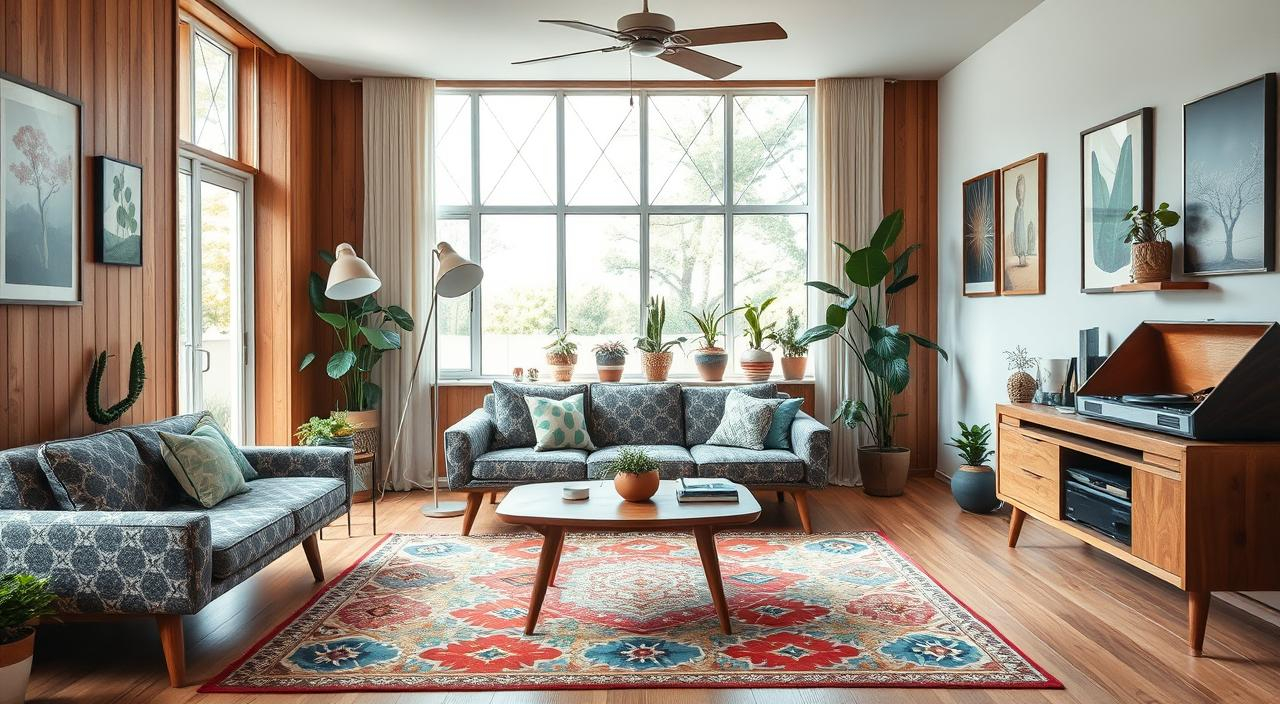
- Textural Play: Introduce warmth and texture with wool rugs, perhaps a shag or a flat-weave geometric pattern. Cushions in bold, abstract patterns or solid colors can add pops of interest and comfort. Think about fabrics like tweed, velvet, or even some linen for a natural feel.
- Art and Sculpture: Mid Century art often features abstract forms, geometric patterns, or organic shapes. Look for original prints, abstract paintings, or even some smaller sculptures. Don't be afraid to mix and match; a well-placed vintage travel poster can sit happily alongside a more abstract piece. It's about what speaks to you, not just what's 'correct'.
- Curated Collections: Display a few carefully chosen ceramics, glassware, or small decorative objects. Avoid clutter. Each piece should have a story or contribute to the overall aesthetic. A vintage globe, a set of colorful glass vases, or a unique ceramic planter can add character and a sense of history.
The Human Element: Making it Your Own, Imperfections Included
Here's the secret, the real magic. A truly curated Mid Century living room isn't about having every single 'correct' piece. It's about creating a space that feels personal, lived-in, and authentic. Don't be afraid to mix in elements that aren't strictly Mid Century if they resonate with you. A piece of art from a different era, a family heirloom, or even a quirky modern lamp can add depth and character.
Remember, human spaces aren't perfect. There might be a slight scuff on a vintage sideboard, or a barely noticeable stain on an old rug. These aren't flaws; they're stories. They're part of the journey. Embrace them. Your living room should be a reflection of you, not just a catalogue page. That's the art of it, truly.
The journey of curating a Mid Century living room is a rewarding one. It's a process of discovery, a dance between iconic design and personal expression. By understanding the core principles of the era – functionality, simplicity, and a love for natural materials – and by thoughtfully selecting your key pieces, from the foundational seating to the smallest decorative accent, you can create a space that is both timeless and deeply personal. It's not about replicating a look; it's about capturing a feeling, a sense of enduring style and comfort. So go forth, explore, and let your creativity guide you. Your Mid Century sanctuary is waiting to be brought to life.