Let’s be honest. Buying a bed online is kinda terrifying. You’re dropping serious cash on something you can’t actually sit on before you buy it. Will it squeak? Will the headboard hit the light switch? Is that "natural oak" going to look like cheap plastic in real life? If you’ve been scrolling through Joss & Main lately, you’ve probably noticed they have a lot of options. Like, a lot. It’s easy to get lost in the sea of upholstered this and platform that.
But here’s the thing. After sifting through hundreds of reviews, specs, and customer photos from early 2026, a few clear winners start to pop out. It’s not just about what looks good in the render. It’s about what works in a real bedroom with real life happening around it. Whether you’re tight on space, obsessed with mid-century vibes, or just need something that won’t collapse when you drop your phone on it, there’s a specific frame for you. Let’s cut through the noise and talk about what’s actually worth your money.
Why the Platform Trend Isn’t Going Anywhere
You might have noticed that box springs are basically extinct. Or at least, they should be. Most of the top-rated queen beds at Joss & Main right now are platform styles. This isn’t just a design choice; it’s a structural one. Take the general construction notes from their best-sellers. They usually come with solid wood slats and center supports. For a queen size, you’re typically looking at three support legs under the center beam. That’s crucial.

Why does it matter? Stability. Without those center legs, a queen frame can sag in the middle over time. Especially if you and a partner are tossing and turning. The platform design eliminates the need for a bulky box spring, which saves you money and lowers the profile of the bed. Just keep in mind the mattress height recommendation. Most of these frames work best with a mattress that’s at least 8 to 10 inches thick. If you go too thin, you might feel the slats. Too thick, and you might climb into bed like you’re scaling a cliff.
It’s also about longevity. Single-piece side rails are a big deal. Cheaper frames often come in multiple pieces that bolt together, which creates weak points. A single rail means less wobble and less chance of those annoying creaks that drive you crazy at 3 AM. When you’re looking at the specs, scan for "solid wood slats" and "center support." If it’s missing, keep scrolling.
Storage Solutions That Don’t Look Clunky
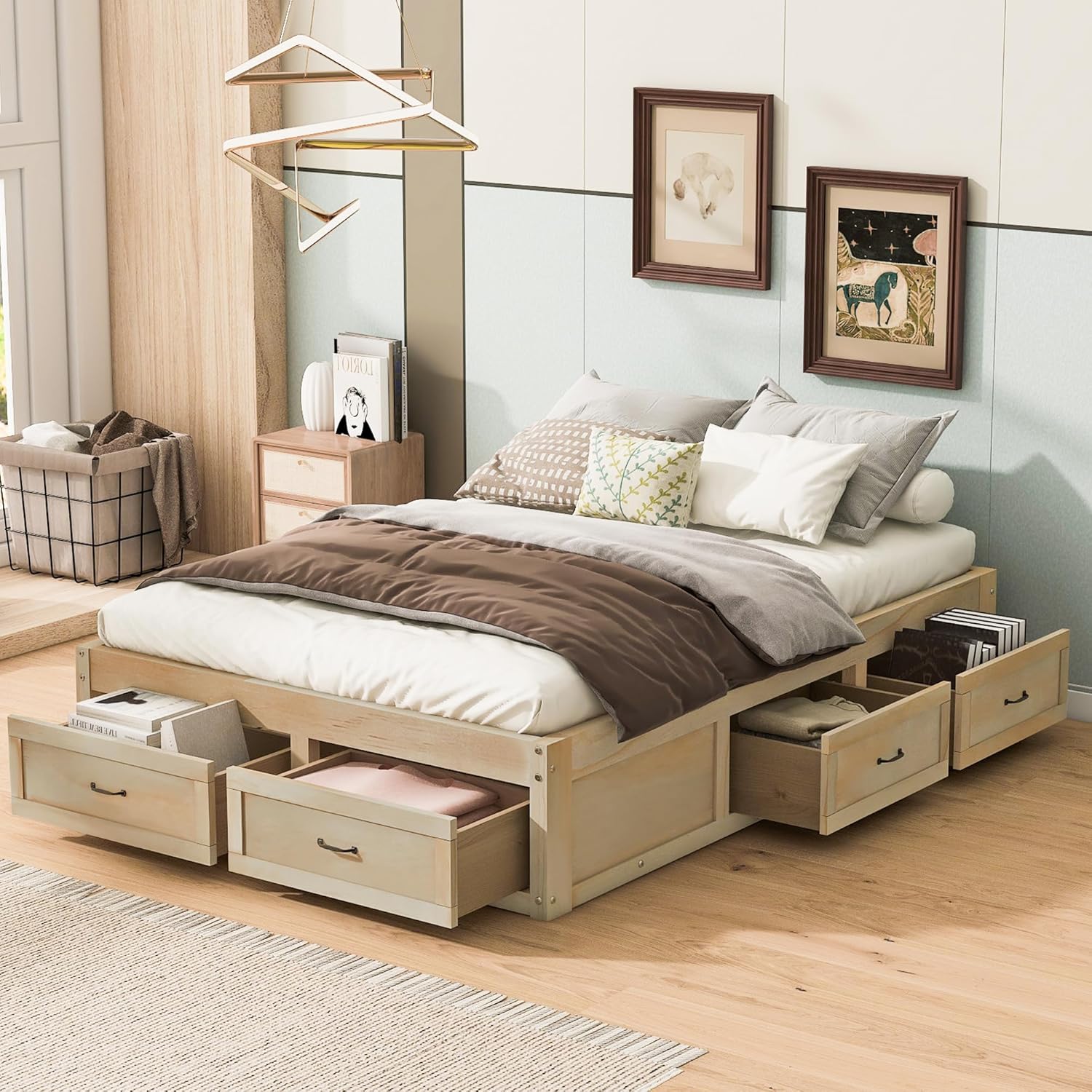
Space is premium in most homes these days. If you’re living in an apartment or just have a smaller master suite, every inch counts. This is where storage beds come in, but let’s be real—most of them are ugly. They look like giant wooden boxes. The Eyler Bed from Joss & Main is a nice exception. It doesn’t scream "I am a storage unit." Instead, it features a rounded silhouette with piped detailing, upholstered in brown polyester. It feels warm, not industrial.

The magic is in the footboard. It pulls forward to reveal storage divided into two panels. It’s perfect for extra sheets, off-season clothes, or those random items that don’t have a home. Because it’s built with a mix of engineered wood, solid wood, and MDF, it holds up well without costing a fortune. The key here is organization. You aren’t just shoving things under the bed where they gather dust. You’re keeping essentials accessible but hidden.
However, there’s a trade-off. Storage beds are heavier. They’re harder to move if you’re planning to rearrange your room next month. Also, make sure you have clearance. If you have a rug or a radiator near the foot of the bed, check the measurements twice. You need room for that footboard to slide open. It’s a practical solution, but it requires a bit of spatial planning. Don’t just assume it’ll fit. Measure the swing radius.
Style Spotlights: Curves, Wood, and Modern Vibes
Aesthetics are subjective, but some trends are dominating the 2026 landscape. Soft curves are everywhere. The Henley bed is a prime example. It combines casual comfort with modern style through a unique curvy headboard. It’s pared down, meaning it’s not overly ornate, which makes it versatile. The natural wood legs add a touch of warmth that keeps it from feeling too sterile. It’s a great choice if you want something that feels current but won’t look dated in two years.

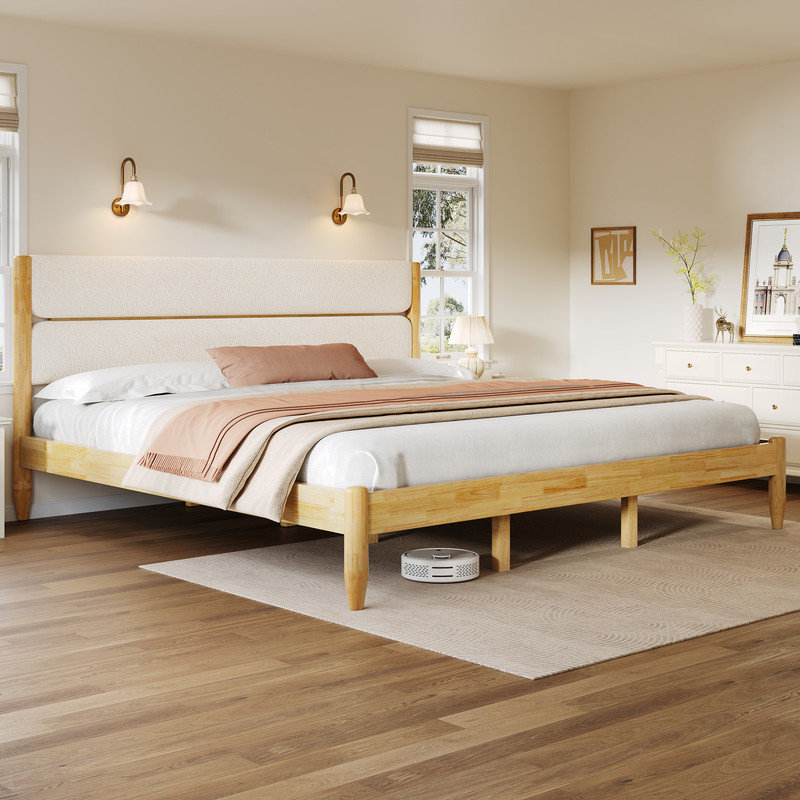
On the other end of the spectrum, you have the Camila Modern Natural Oak collection. This one is for the people who love texture. The natural oak panel headboard exudes warmth and subtle sophistication. It blends artisanal craftsmanship with modern sensibility. If you’re going for a serene, inviting vibe, this is the route. The matching nightstands with gold-accented handles tie the whole look together. It’s less about trendy shapes and more about material quality.
Then there’s the Tilly Upholstered Bed, which pops up on sister sites like AllModern too. It’s a staple for a reason. Upholstered beds soften the room acoustically and visually. They’re great if you like to sit up in bed and read or watch TV. Hard wood headboards can be unforgiving on your back. Fabric offers a bit of give. Just be mindful of the color. Light fabrics show everything. Darker tones hide stains but can feel heavy in a small room. Pick based on your actual habits, not just the photo.
The Hidden Trap: Measuring Your Space Correctly
Here’s where most people mess up. They measure the mattress. A queen mattress is 60 by 80 inches. So, they think they need a space that’s 60 by 80 inches. Wrong. The frame adds bulk. A lot of it. According to recent customer feedback, some headboards and footboards add roughly a foot to the length and width of the bed. One reviewer noted their bed was "even more massive than we were expecting." That’s a nightmare if you’re trying to fit it between two windows or alongside a closet door.

You need to measure the outer dimensions of the frame, not the mattress size. Check the product specs for "overall dimensions." Look at the width including the arms or side rails. Look at the length including the footboard. If you have a tight hallway or staircase, measure those too. Some of these beds come in huge boxes. If the box won’t fit through your door, the bed won’t either. It sounds obvious, but you’d be surprised how many returns happen because of this.
Also, think about vertical space. High headboards look dramatic, but they can overwhelm a small room. If you have low ceilings or a window behind the bed, a towering headboard might block light or feel oppressive. The Henley’s curvy headboard is lower and wider, which works well in compact spaces. The Camila’s panel headboard is substantial but not necessarily tall. Always visualize the volume, not just the footprint. Tape it out on the floor with painter’s tape if you’re unsure. It helps.
Assembly and Maintenance: The Reality Check
Let’s talk about putting it together. Most Joss & Main beds require assembly. It’s not always a two-person job, but it’s definitely easier with help. The instructions are usually decent, but hardware can be tricky. Keep a small bowl for screws. Label bags if you’re taking your time. One tip: don’t tighten everything all the way until the very end. Leave things slightly loose so you can align holes, then go back and tighten. It saves a lot of frustration.

Once it’s built, maintenance depends on the material. Upholstered beds like the Eyler or Tilly need occasional vacuuming. Dust settles in the fabric weave. If you spill something, blot it immediately. Don’t rub. For wood frames like the Camila or Henley, use a soft cloth. Avoid harsh chemicals. Natural oak can dry out if the air is too arid, so consider a humidifier in the winter if you notice cracking. It’s rare, but possible.
Check the bolts every six months. Beds shift. People jump on them (don’t judge). Kids use them as trampolines. Things loosen. A quick tighten with an Allen wrench can prevent a wobble from becoming a break. It’s a five-minute task that extends the life of your bed significantly. If you hear a creak, find the source. Usually, it’s a joint that needs tightening or a slat that’s shifted. Fix it early.
Price is always a factor. Joss & Main sits in that sweet spot between budget big-box stores and high-end designer furniture. But "affordable" doesn’t mean "cheap." When you’re comparing options, look at the materials. Solid wood costs more than engineered wood, but it lasts longer. Upholstery quality varies. Polyester is durable and easy to clean, which is great for pets or kids. Leather or linen might look nicer but require more care.
Think about the long-term value. A bed that costs $50 more but has better support legs and thicker slats is worth it. You’re sleeping on it every night. Bad sleep affects everything. If a frame sags after a year, you’ve wasted money. Read the recent reviews from 2026. Look for comments about sturdiness over time, not just initial impressions. Did it hold up after six months? A year? That’s the data that matters.
Also, consider the return policy and shipping. Free shipping over $35 is standard, but returning a bed is a hassle. You usually have to disassemble it and repackage it. Make sure you’re confident in your choice before you click buy. Watch video reviews if available. Look at user-uploaded photos to see how the color looks in different lighting. Renderings are idealized. Real life is messy. Pick the bed that fits your real life, not the catalog version.
At the end of the day, your bed is the anchor of your room. It sets the tone. Whether you go for the sleek curves of the Henley, the smart storage of the Eyler, or the warm wood of the Camila, make sure it serves you. Don’t just chase a trend. Chase comfort. Chase stability. Chase a good night’s sleep. Because honestly, that’s the only review that really counts.